
Stanway House
OUR TRAVELS:
STANWAY
HOUSE
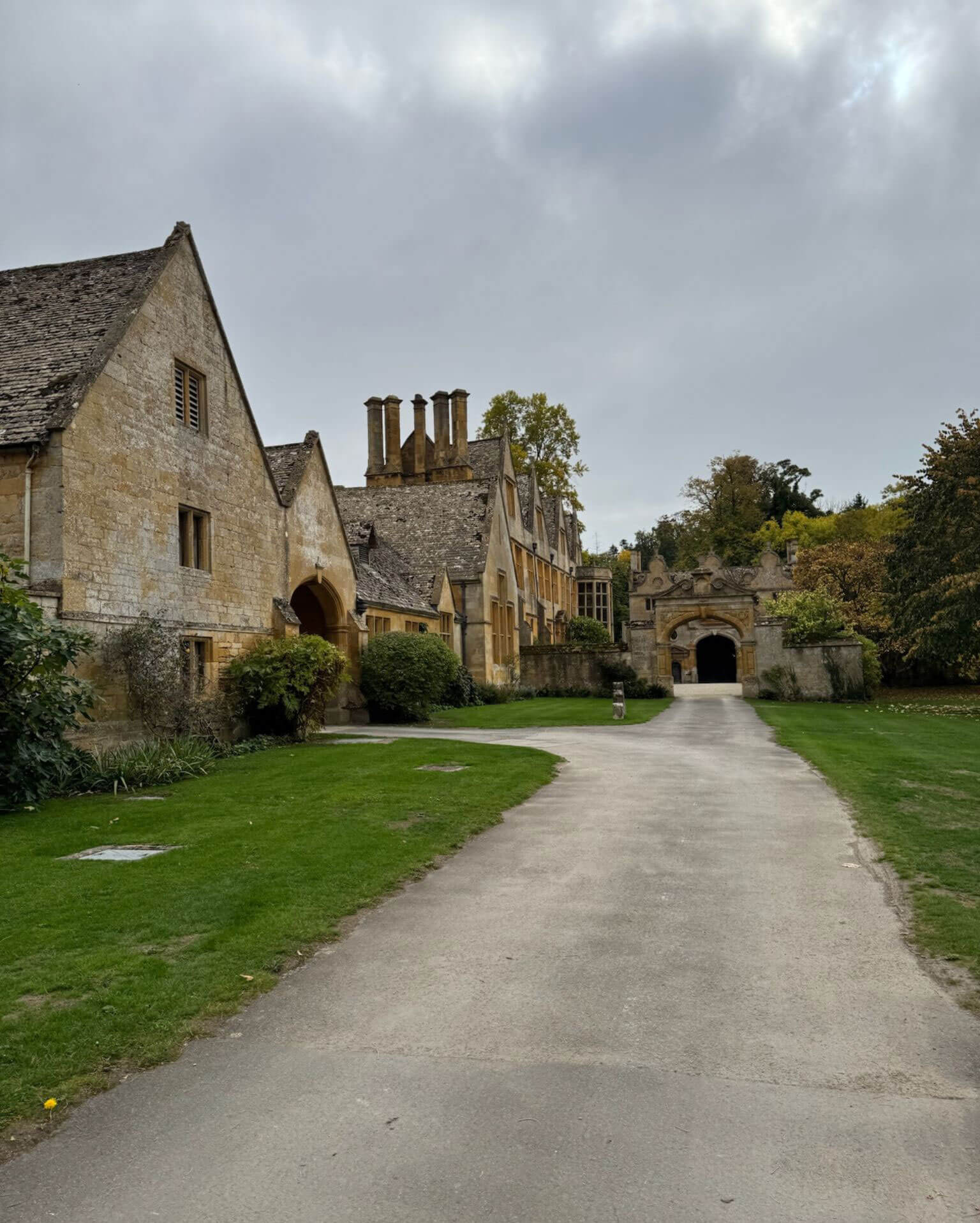
We visited Stanway House in Gloucestershire in the fall of 2025, and I wanted to share a few photos we took throughout the grounds. Jesse has spoken about this manor for almost as long as he has been designing private residences. It was one of the first Tudor manor homes he came across as a reference during the early years of developing his design language, and he has made a point of visiting it every time we are in the Cotswolds. He loved the proportions of it the minute he set eyes on it, and experiencing it in person only deepened that. His words on it were simple: it puts into perspective just how grand the character of these homes should be.
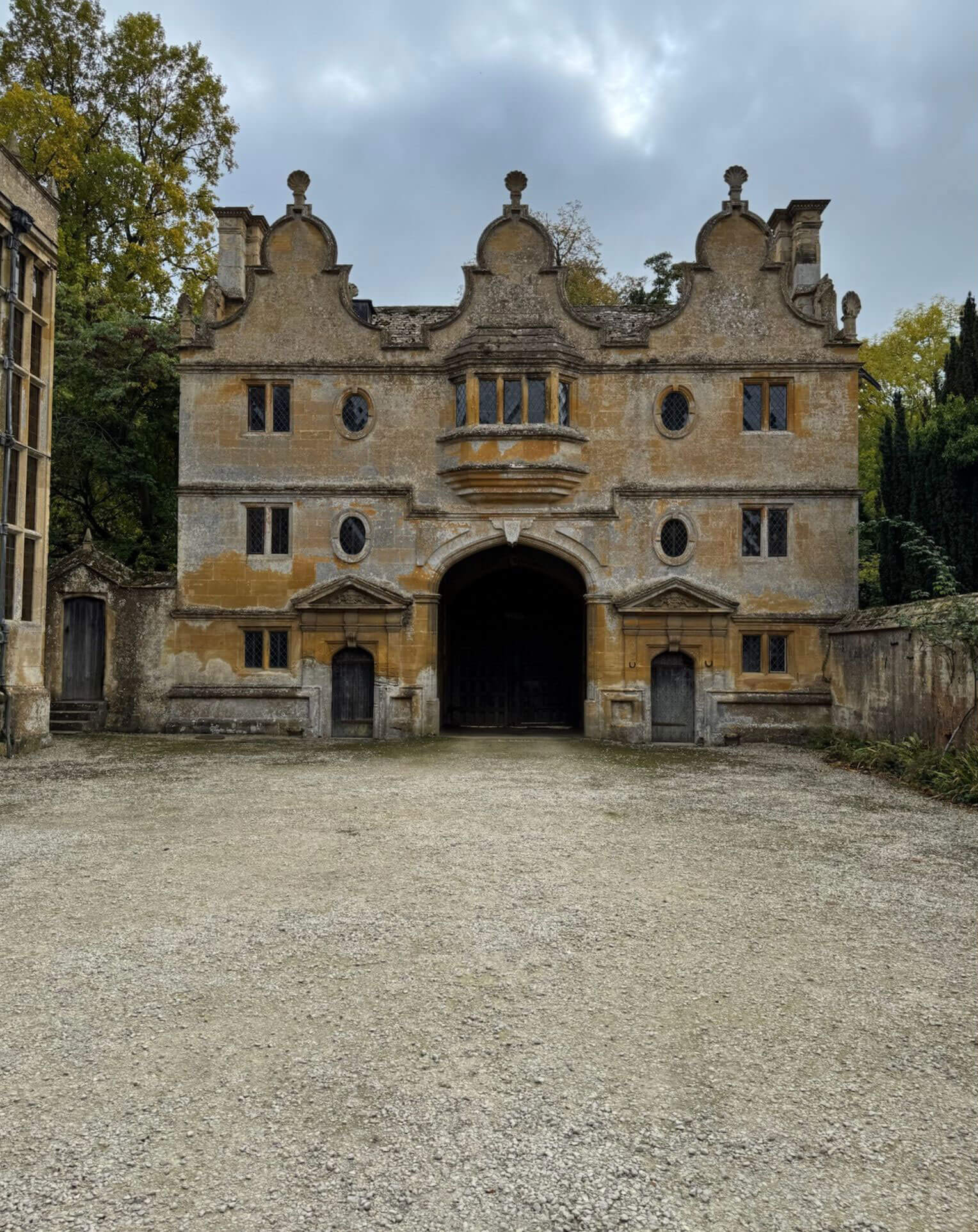
Stanway House is a great example of how a manor of this stature properly blends the utility required to run an estate of this scale with architectural grace and, more specifically, proportional intention. Every gable, archway, privacy wall, and stable was approached with a detailed and critical eye. This is not always the case with historic homes of this age, where additions were sometimes made without much regard for the original language of the building by different owners during different periods. At Stanway, each element feels considered in relation to the whole, which is what gives the composition its coherence. That quality is perhaps most legible in the gatehouse, a triple-gabled Jacobean structure built around 1630 by Sir Richard Tracy, positioned at a right angle to the main house rather than directly in front of it, owing to the proximity of the adjacent church. What could have read as an awkward accommodation has instead become the defining feature of the entry sequence. It holds its own proportional weight entirely independently of the main house, which is one of the more difficult things to achieve in a compound of this kind.
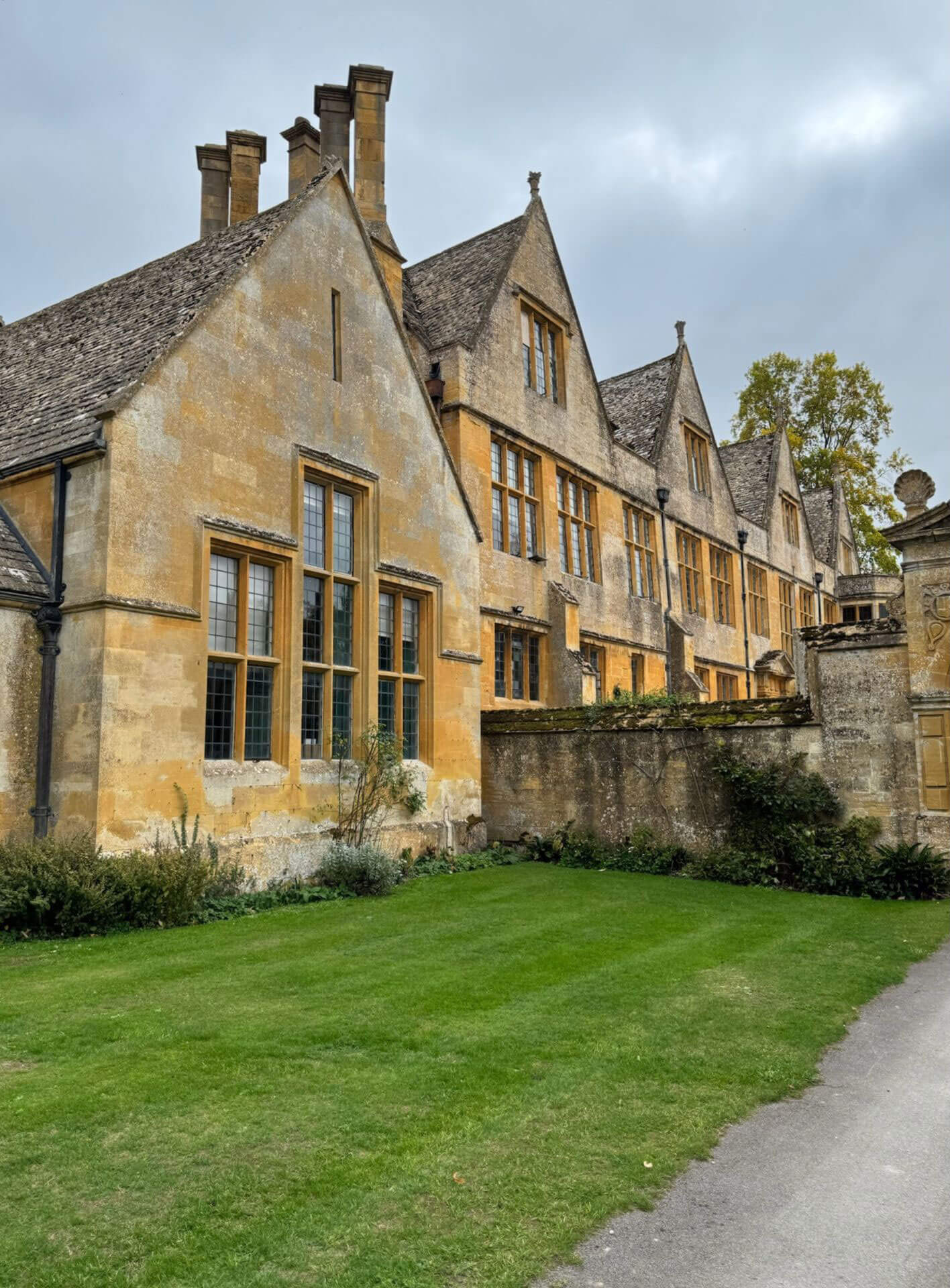
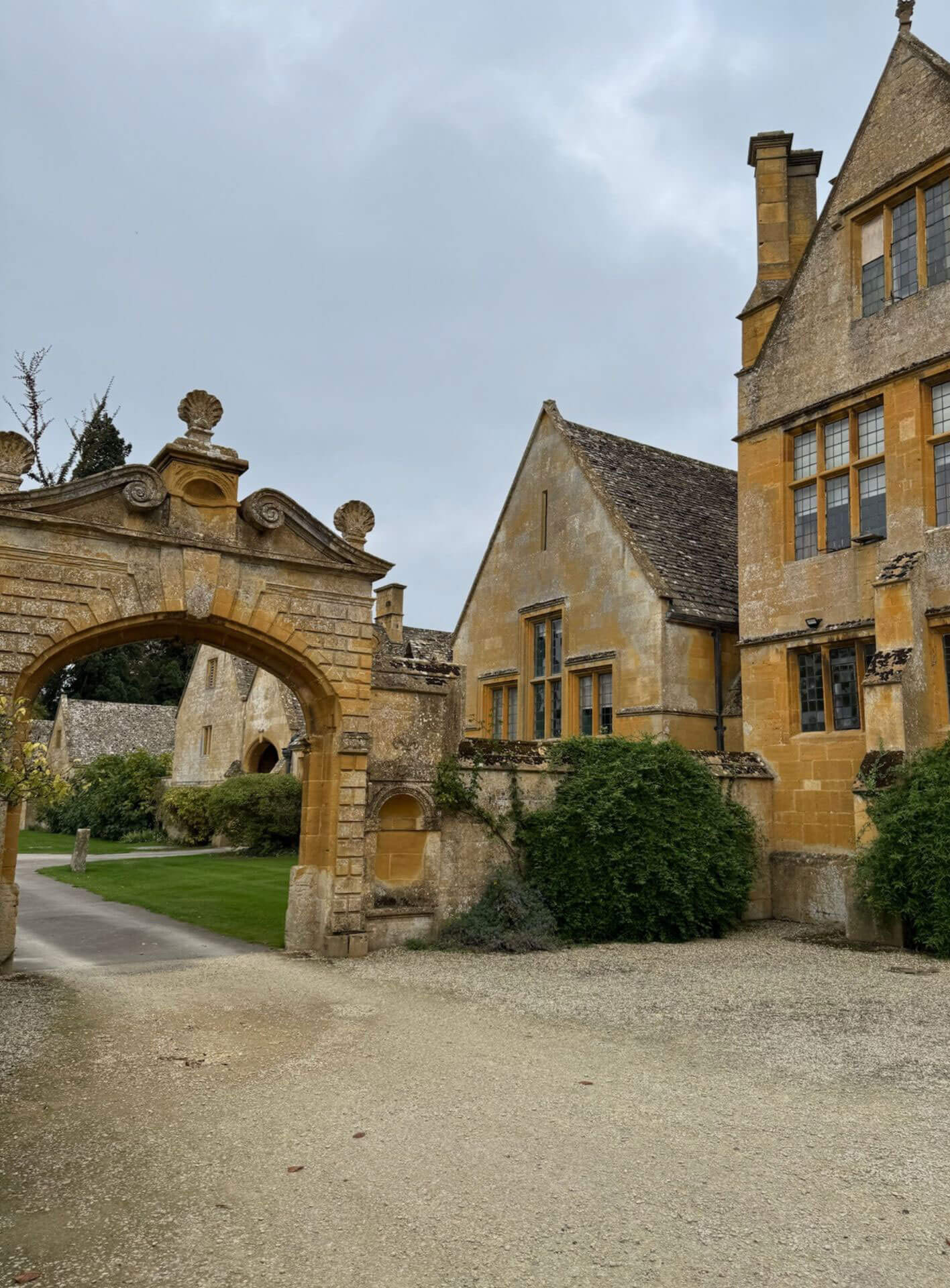
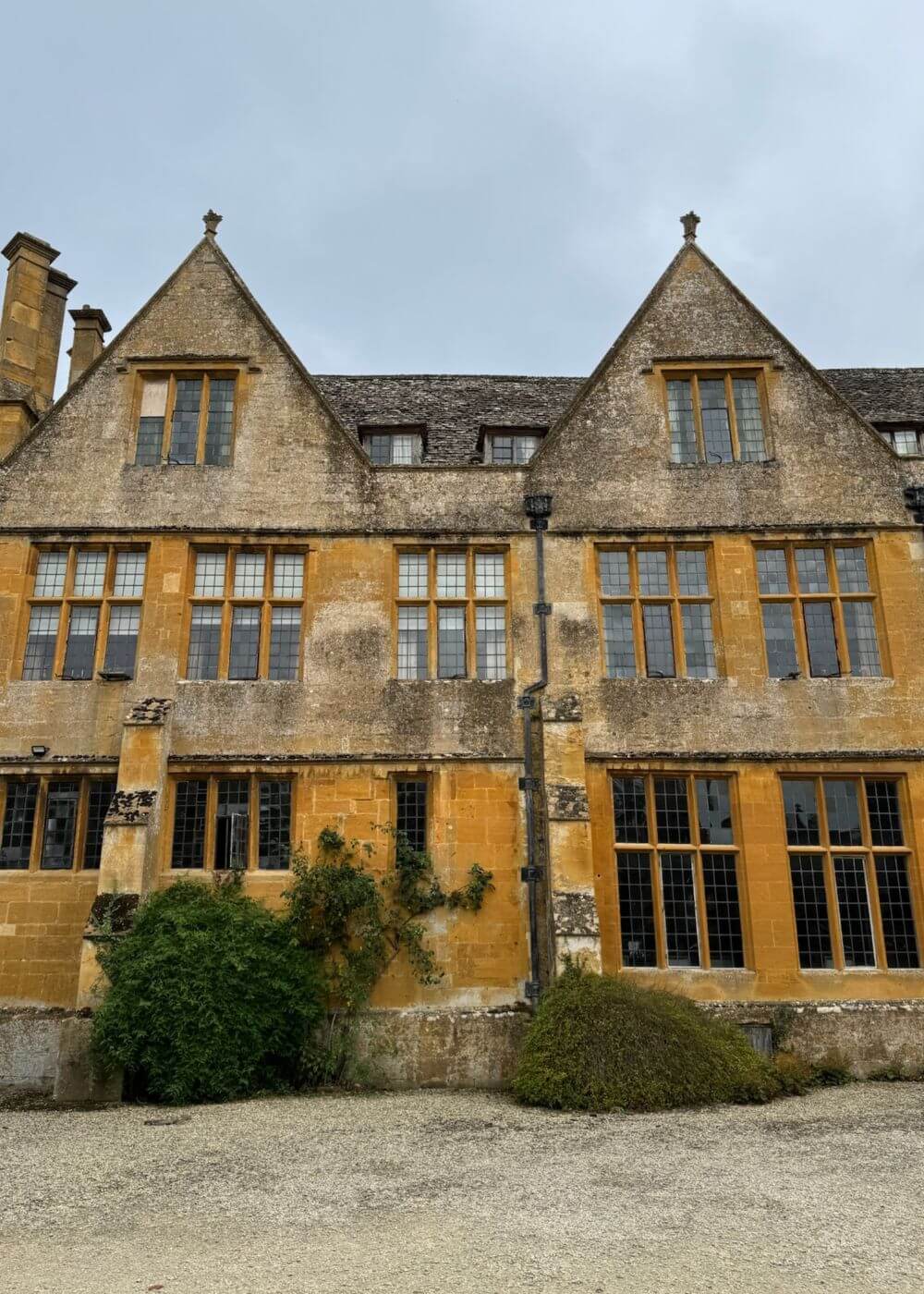
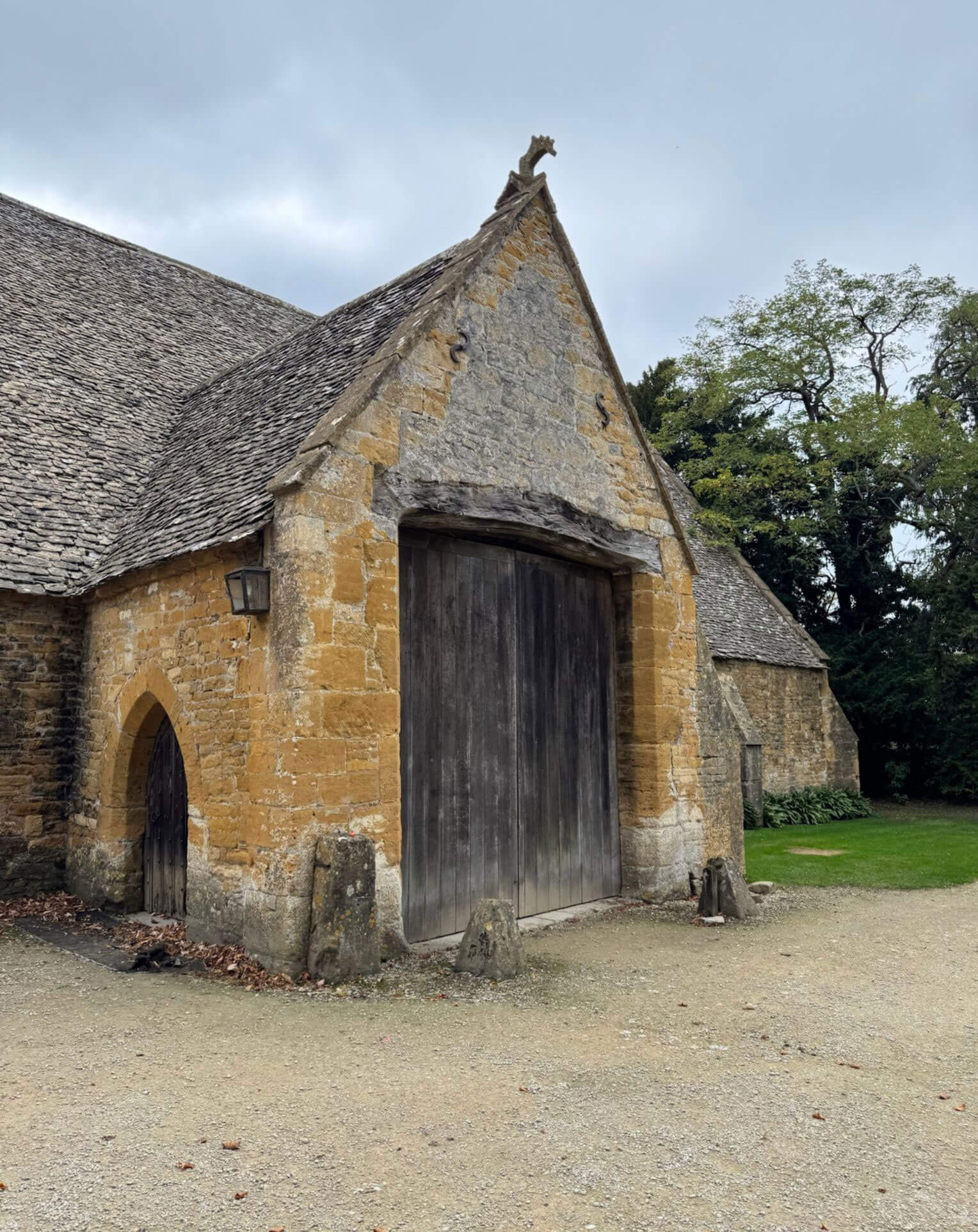
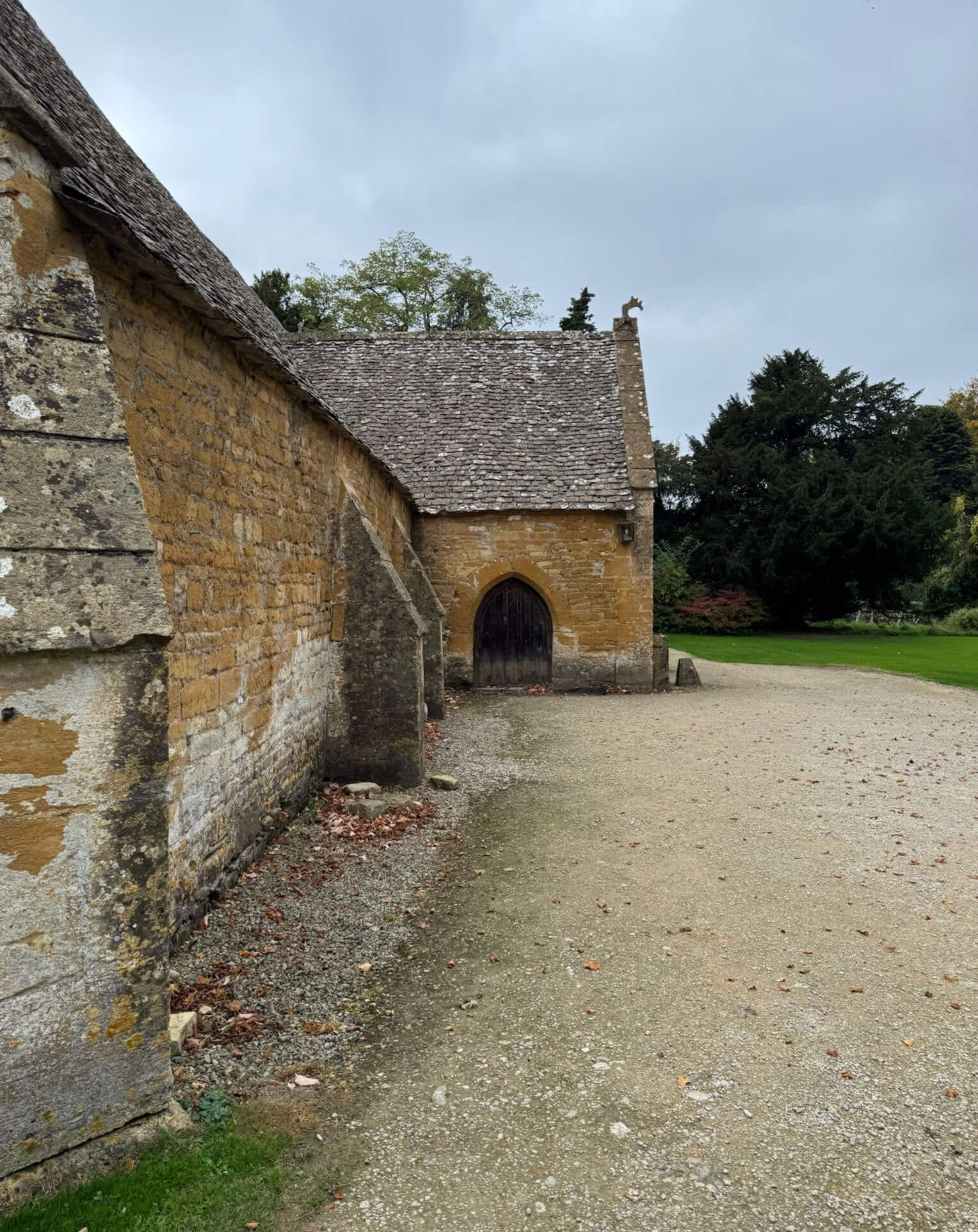
It is one thing to study proportions in photographs, and another to stand at the gatehouse and understand the scale of the surroundings in relation to the proportions, or to move through the courtyard and feel how the single-storey stable wing relates to the taller gabled ranges behind it. The relationship between the different heights, the rhythm of the mullioned windows, and the weight of the Guiting yellow limestone under different light conditions are all things that photographs compress into something much flatter than the reality.
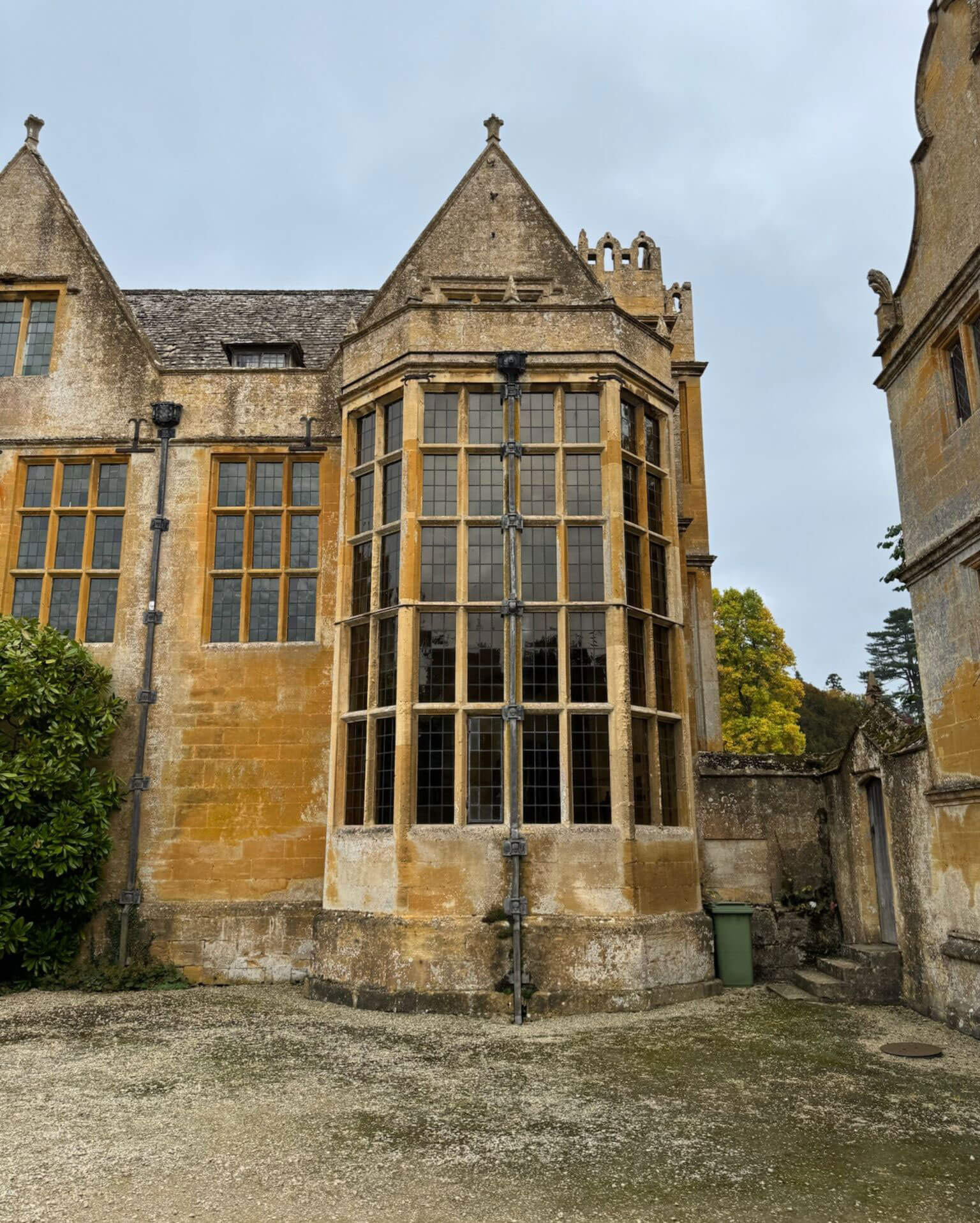
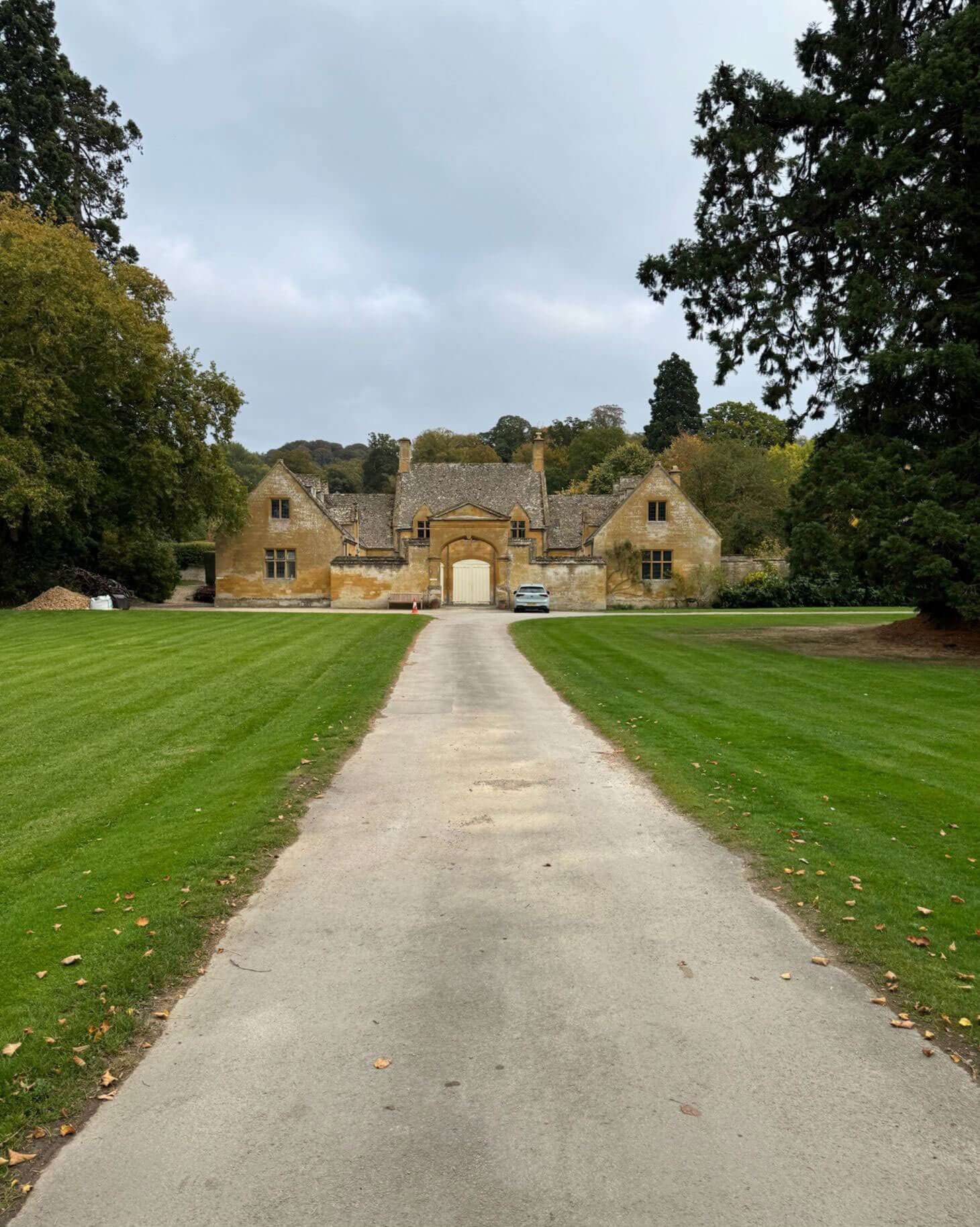
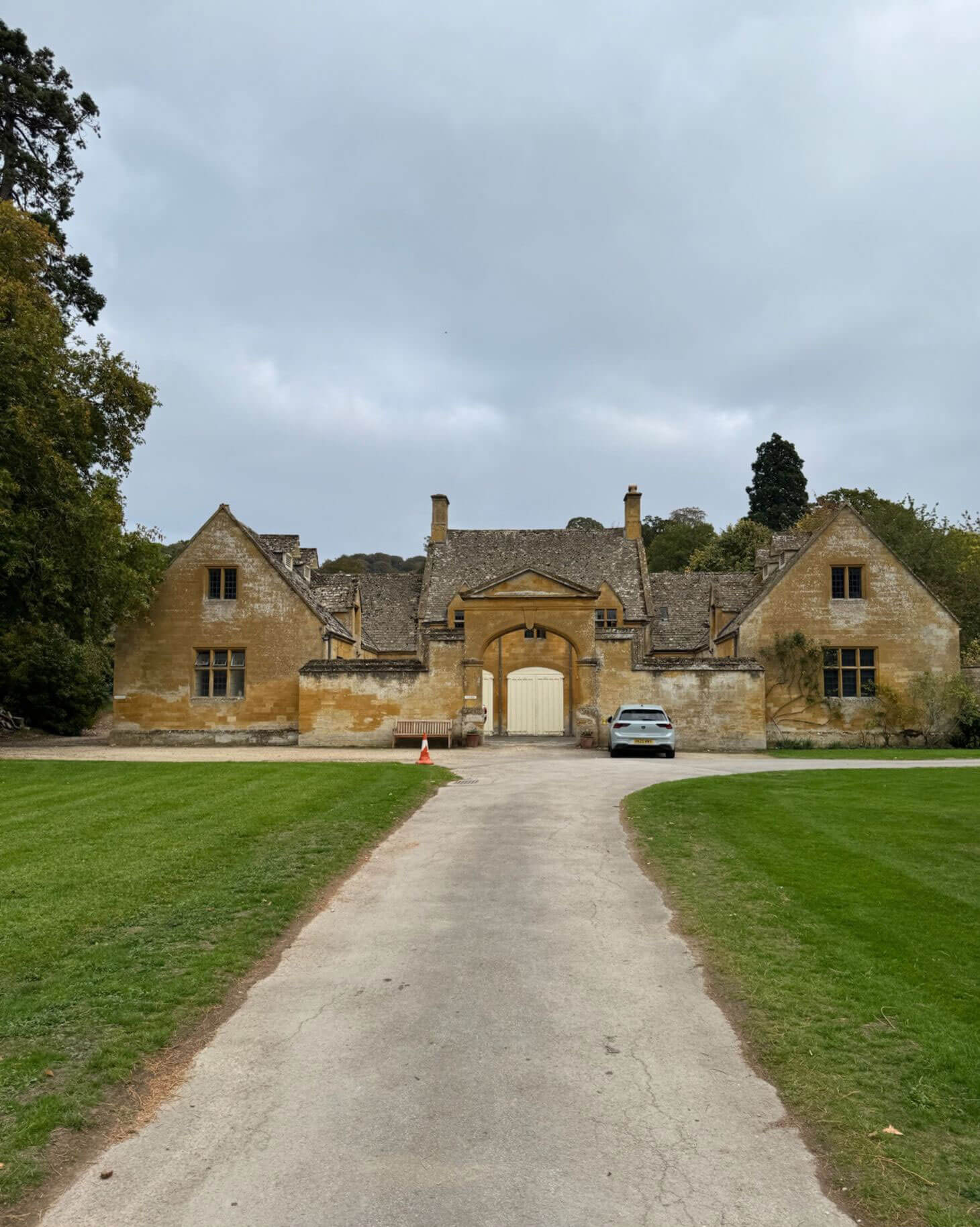
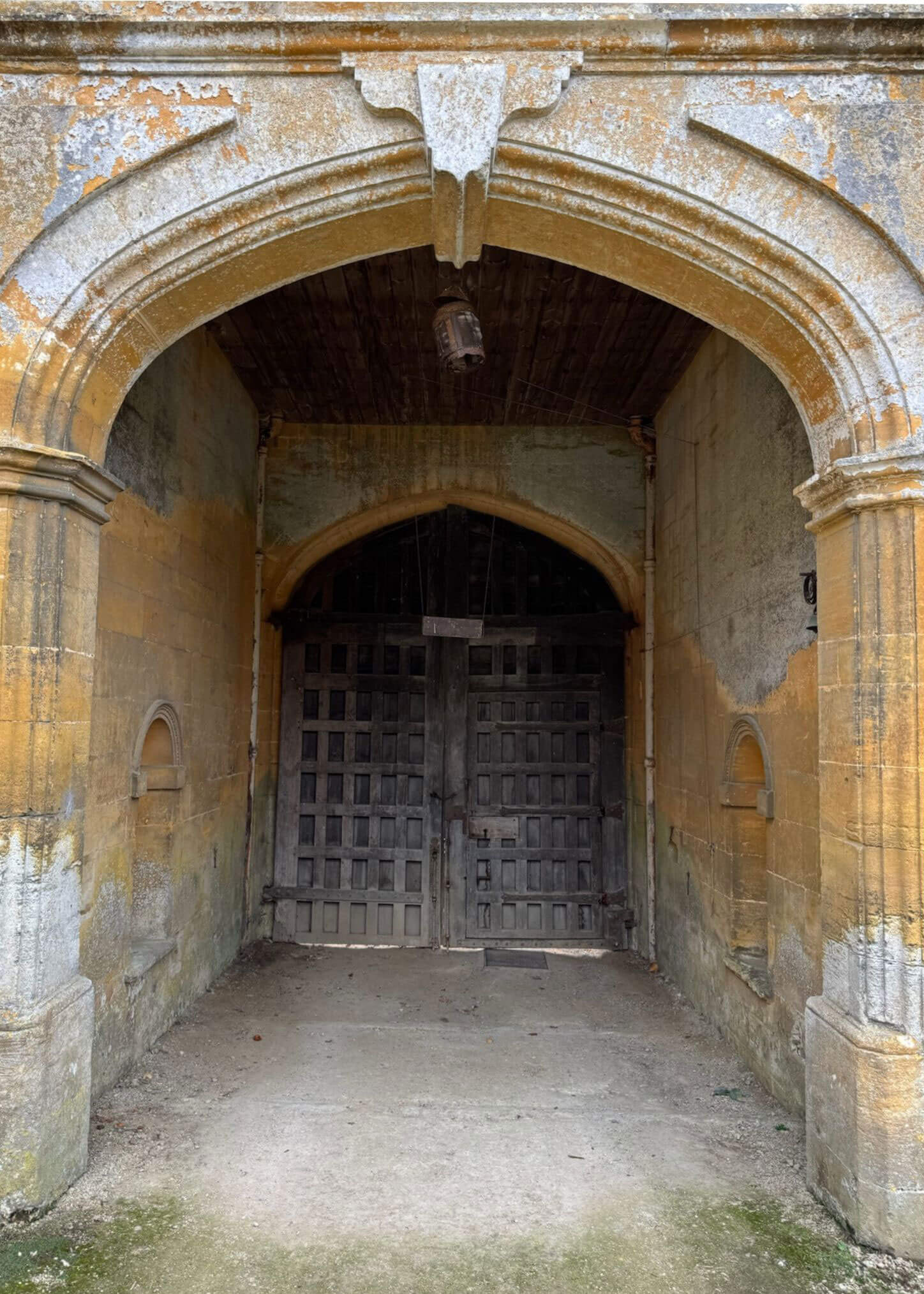
What makes Stanway particularly instructive is the stylistic variety of exterior details that can be found throughout, the result of different additions spanning several centuries. The core of the house dates to the late sixteenth and early seventeenth century, with the gatehouse added around 1630 and further alterations carried out in the eighteenth and nineteenth centuries. Despite the evolving nature of the manor as it changed hands between the Tracy family and later the Earls of Wemyss, each phase was clad with the same local Guiting yellow limestone, giving the whole composition a consistency that no amount of deliberate planning could fully manufacture. It reflects the character of the local stone available to builders of the past that has now become synonymous with grand Cotswold charm.
The estate itself traces back to 715 AD, when it was given to Tewkesbury Abbey under Saxon ownership, and remained under the Abbey's stewardship for roughly 800 years. Several of the wings hold Grade I listed status. J.M. Barrie, the creator of Peter Pan, used Stanway as a regular summer retreat through the 1920s and into the 1930s, and donated the thatched cricket pavilion that still stands on the grounds. He also spent considerable time at 3 Adelphi Terrace in London, one of my favourite mid-rise structures in the city, which gives some sense of the breadth of his taste.
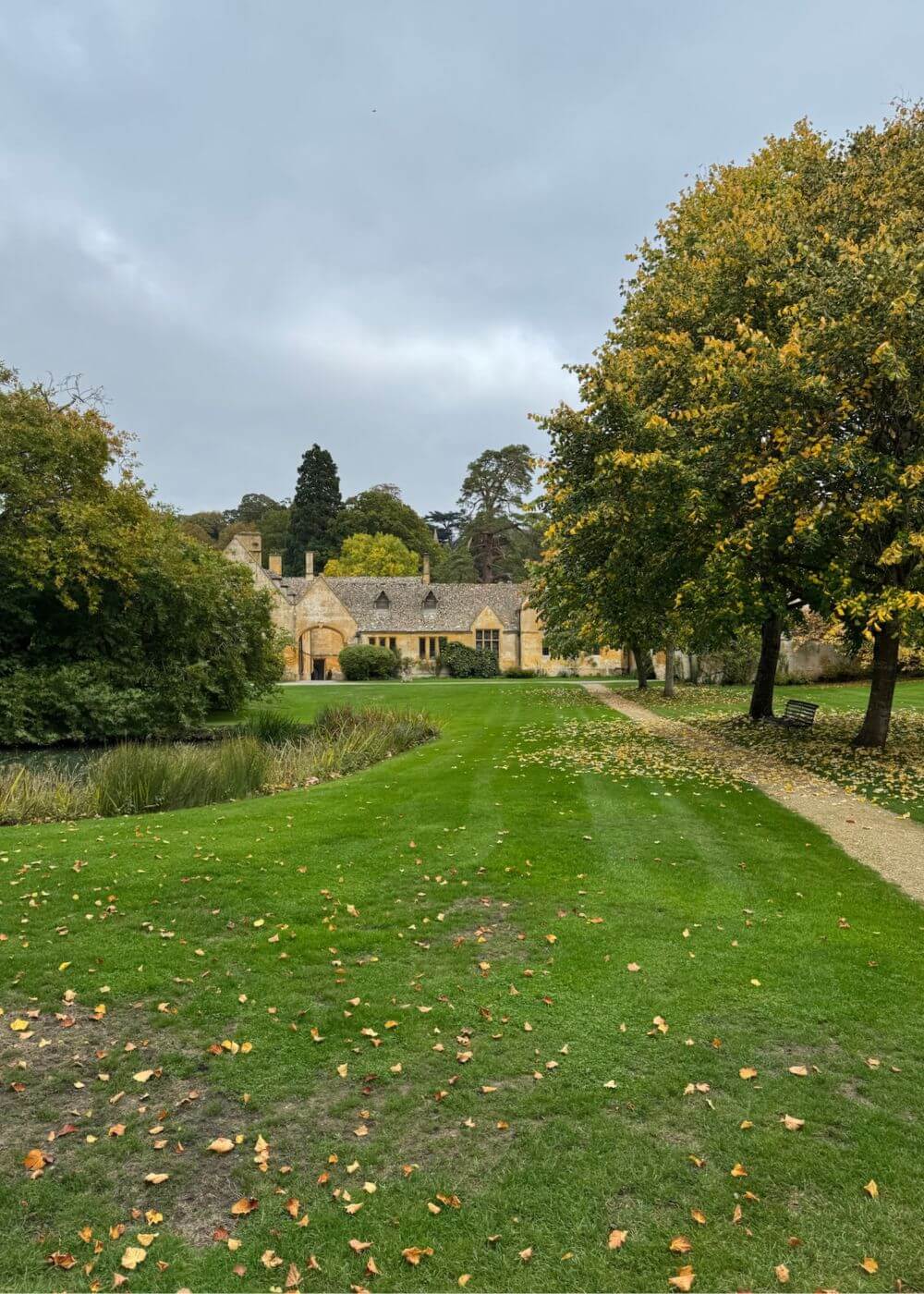
The gardens are equally considered. The water garden, likely designed by Charles Bridgeman in the 1720s, features a formal canal set on a terrace twenty-five feet above the house, fed by a single-jet fountain that reaches 300 feet and remains the tallest gravity-fed fountain in the world. The scale of it is genuinely surprising, and it adds a layer of grandeur to the grounds that sits comfortably alongside the architecture.
No matter how many times you visit the Cotswolds, you will always find new inspiration that charms you for years to come. Stanway is reliably part of that.