North American Cotswold Vernacular
THE NORTH AMERICAN
COTSWOLD DESIGN
STYLE
BY JESSE SAHLANI
THE CREATION
OF A NORTH
AMERICAN
ICON
At Sensus Design Studio, we are proud to share more about a design language that has quietly taken root across some of our most notable projects, a style conceptualized, developed, and refined by Principal Designer Jesse Sahlani: The North American Cotswold.
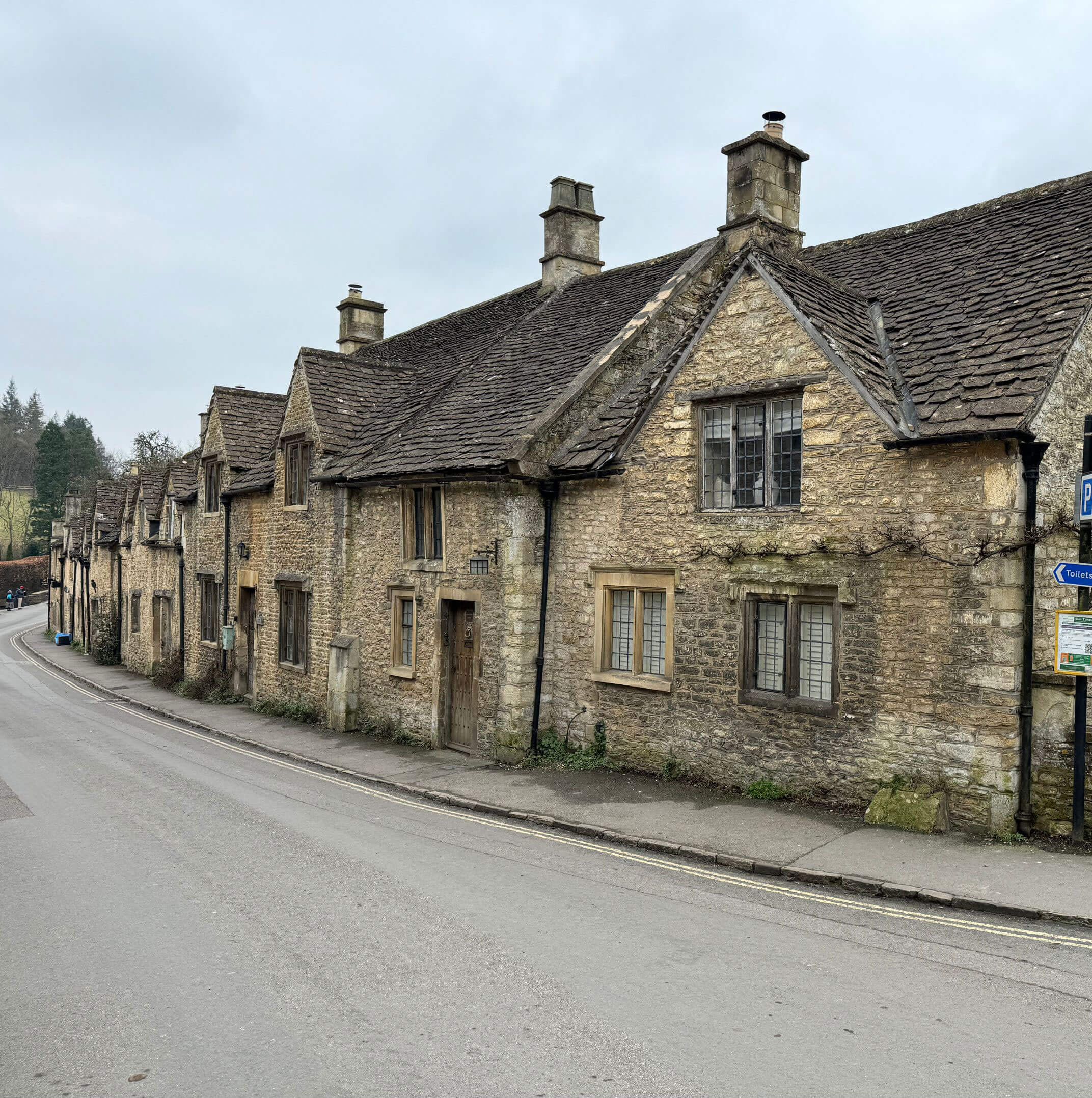
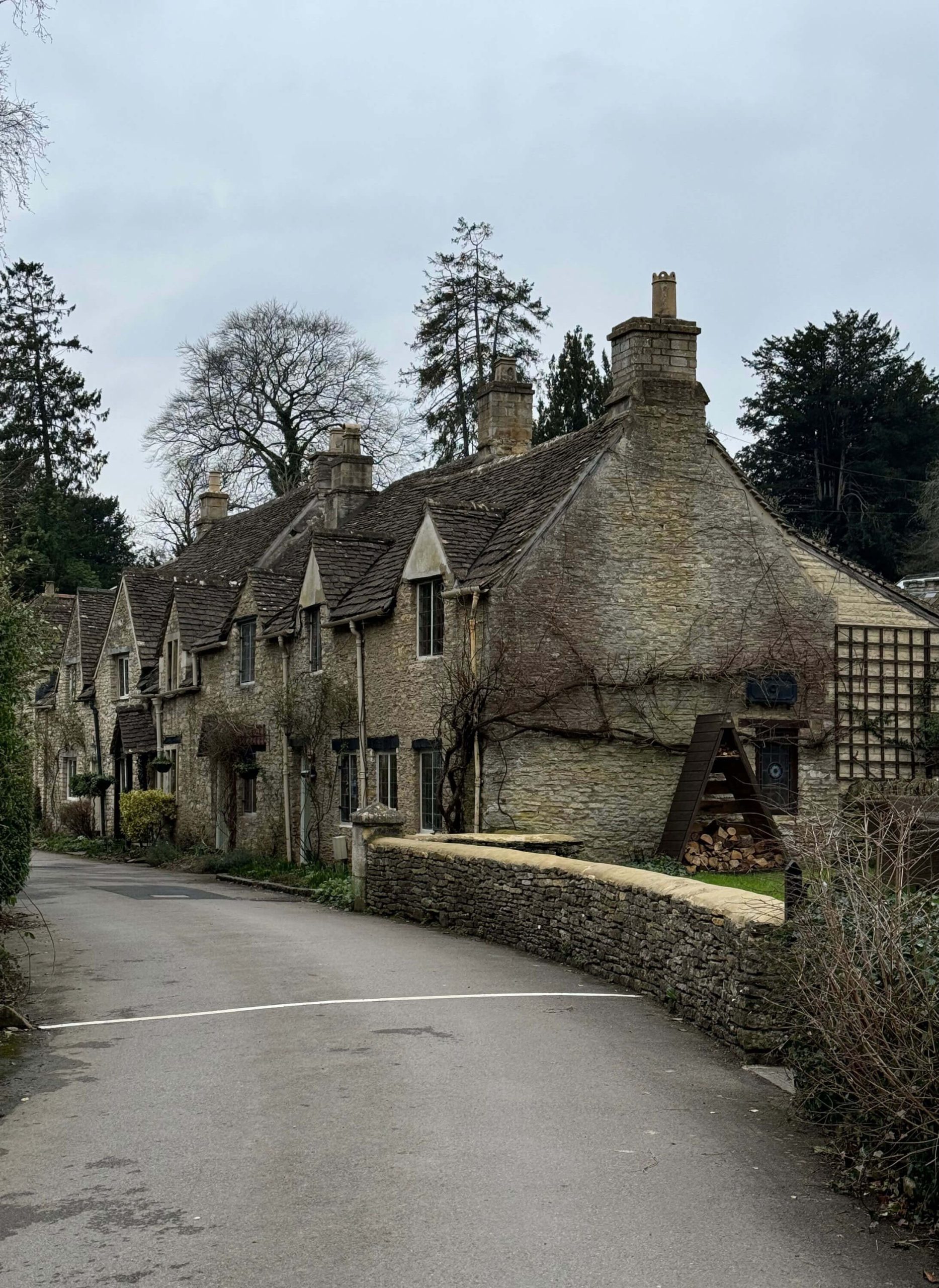
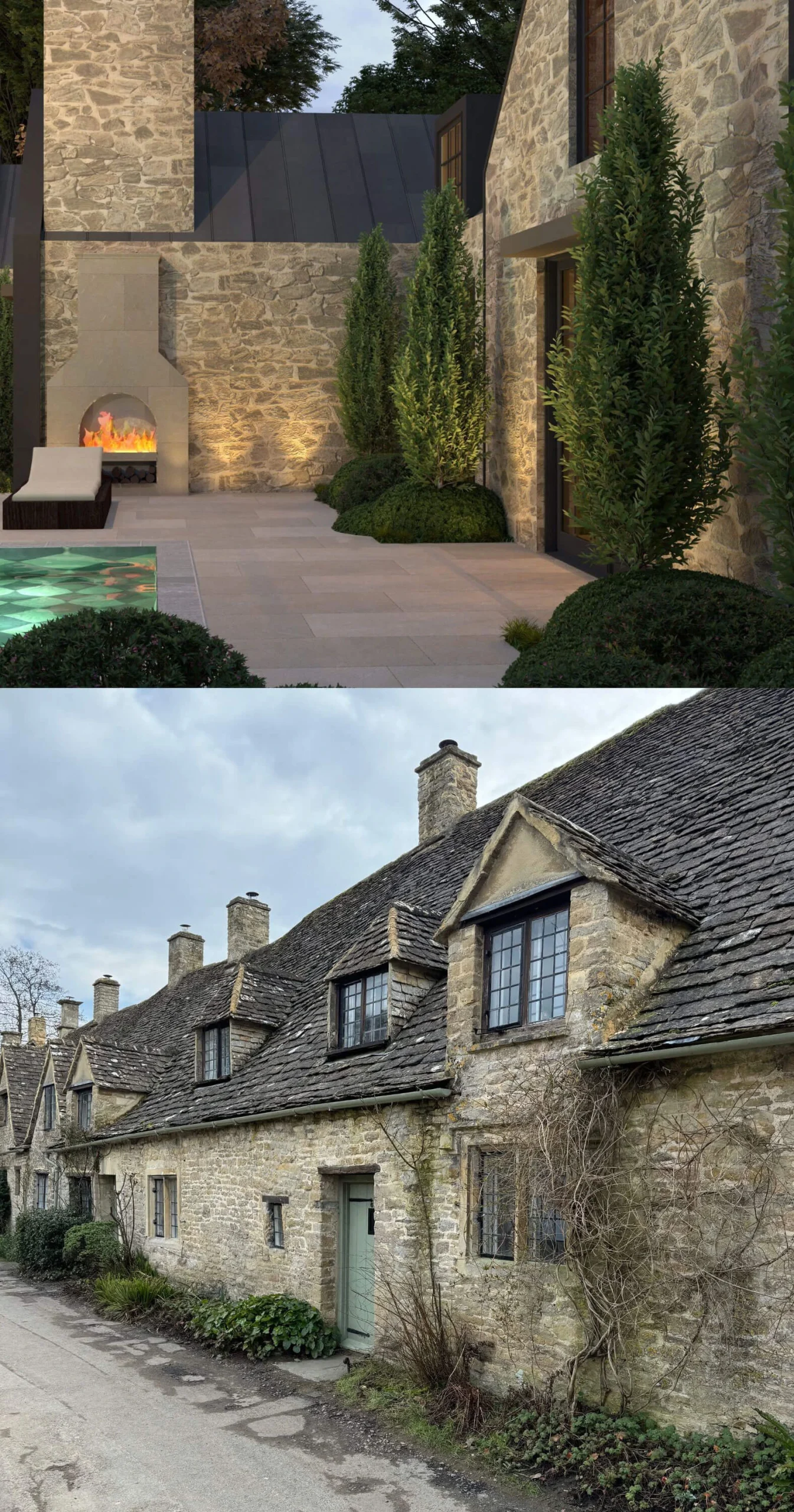
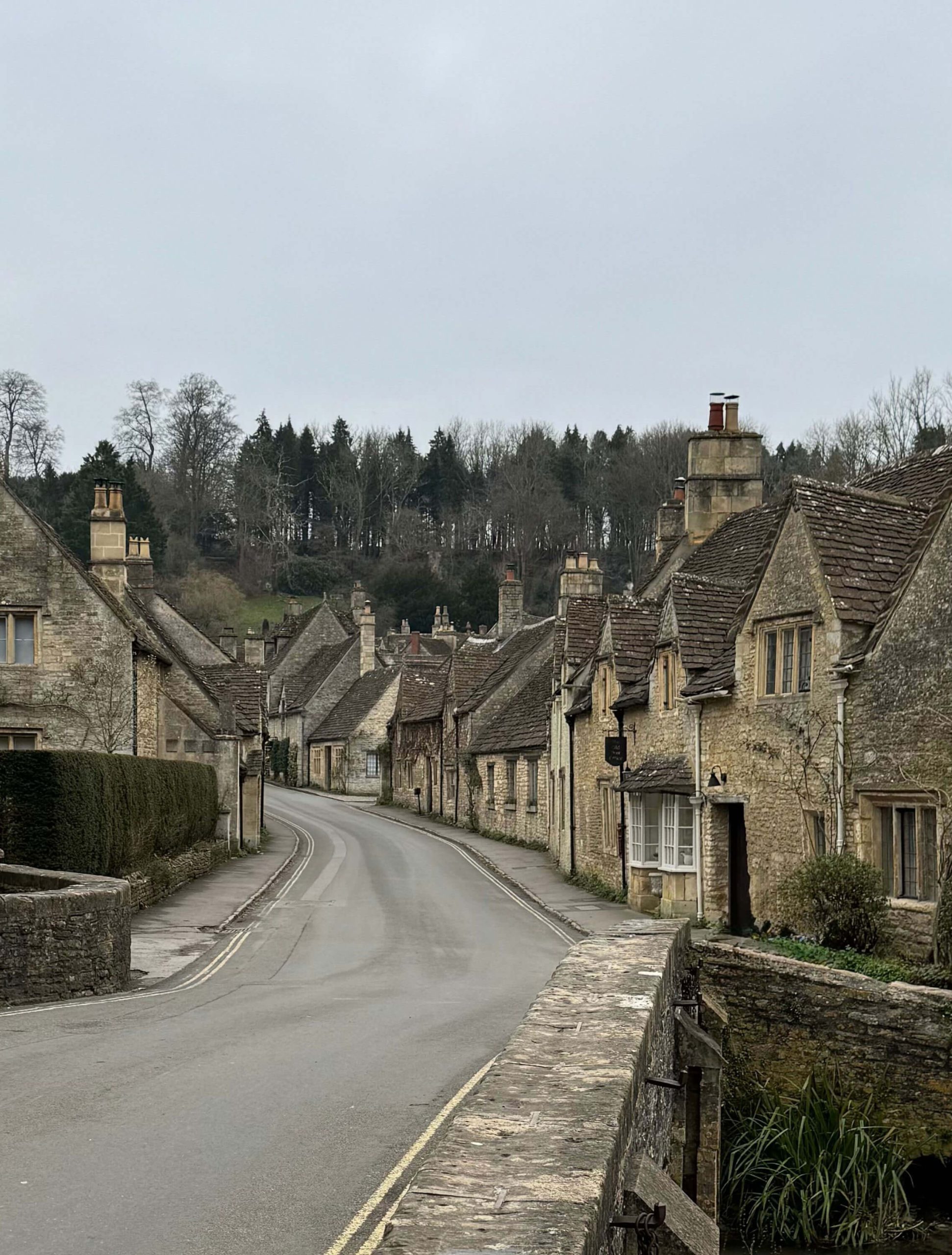
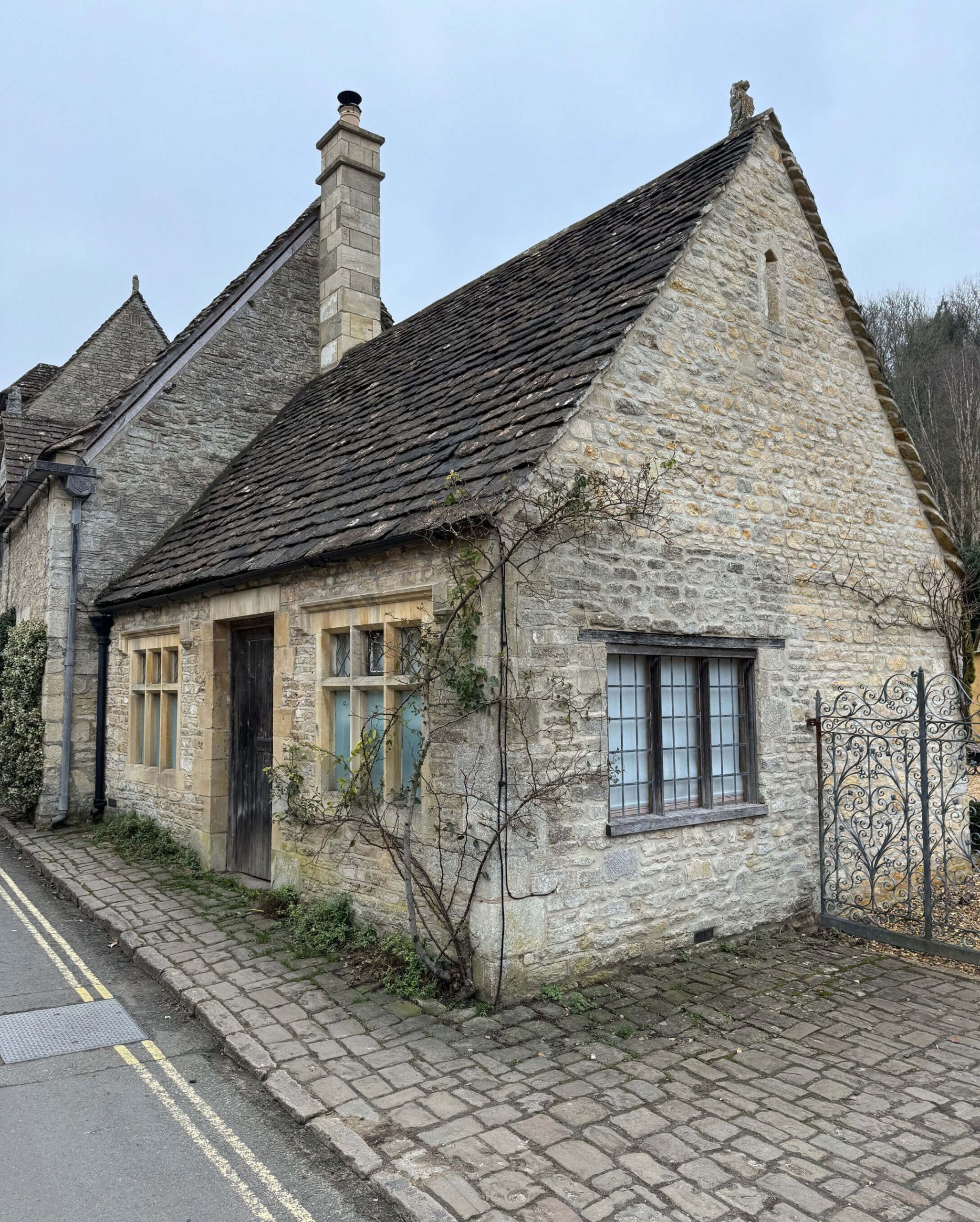
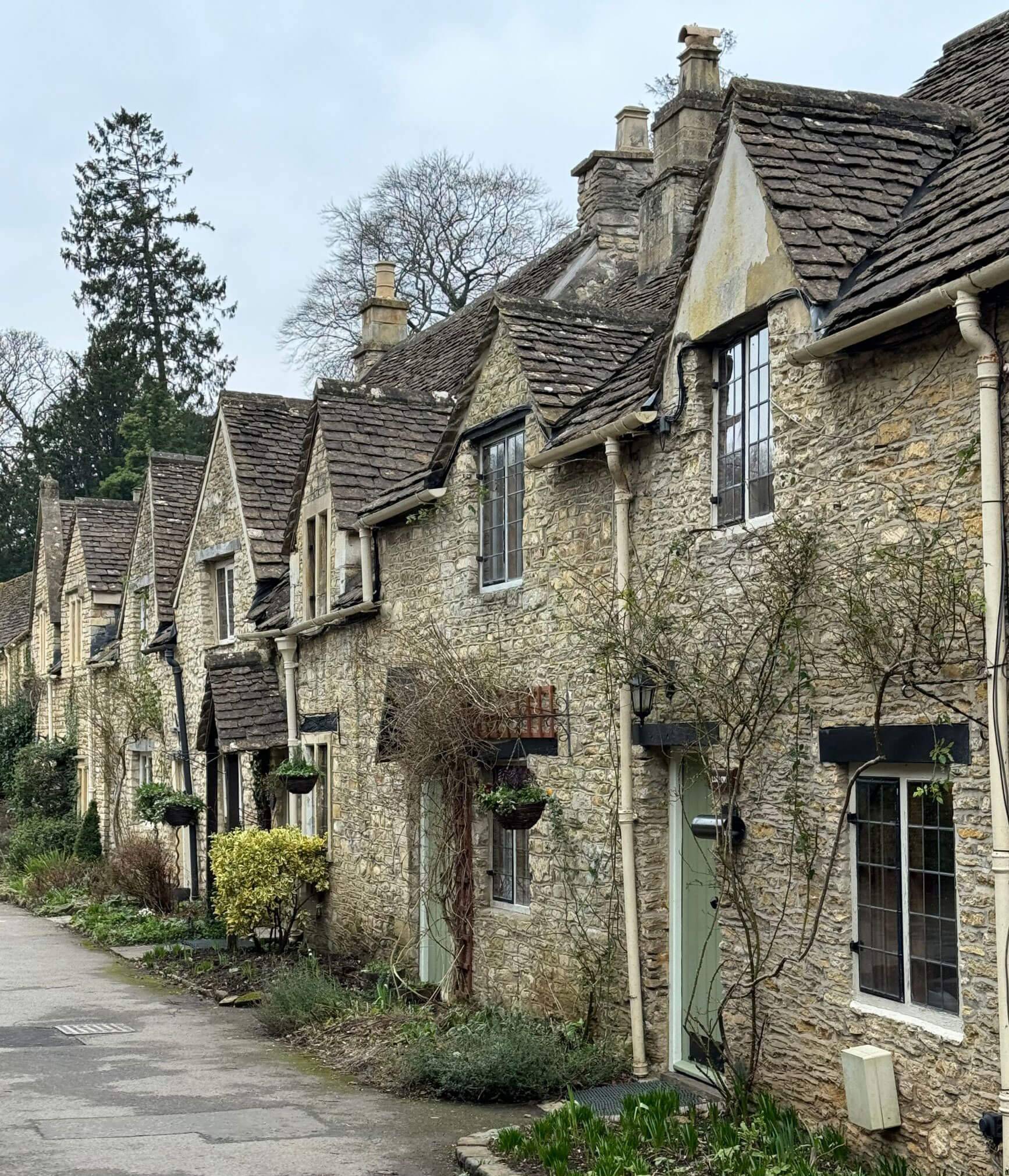
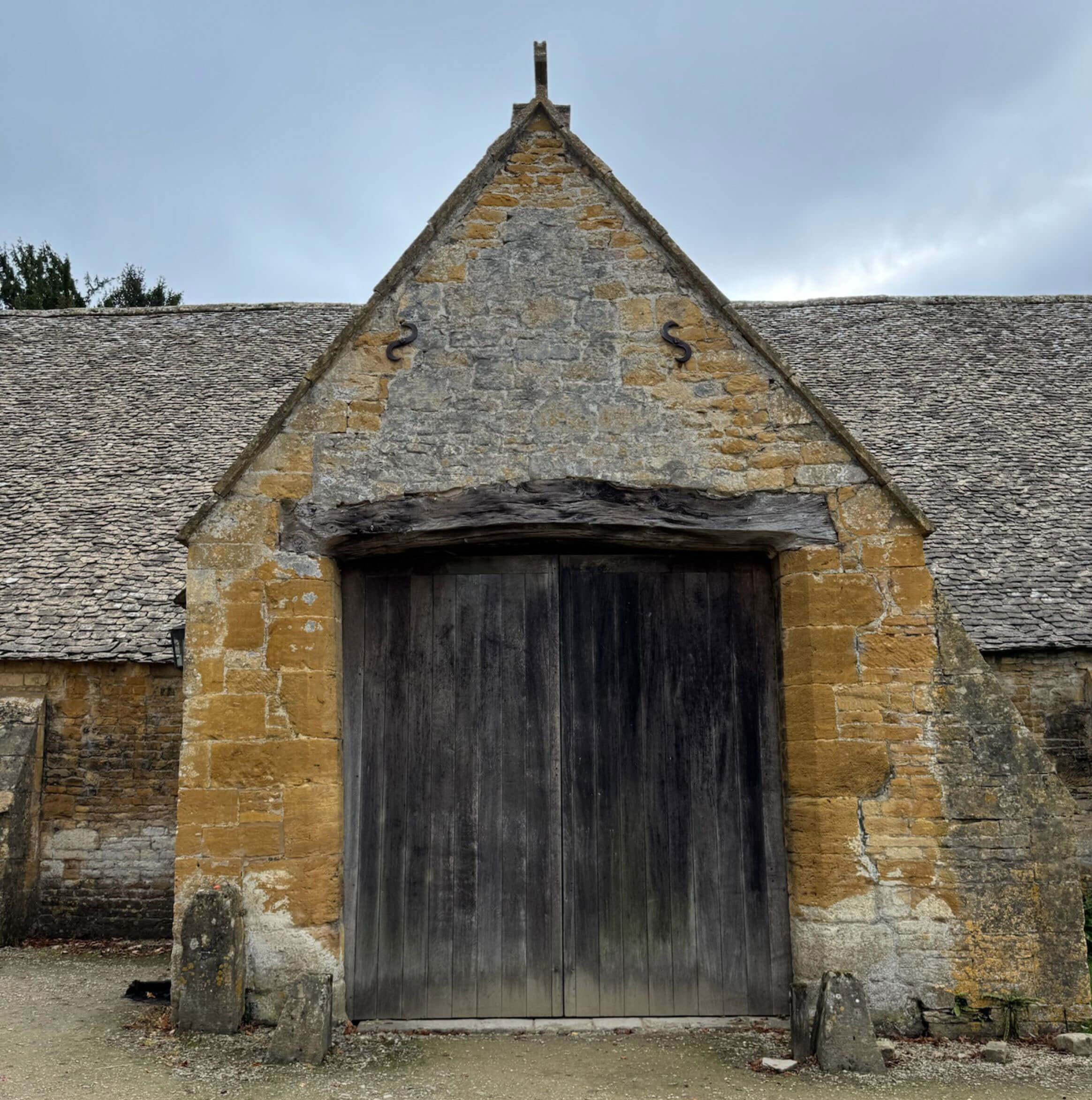
He coined this vernacular through an intuitive urge to capture the character he associated with the environments he experienced in the English countryside. His specific inspiration came from the tiny cottages lining the riverside towns of the Cotswolds, and the utilitarian stone farmhouses that can be found as you drive between these towns.
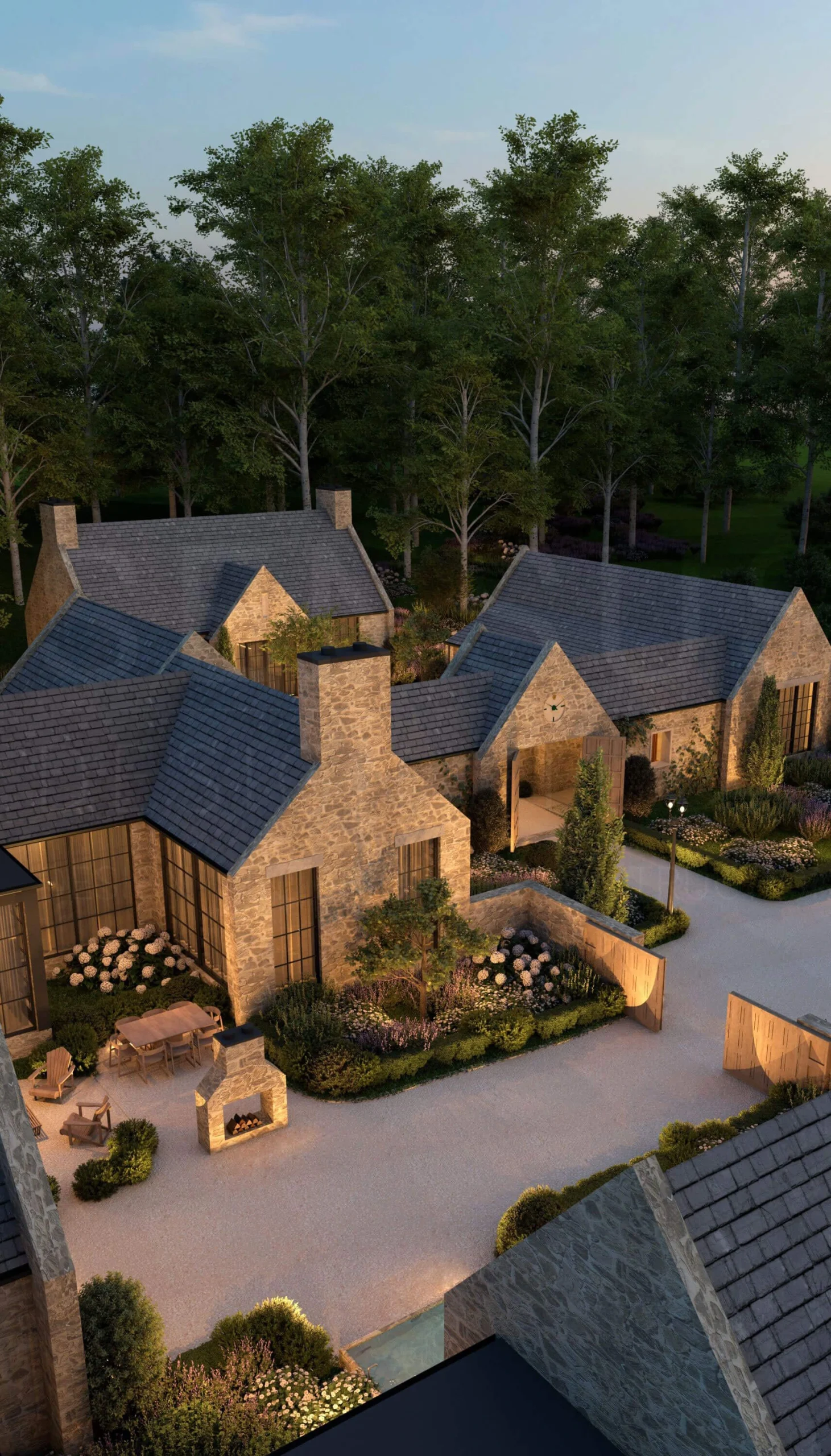
He sought to reimagine these quaint residences in a format that would offer the same grand, sprawling scale as some of his favourite Manors and Country Homes. However, his intention was to develop a set of principles that would make a home of any square footage feel sprawling and rambling within the context of this vernacular.
This page will explore the design principles, stylistic cues, and associated characteristics that define the North American Cotswold, a style that has become synonymous with Jesse Sahlani’s catalogue among a sea of stylistically diverse private residences.
ORIGINS OF THE
DESIGN STYLE
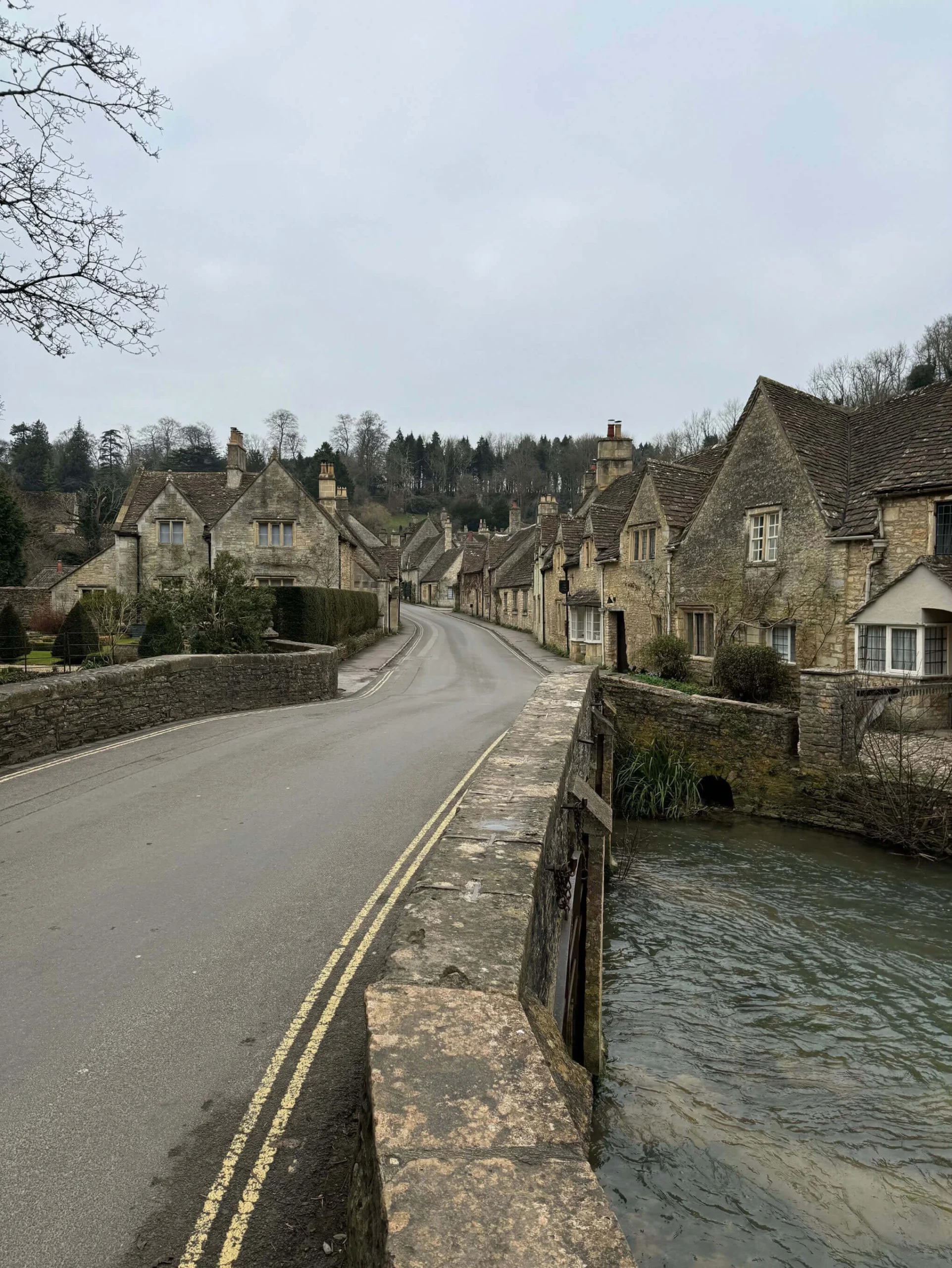
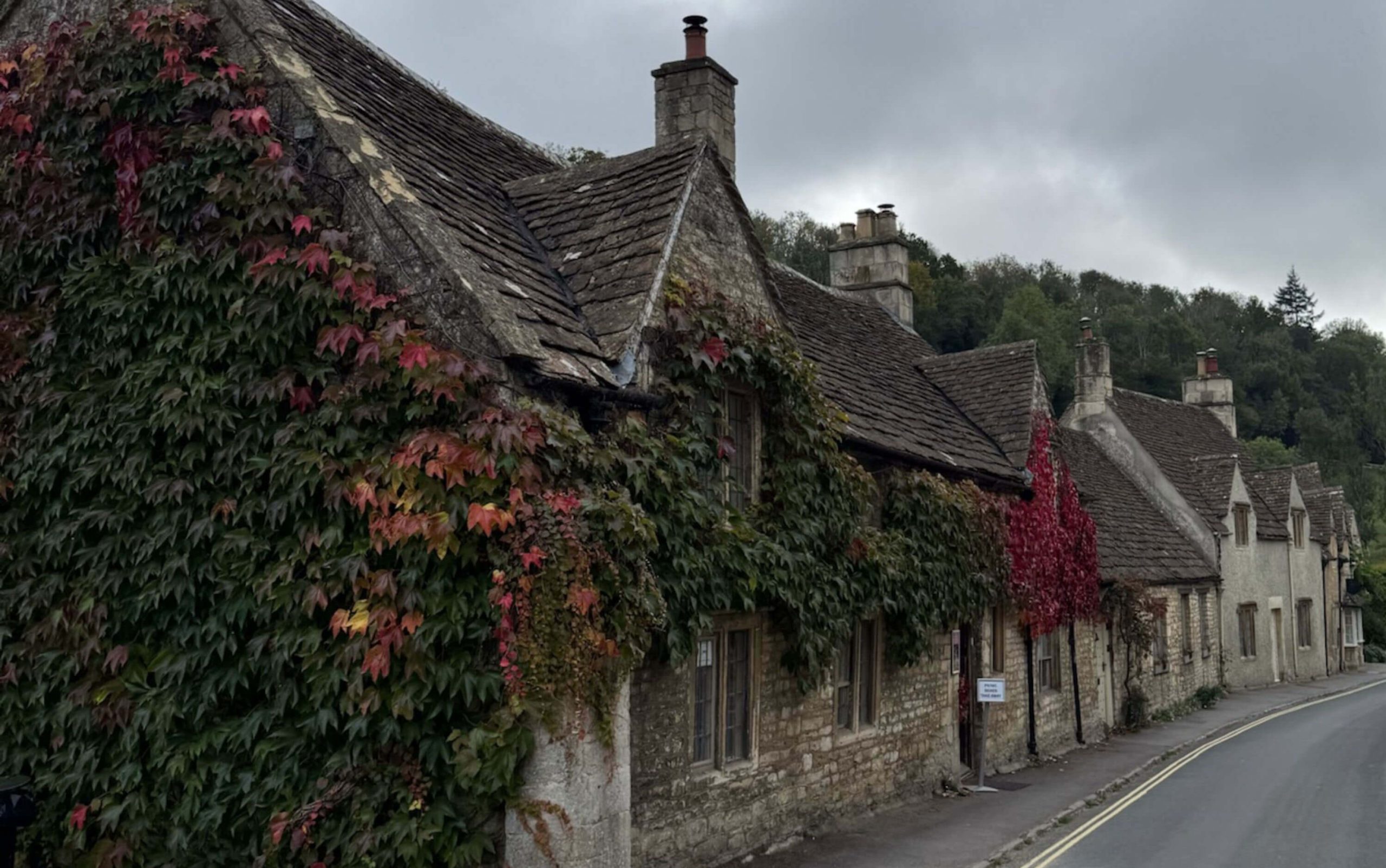
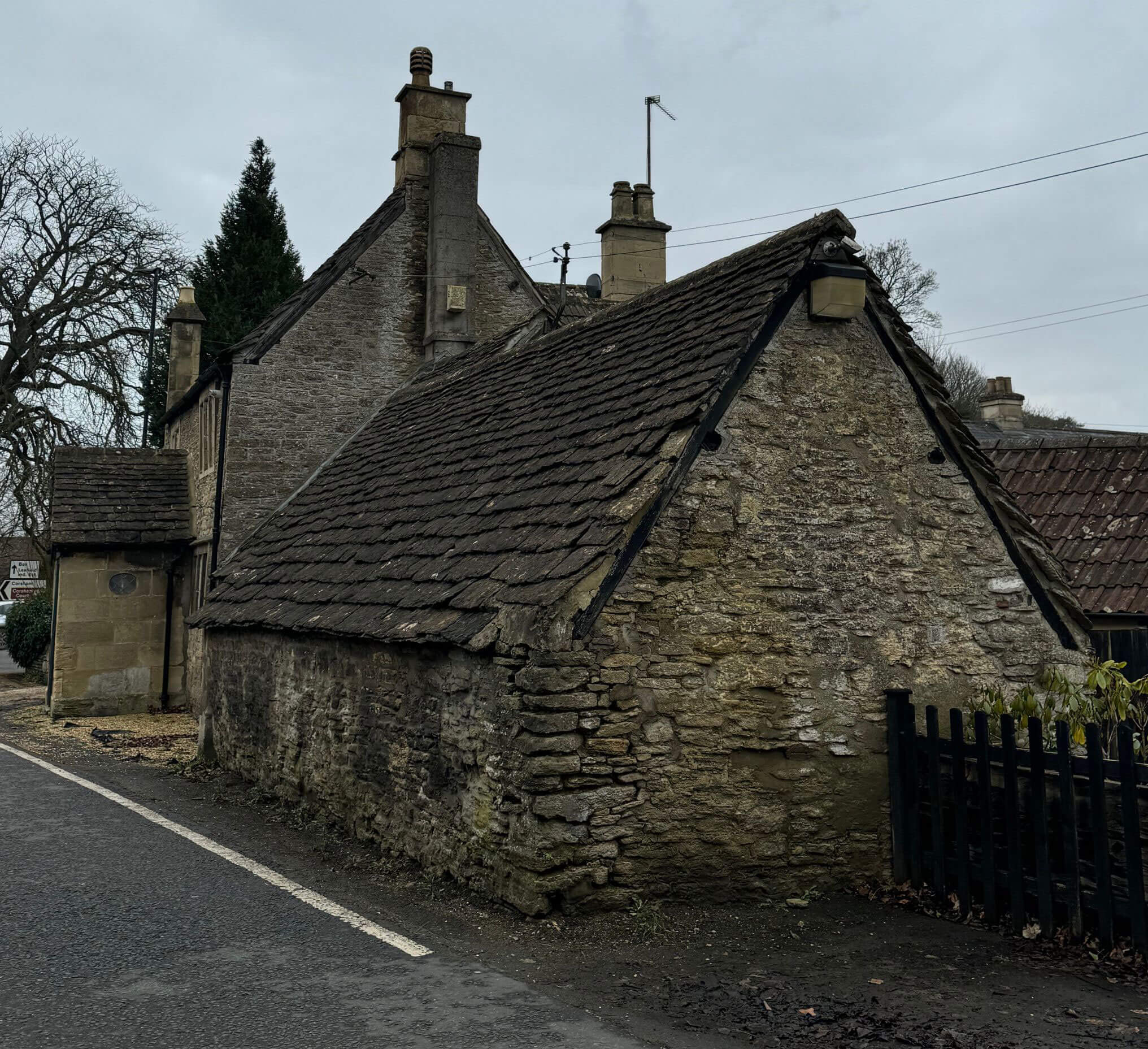
He was struck by how these humble buildings, constructed for utility, conveyed a sense of warmth and permanence that far exceeded their scale. They stood in contrast to the grandeur often associated with North American luxury homes, offering something altogether more grounded, understated, and undeniably charming.
DEFINING
DESIGN
PRINCIPLES
PROPORTIONS
THAT FEEL
QUAINT AND
RAMBLING
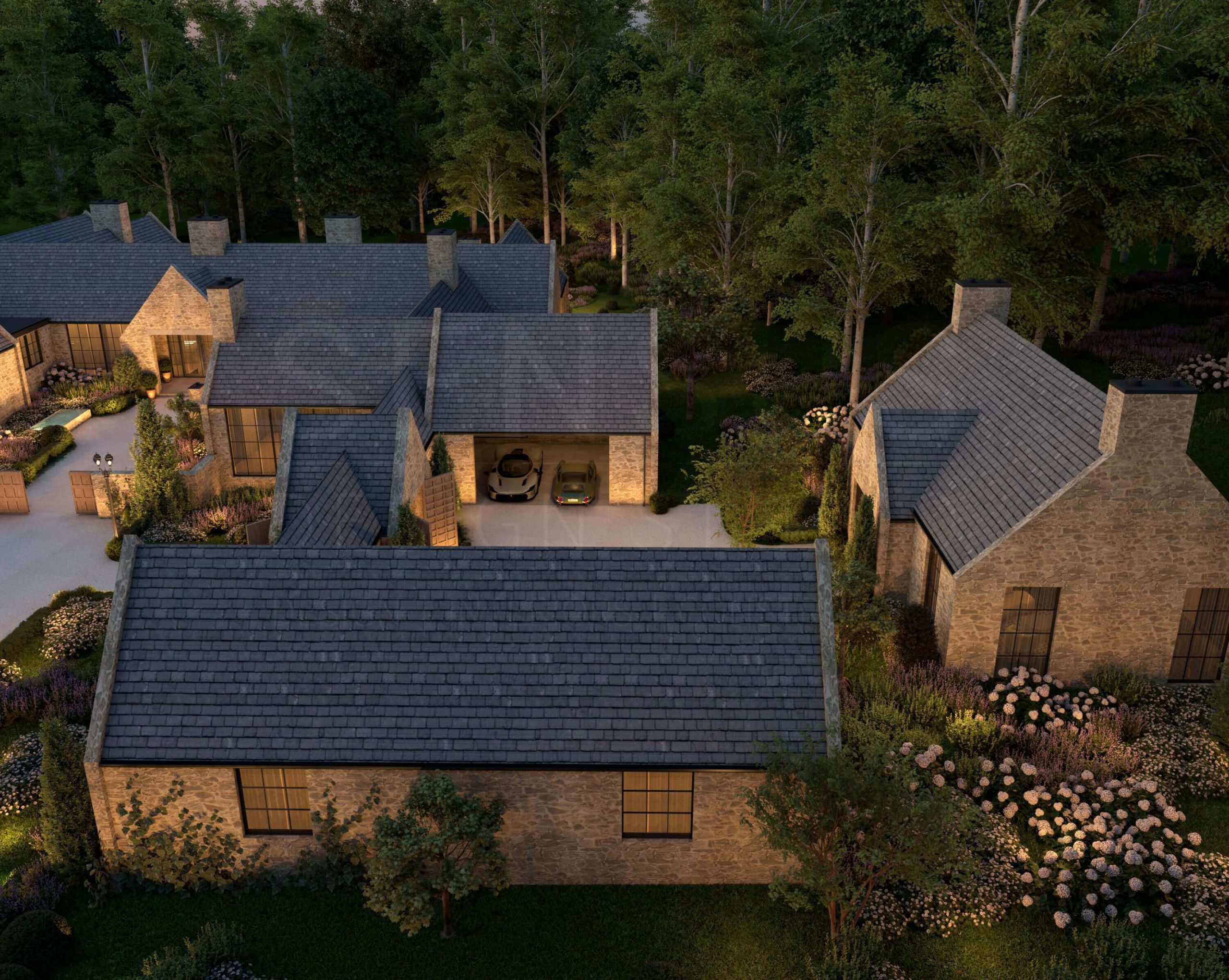
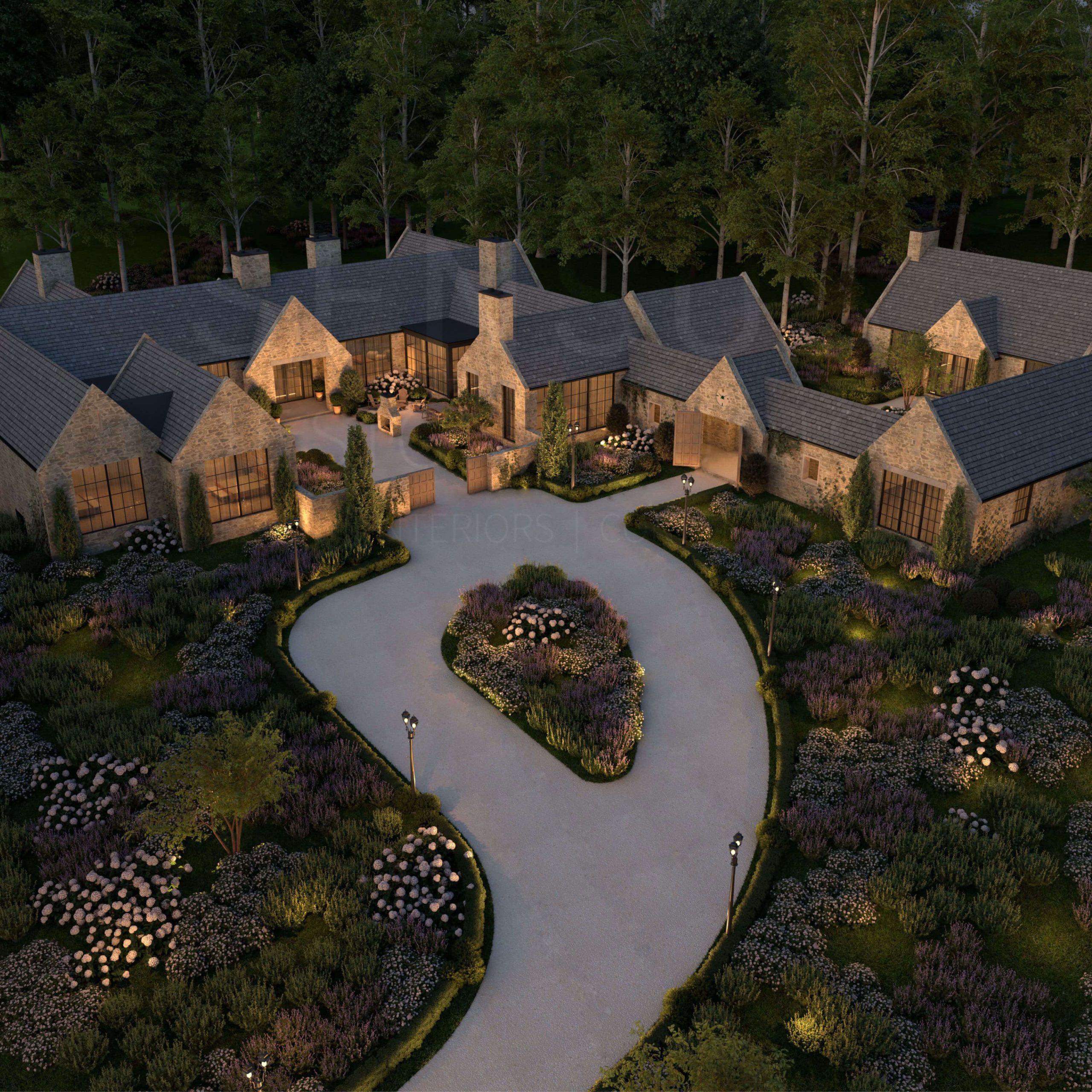
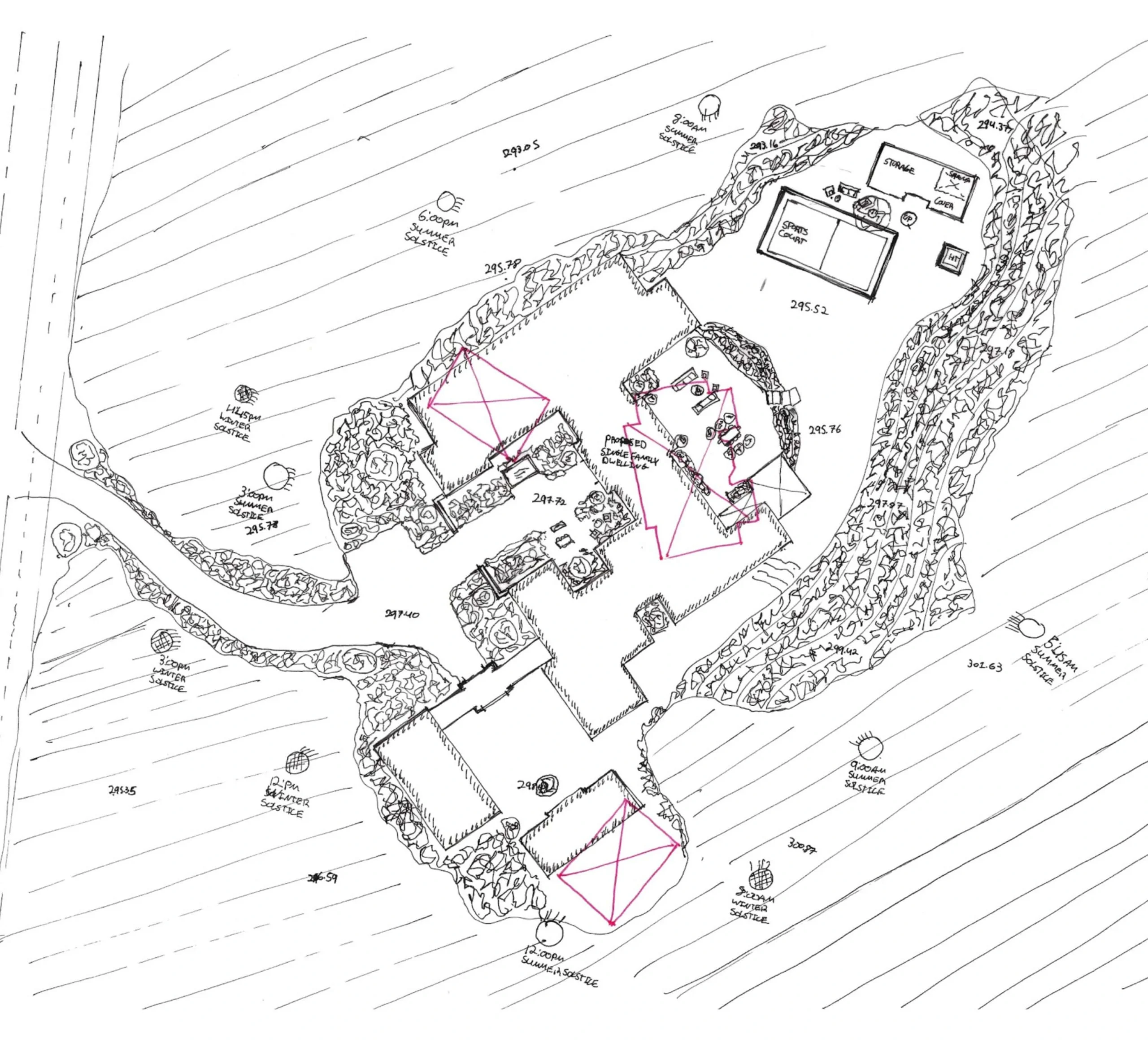
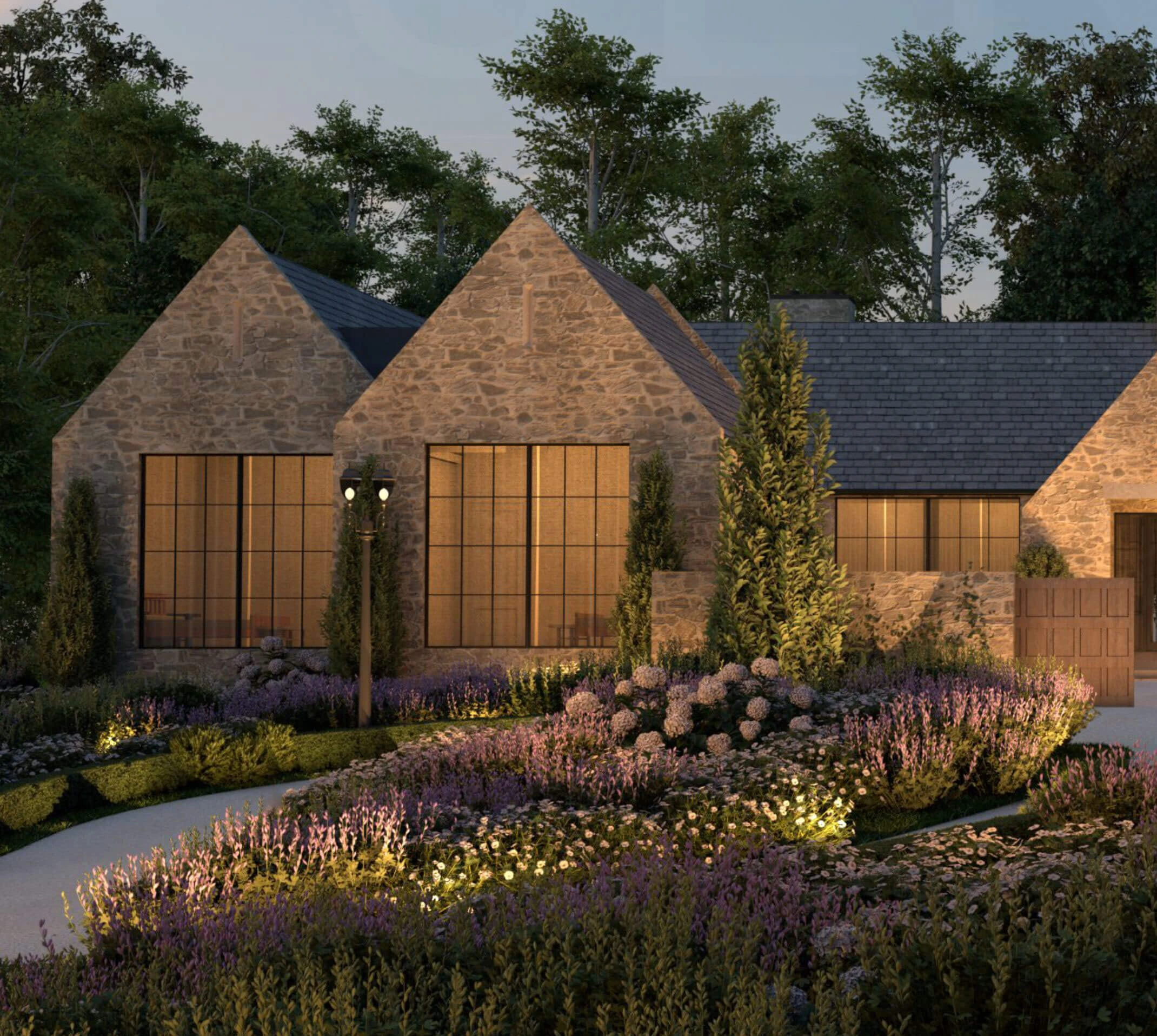
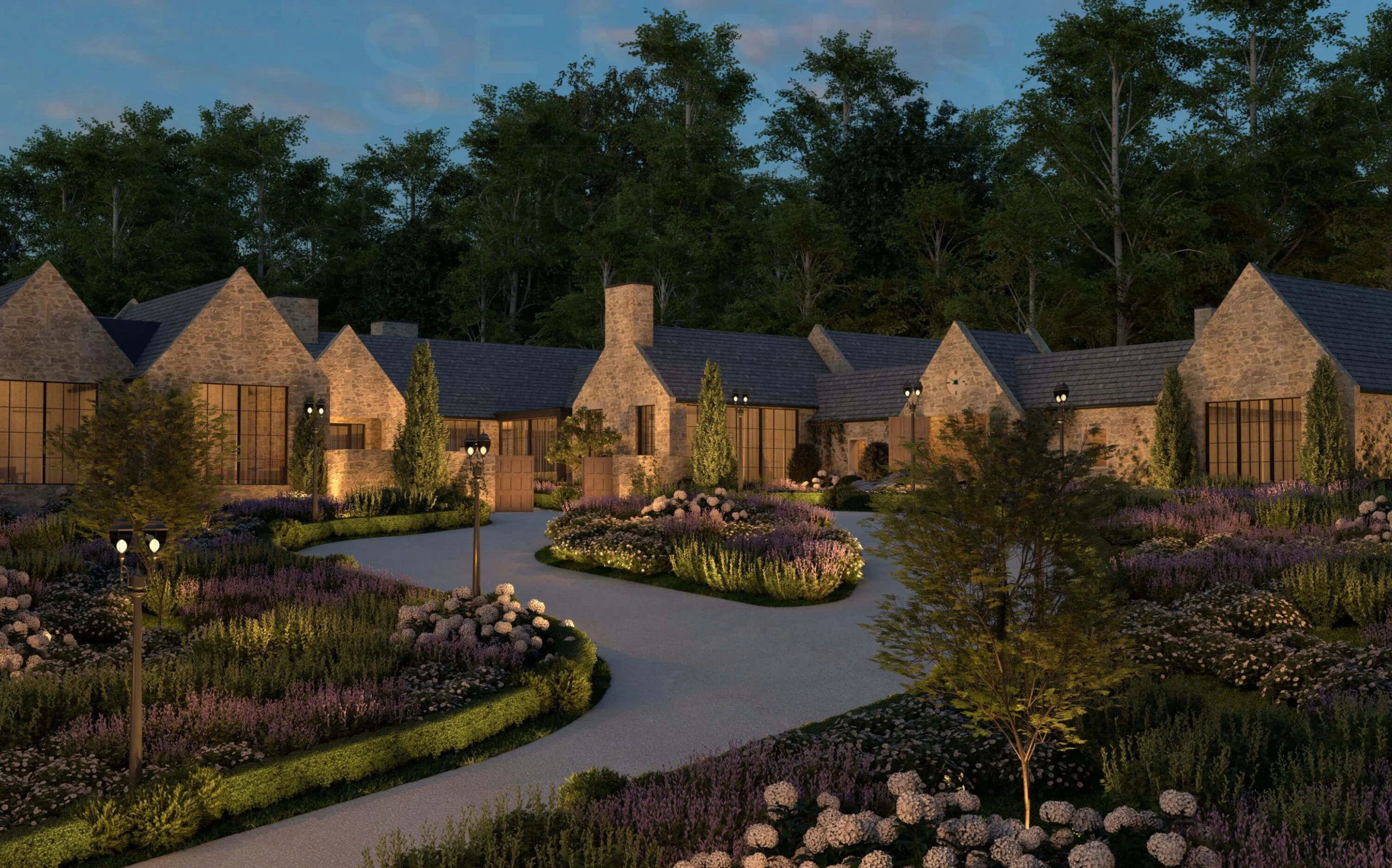
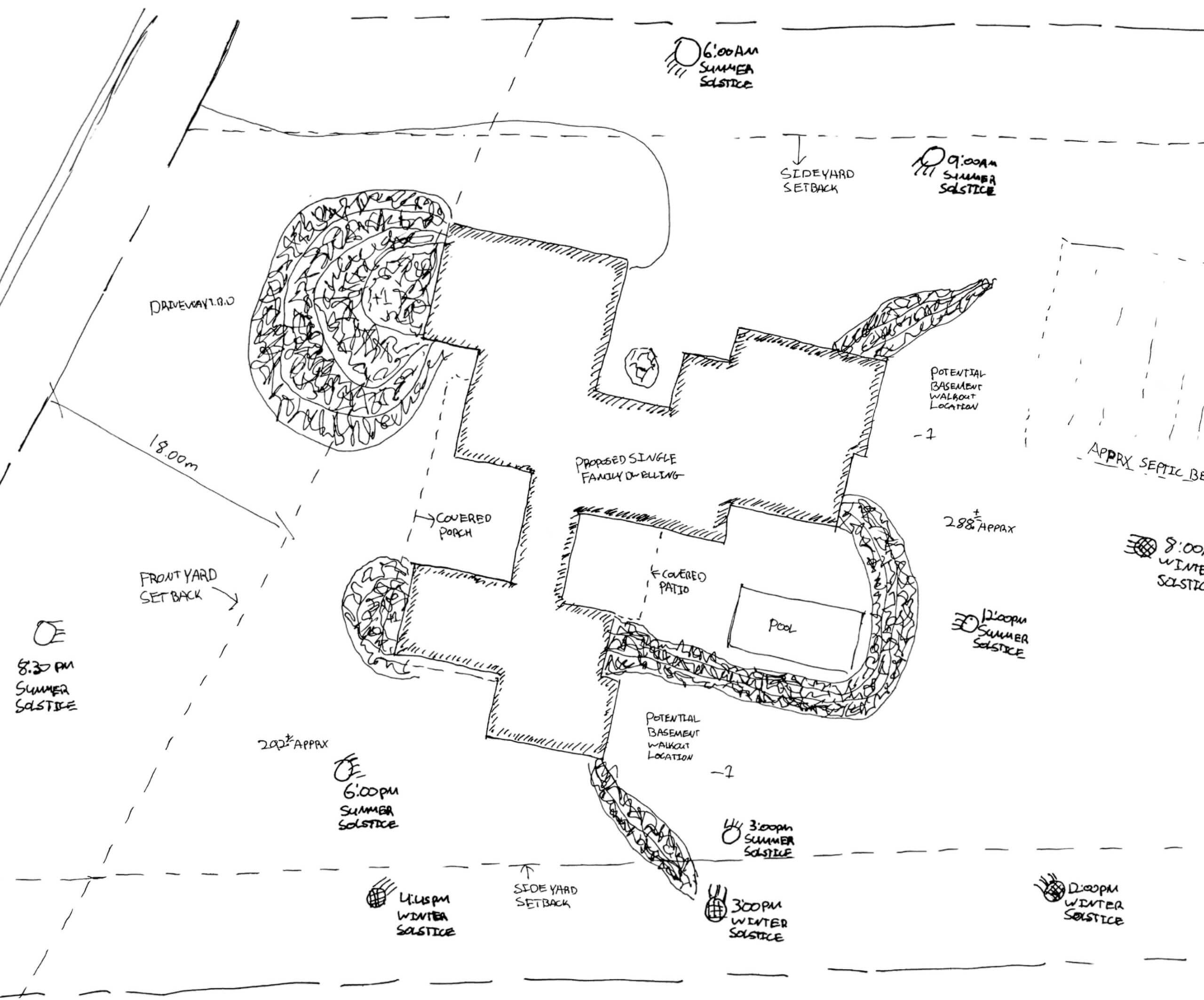
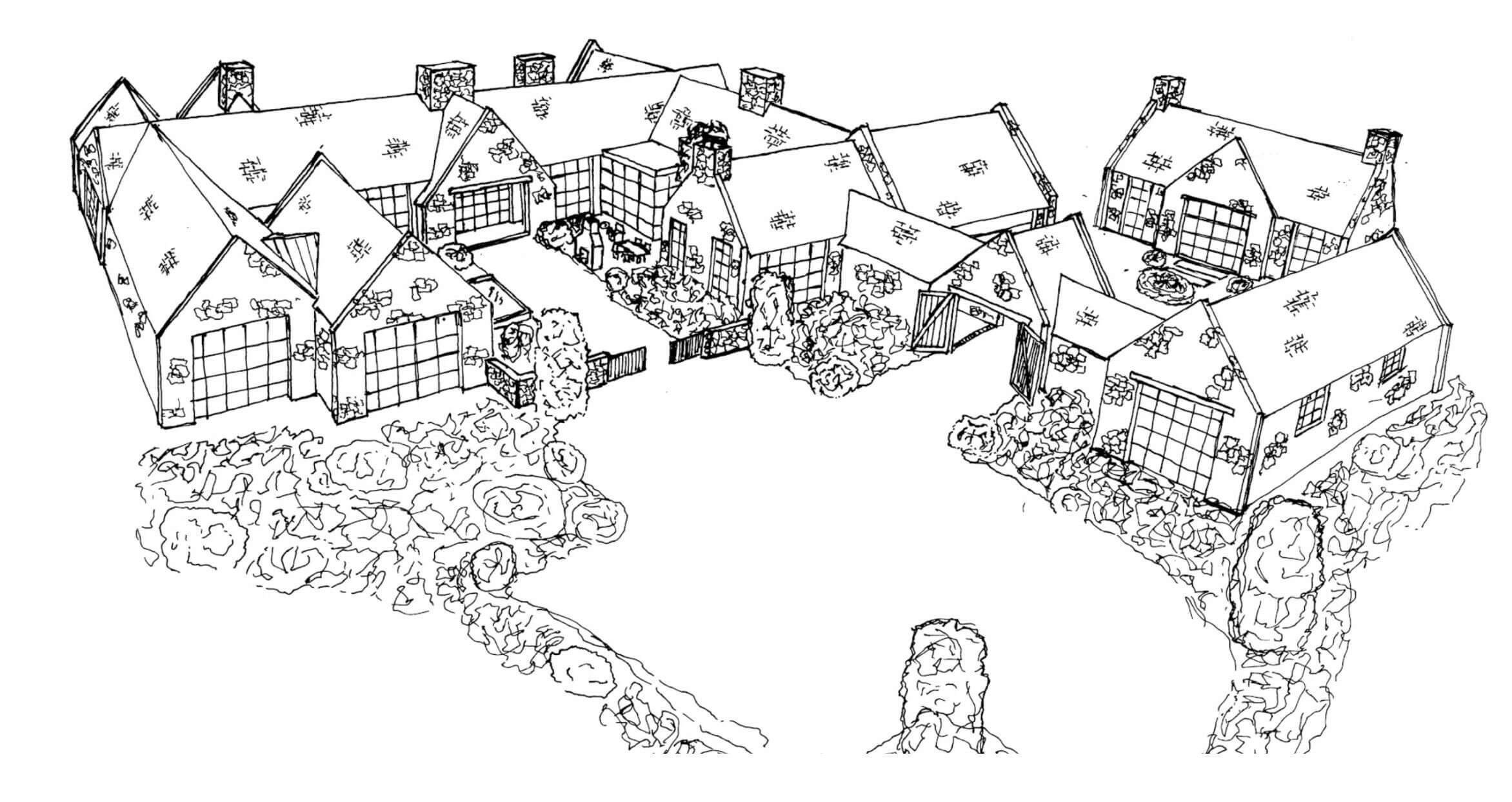
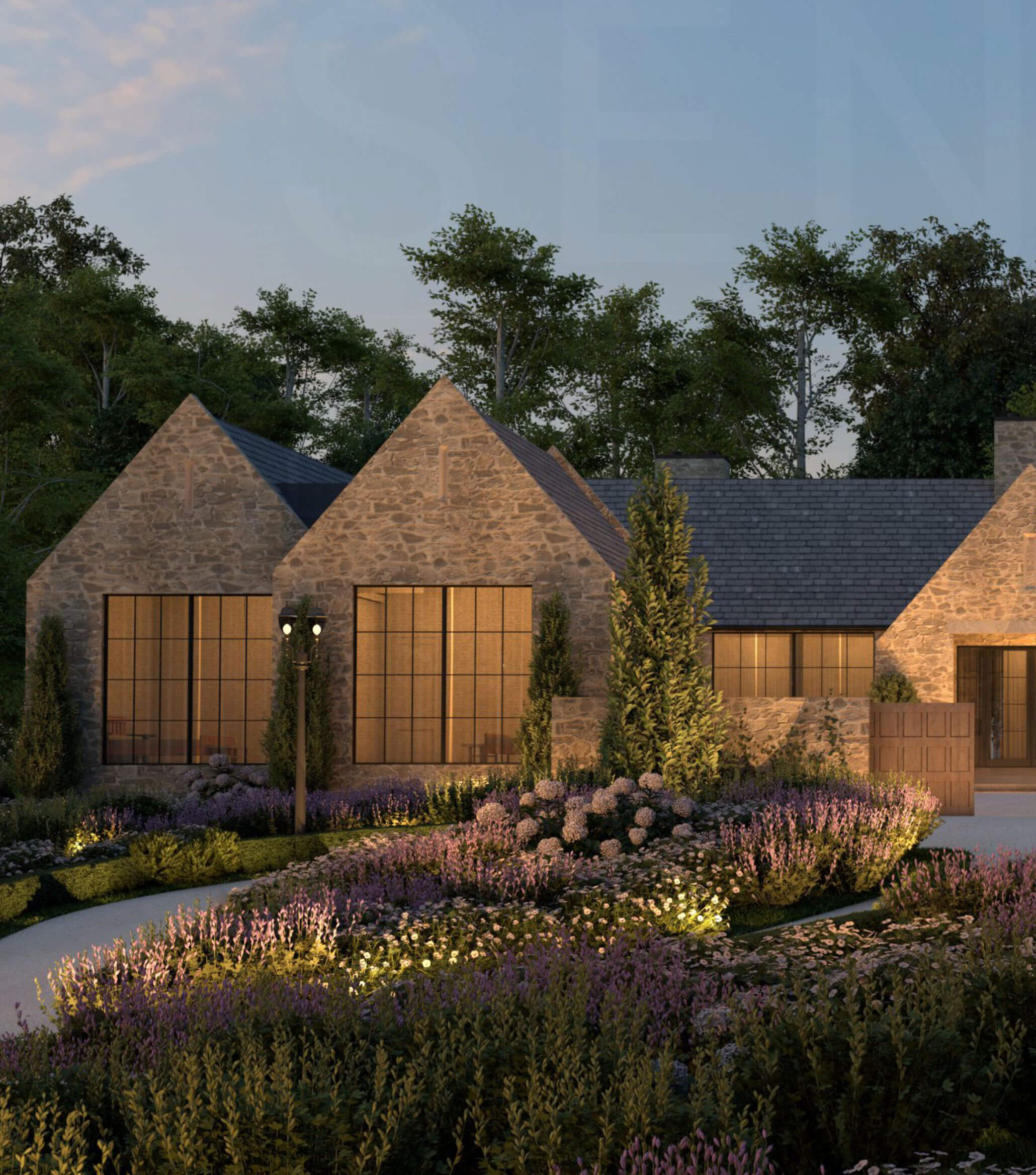
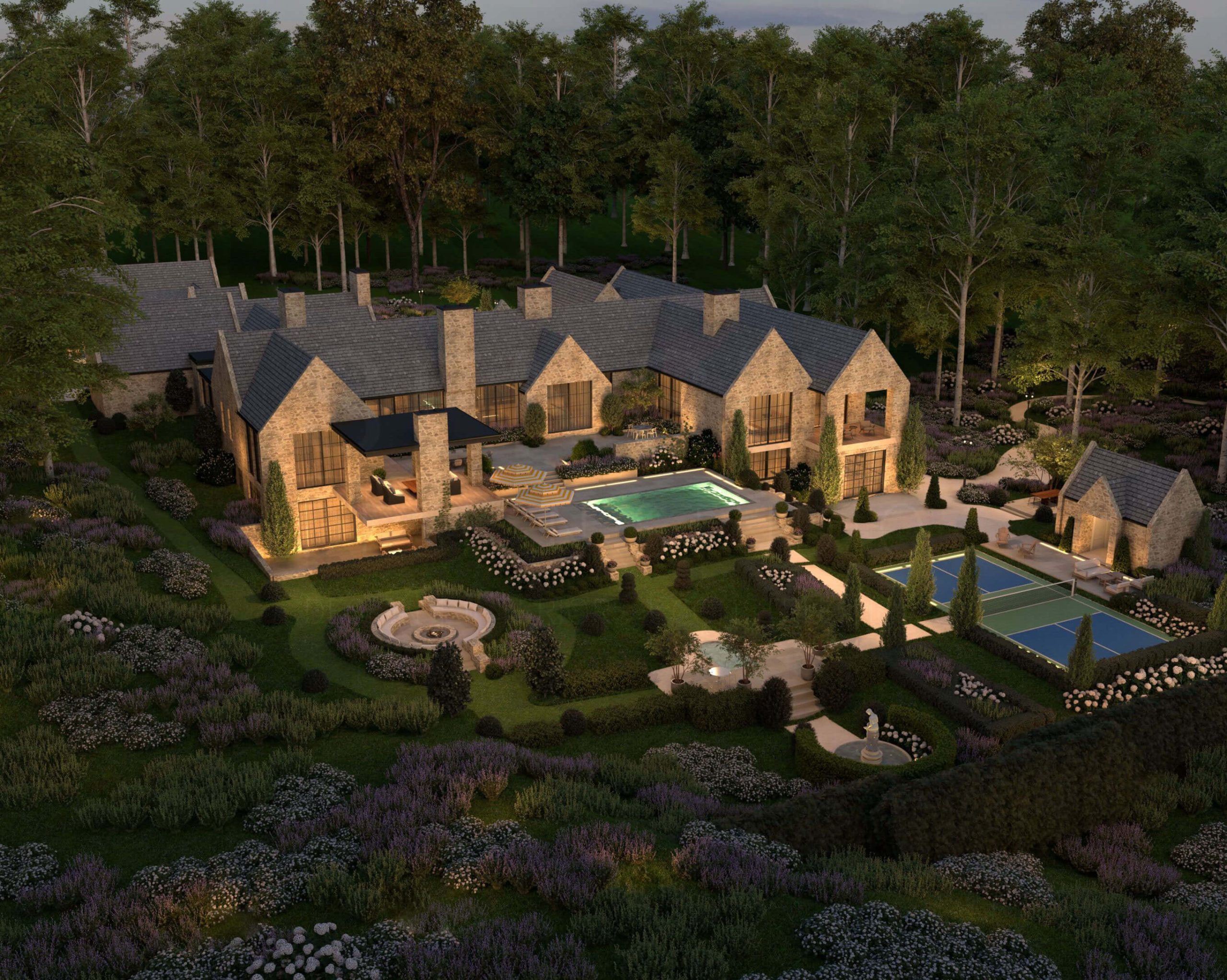
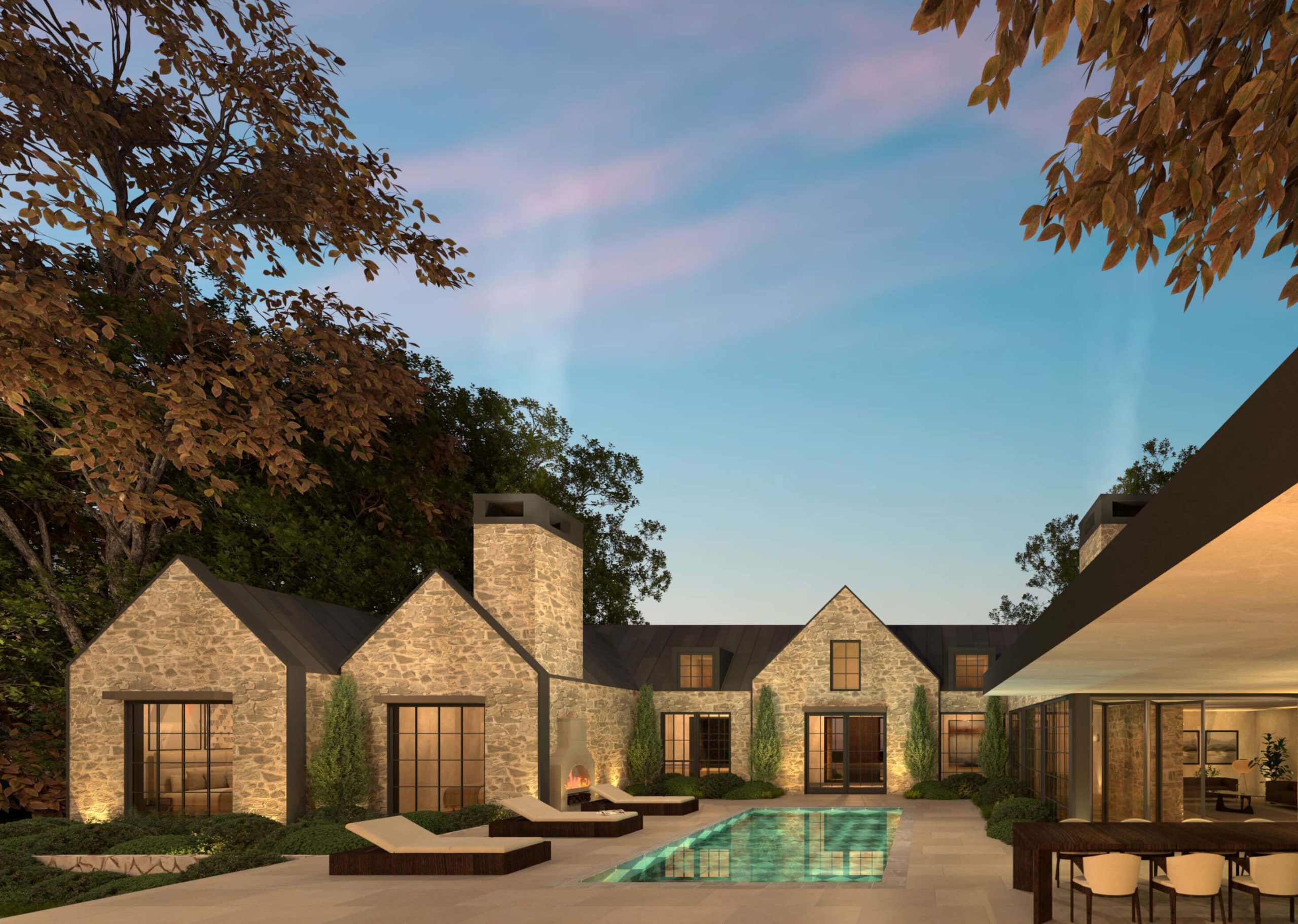
At the heart of the North American Cotswold design language is a commitment to low, wide proportions that feel quaint, grounded, and intentionally rambling. Jesse invented a way to stretch the architecture horizontally. He created the "rambling wing" concept, breaking a massive mansion into smaller, connected pieces so it never feels looming or commercial. In doing so, he proved that a 10,000 sq. ft. home could still feel like a quaint cottage if the proportions were handled correctly.
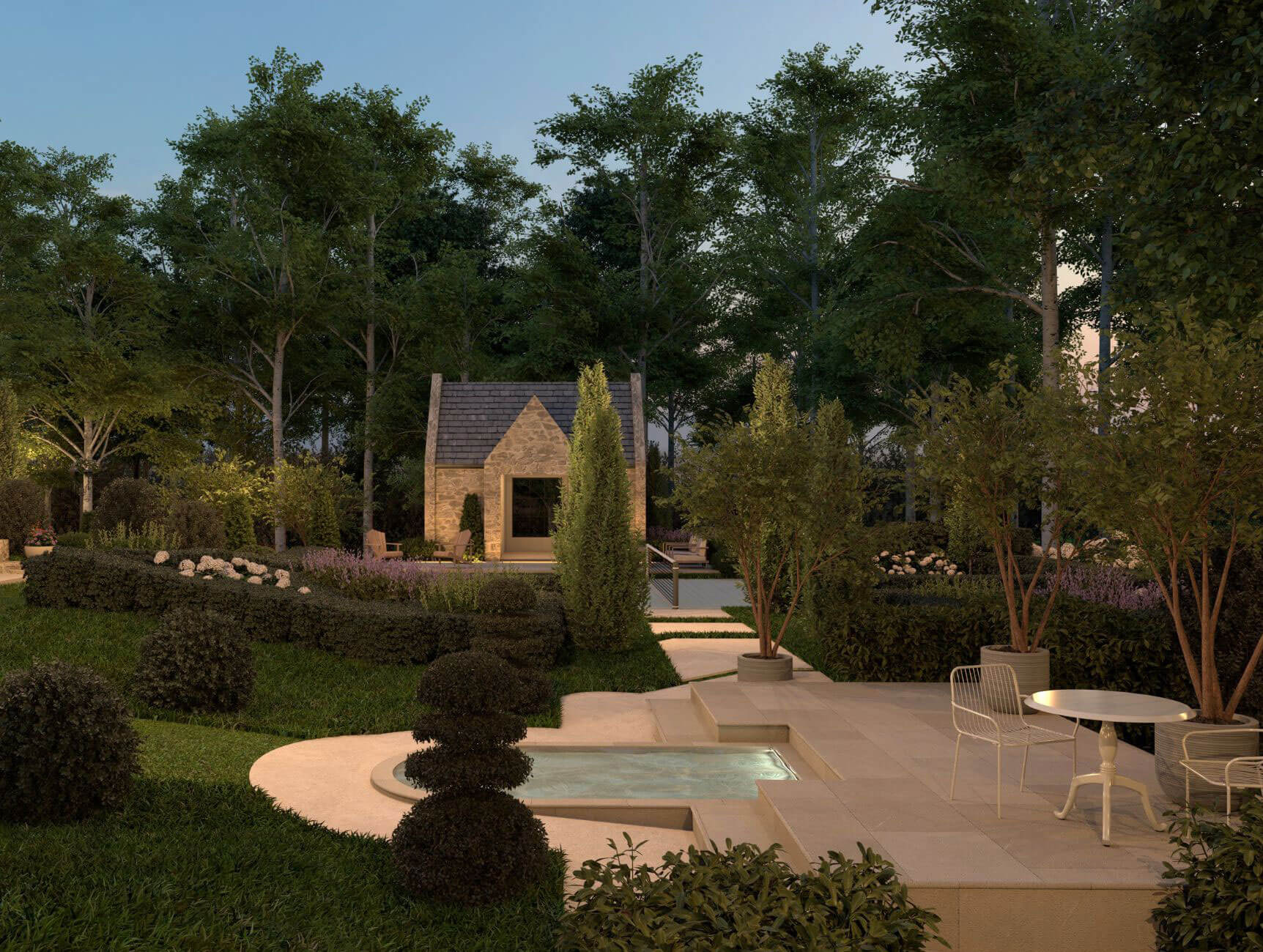
Rather than reaching upward, these forms settle into their surroundings, creating a sense of quiet stature. Jesse’s intention was for homes of this design style to feel nestled into the land, as if they were placed there before the surrounding foliage, all while working with the natural topography to complement the scale of the setting.
This principle draws direct inspiration from the historic villages and countryside estates of rural England, where multiple smaller homes stretch horizontally across the landscape organically.
A TIMELESSLY
RUSTIC STONE
FACADE
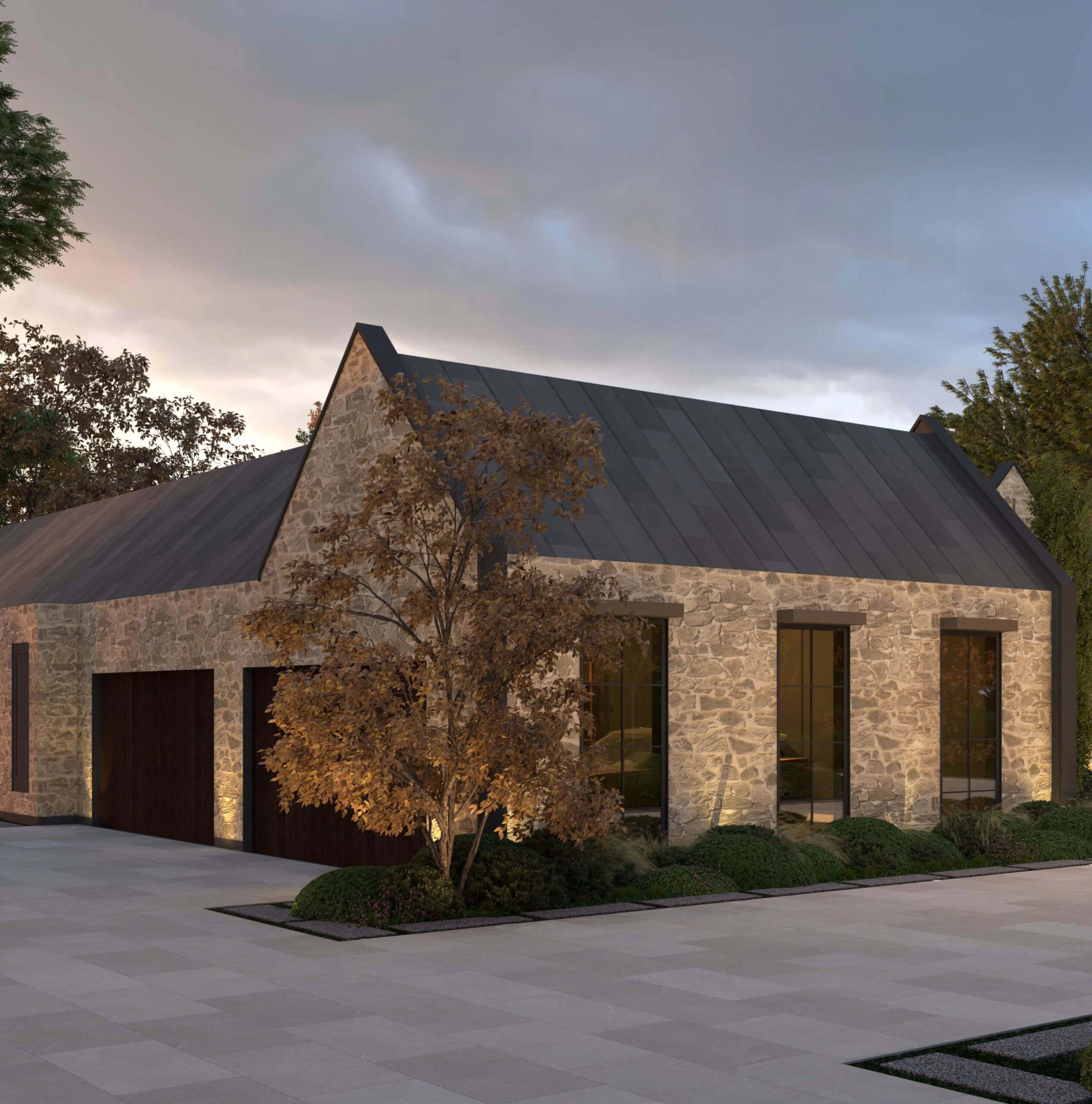
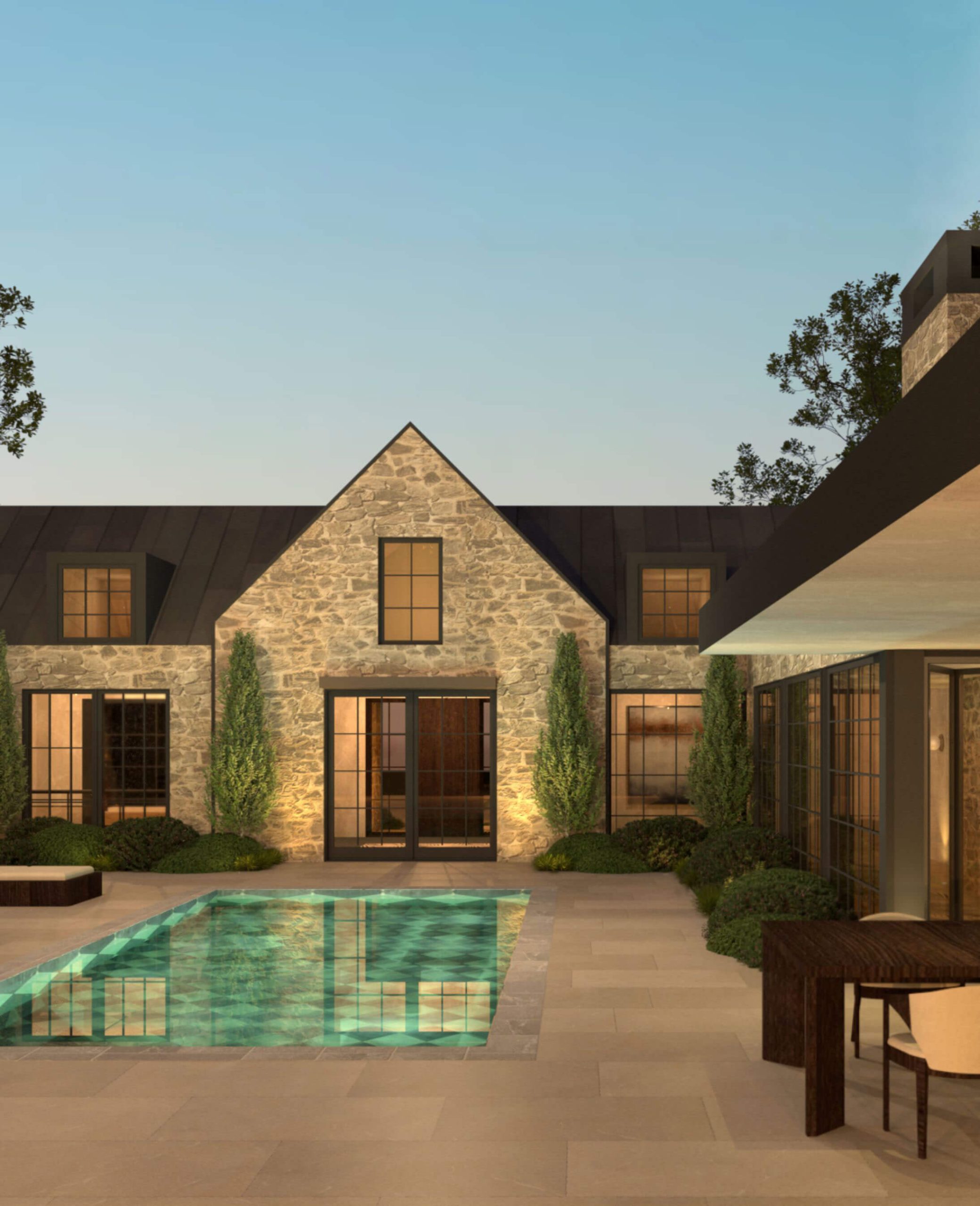
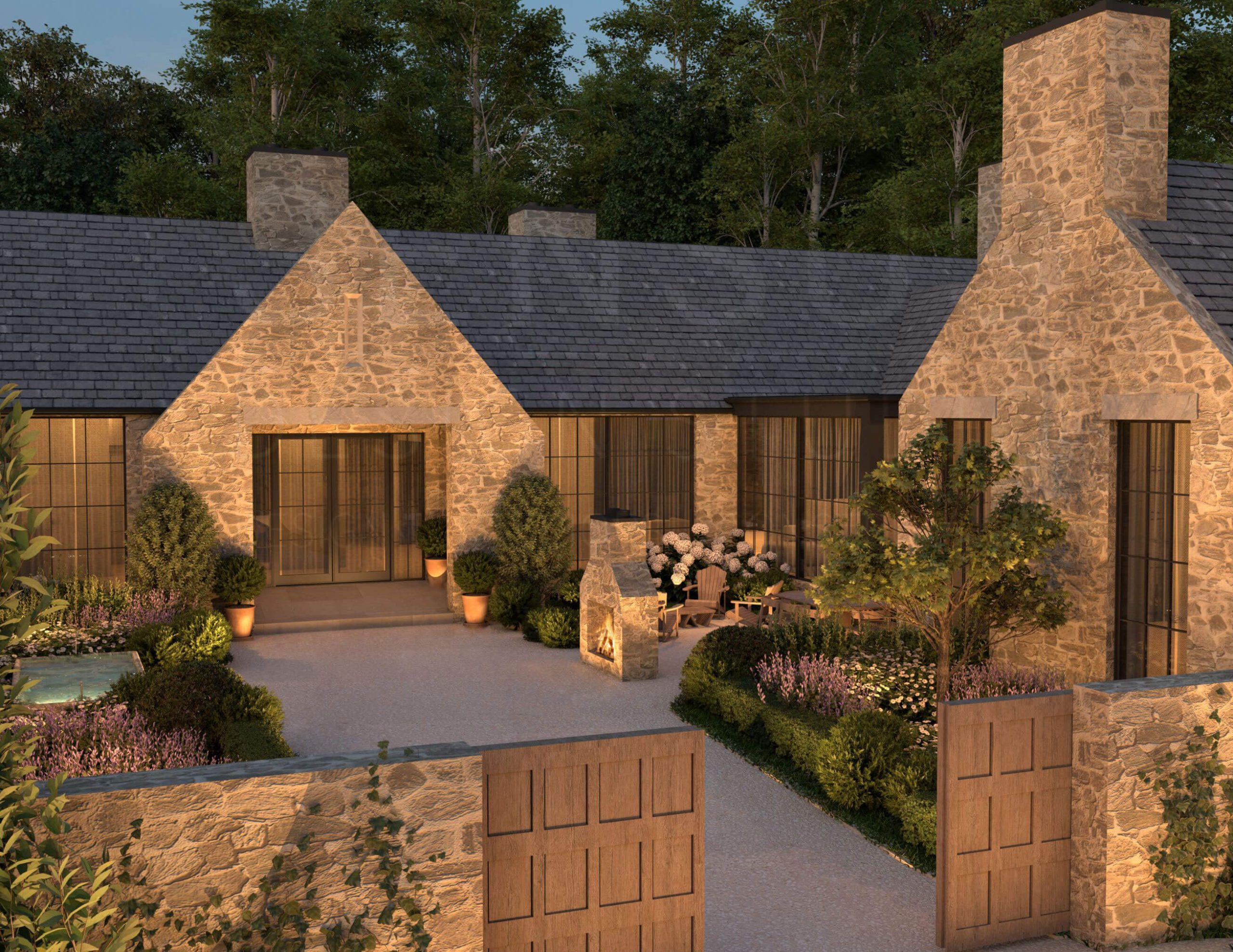
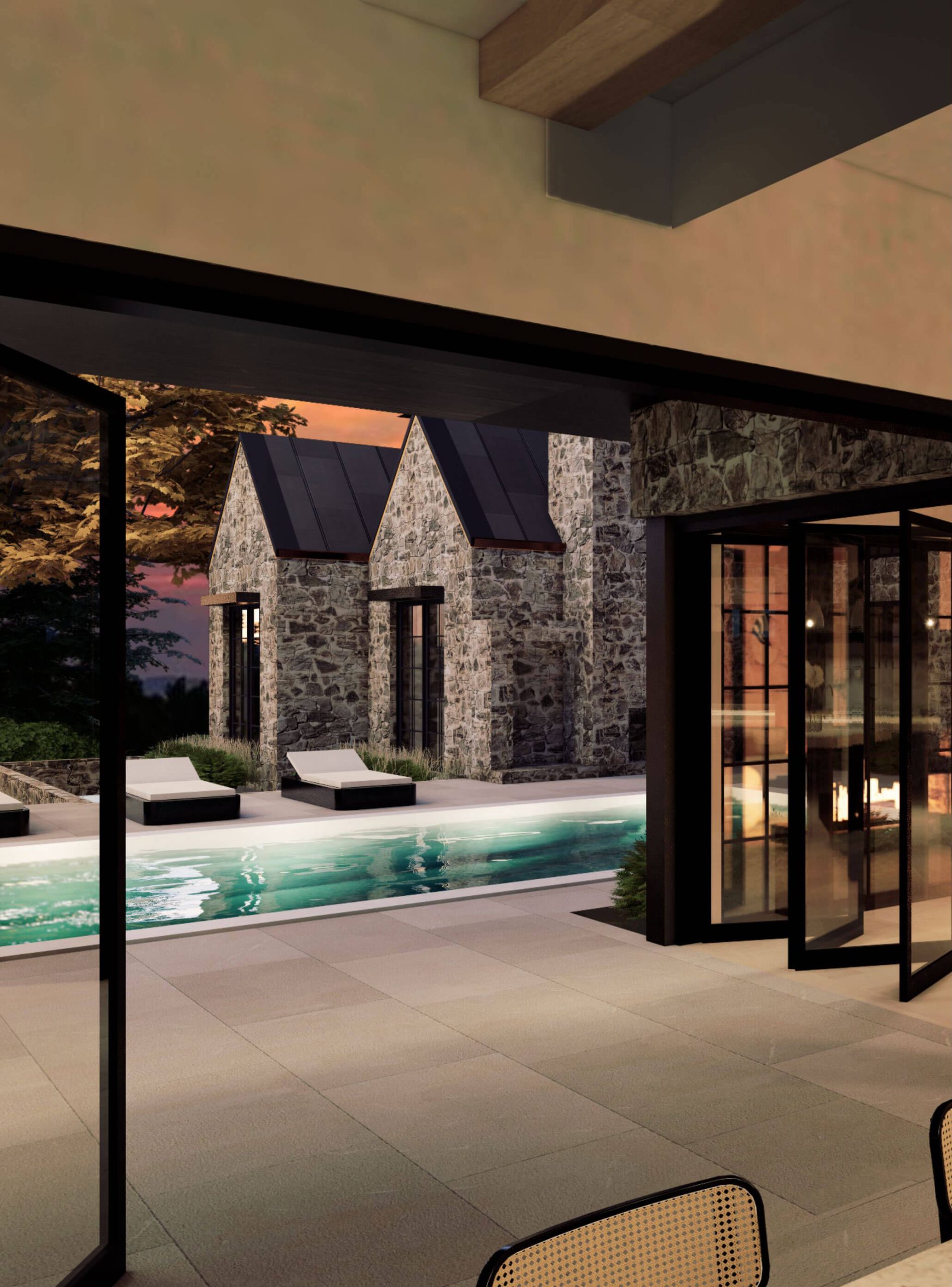
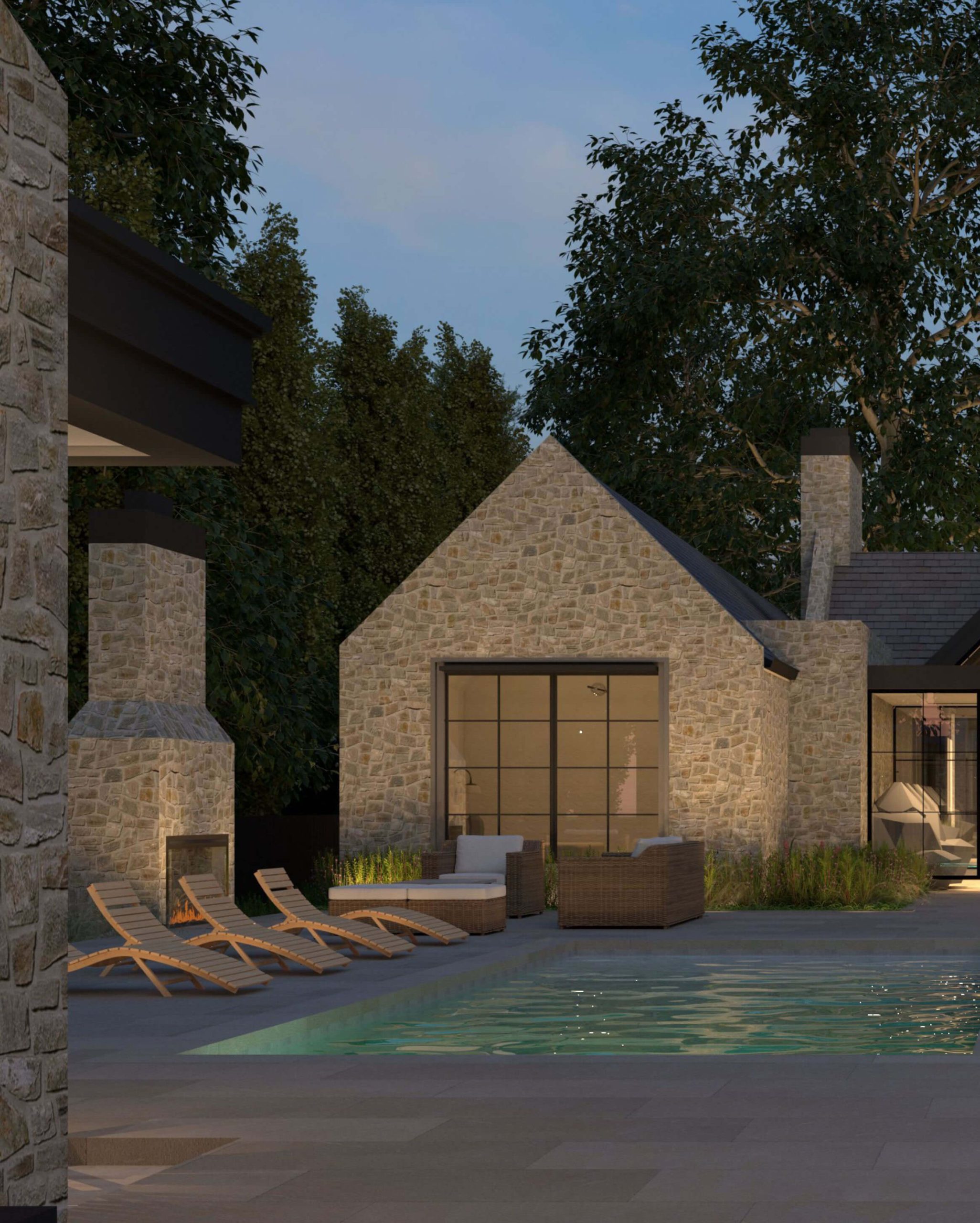
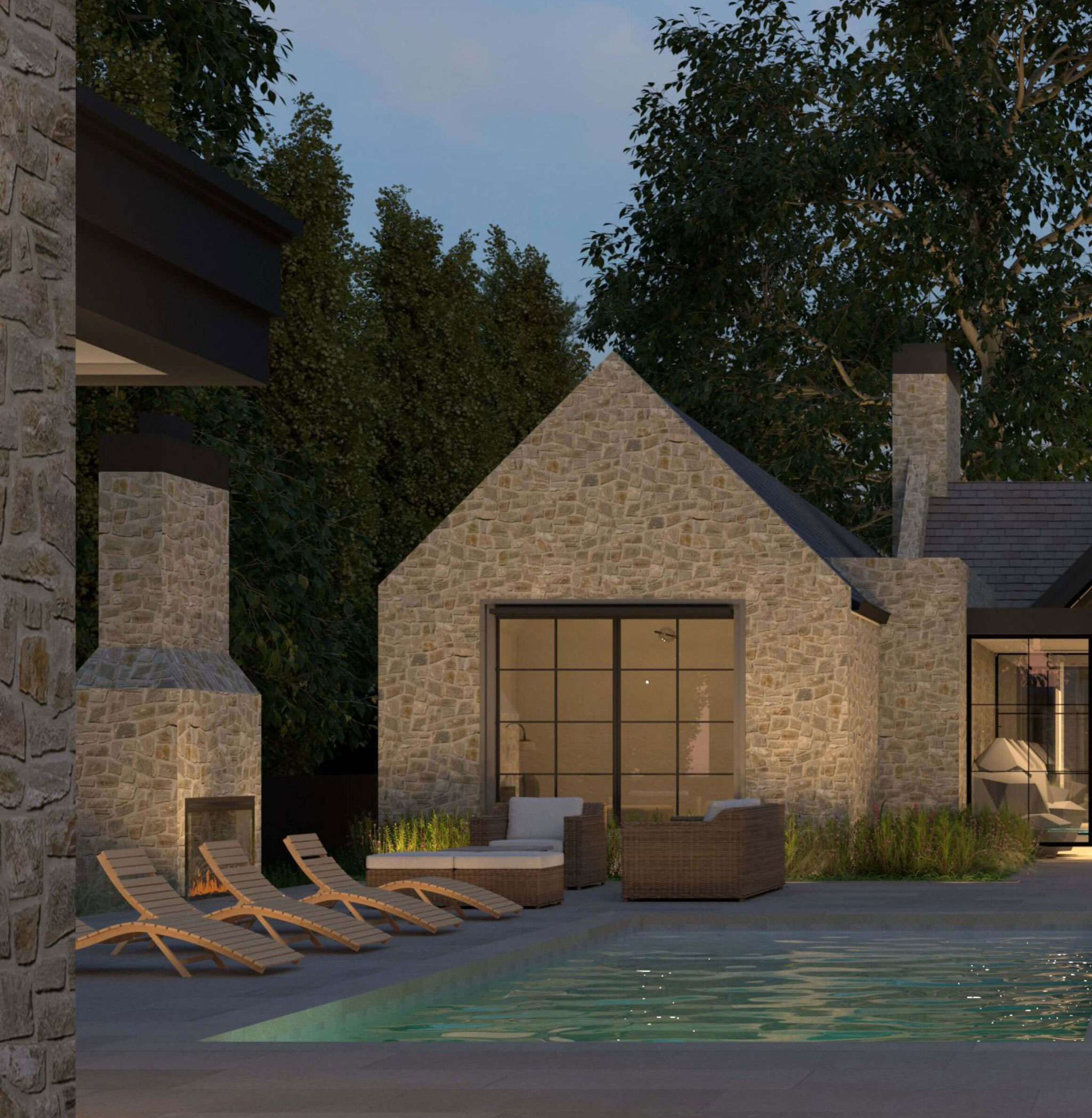
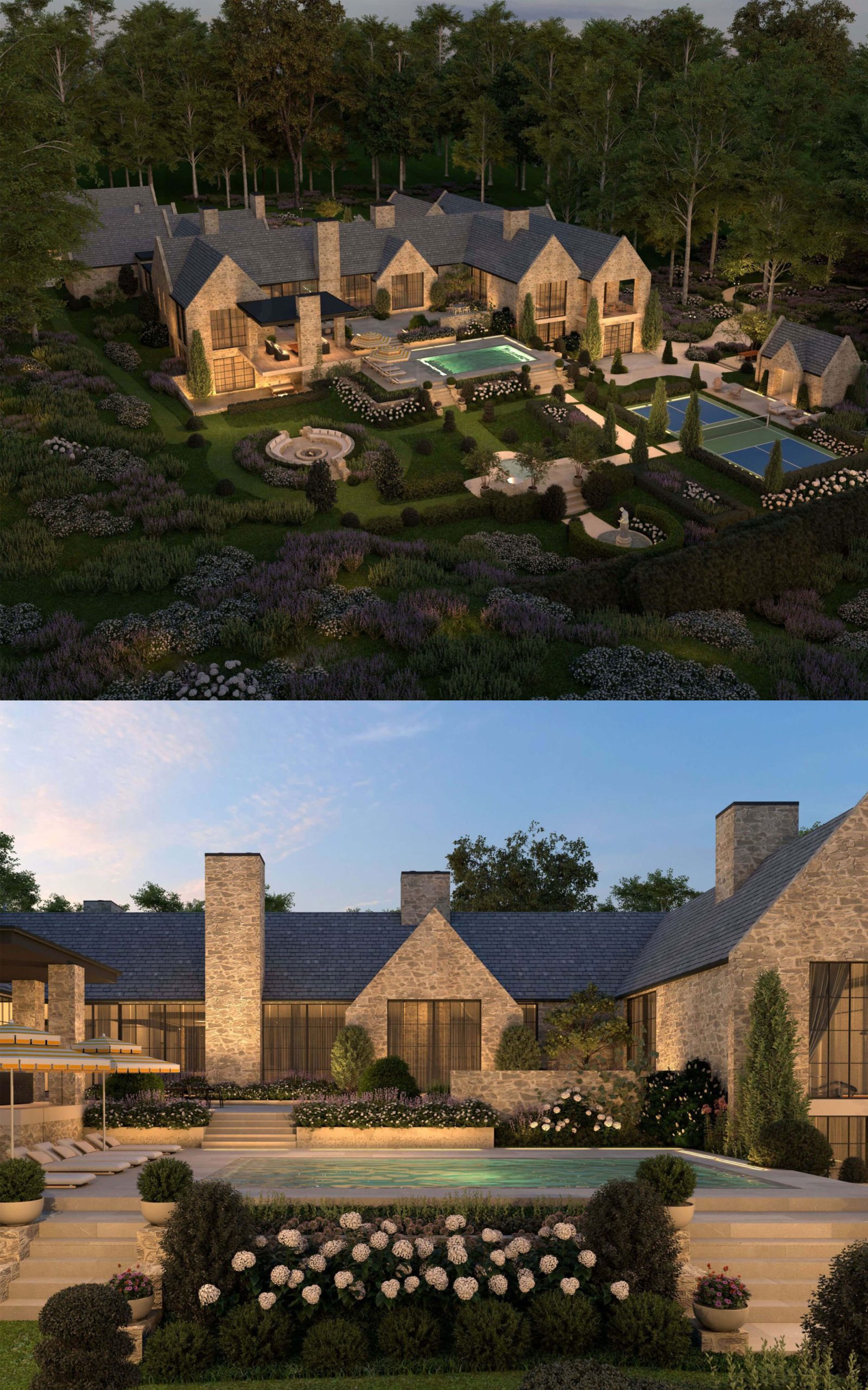
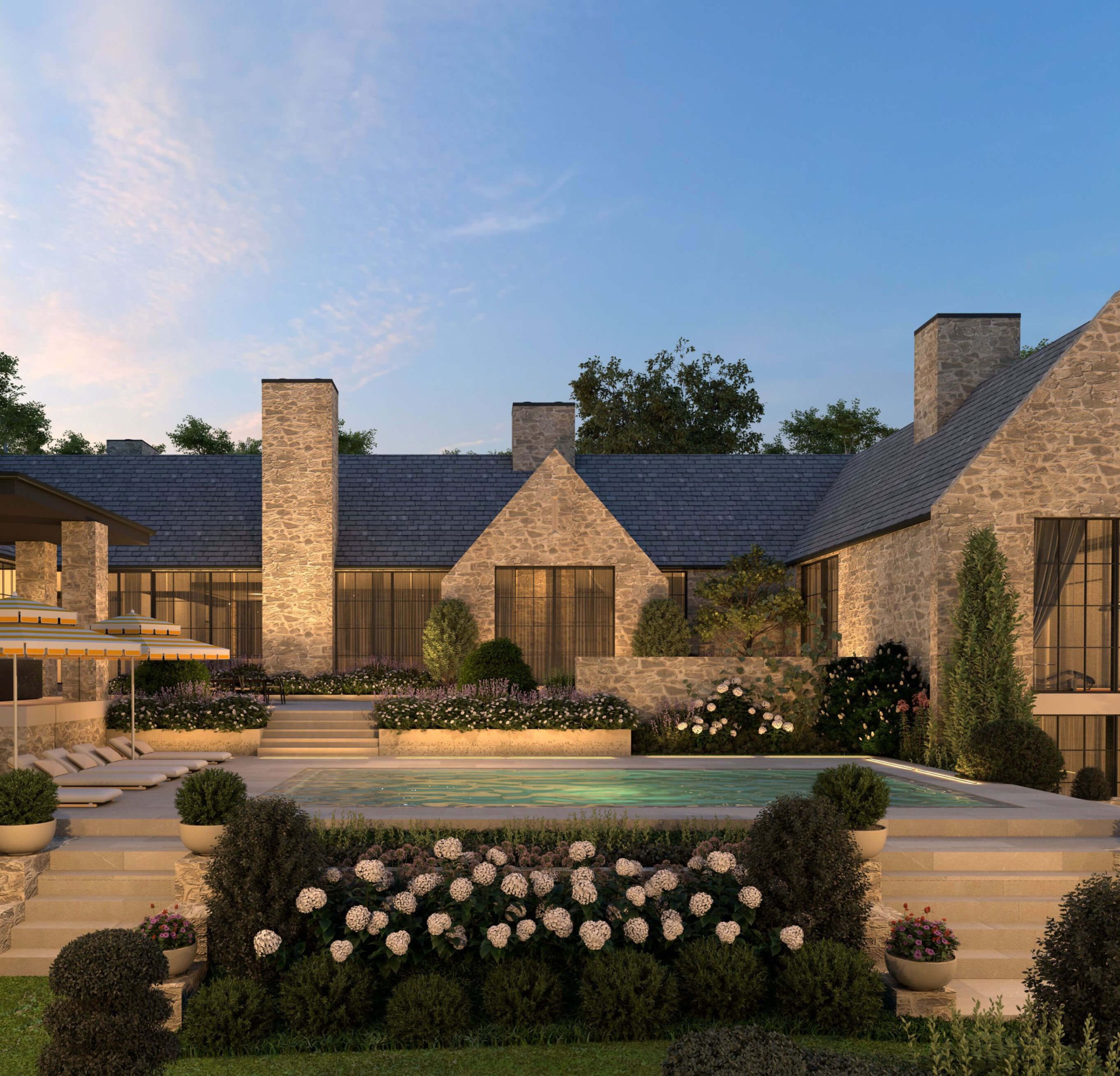
A defining hallmark of the North American Cotswold vernacular is its richly textured masonry facade, crafted to resemble the rubble or brick masonry work found throughout the Cotswolds. The specific blend, its hue, shape, and composition are central to the identity of each home, directly influencing its sense of warmth, age, and authenticity.
This material choice is a deliberate homage to the centuries-old farmhouses and manors that informed Jesse Sahlani’s design vision. The masonry is meant to be applied to all facades, and the only places where it is not present are the openings Jesse carves out for his floor-to-ceiling window details. The result is that the stone is meant to be appreciated for its texture, capturing the traditional warmth Jesse sought.
The intention here is that the facades are so timeless and of such quality that no future generations would need to modify the home beyond their own interior tastes. This commitment to “heirloom quality” sets the design style apart.
NOBLE
MATERIALS;
THE FABRIC
OF TIMELESS
CHARACTER
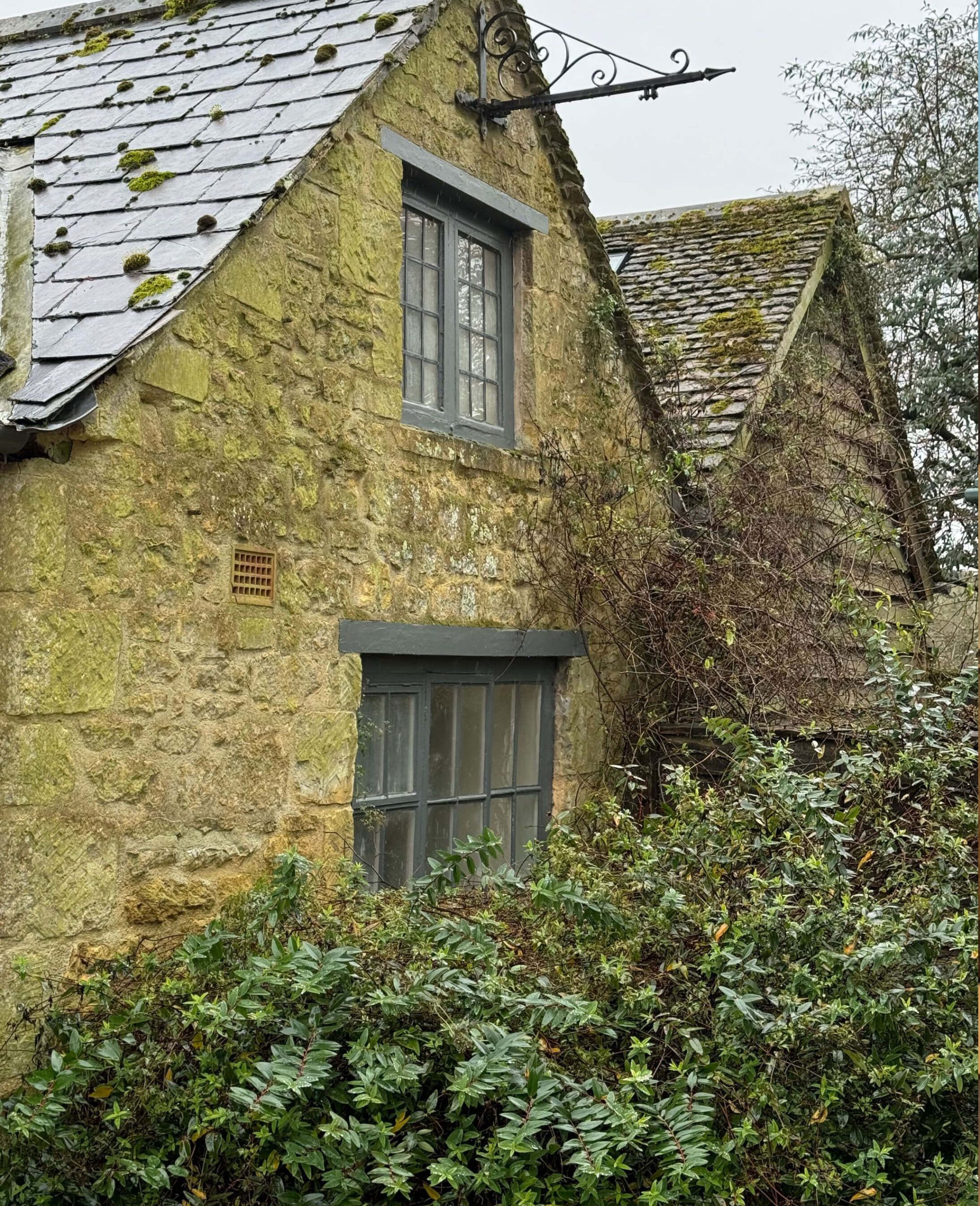
Jesse built The North American Cotswold design language upon a foundation of noble materials. The inclusion of these natural materials throughout the exterior facade speaks to the idea that these structures are meant to outlive us, just as the structures that inspired this design style did their creators.
Slate roofing, zinc for exterior drainage details, and natural stone are all elements that contribute to the proper execution of this design style's character. These materials only get better with age, growing moss, developing an ever-changing patina, or even accumulating soot from acid rain over the years. These are the materials that wear time with grace and offer an intrinsic luxury that can be implicitly understood upon approach of the structure.
FOOTPRINT
COMPOSITION
THAT CREATES
COURTYARDS
INTERIOR
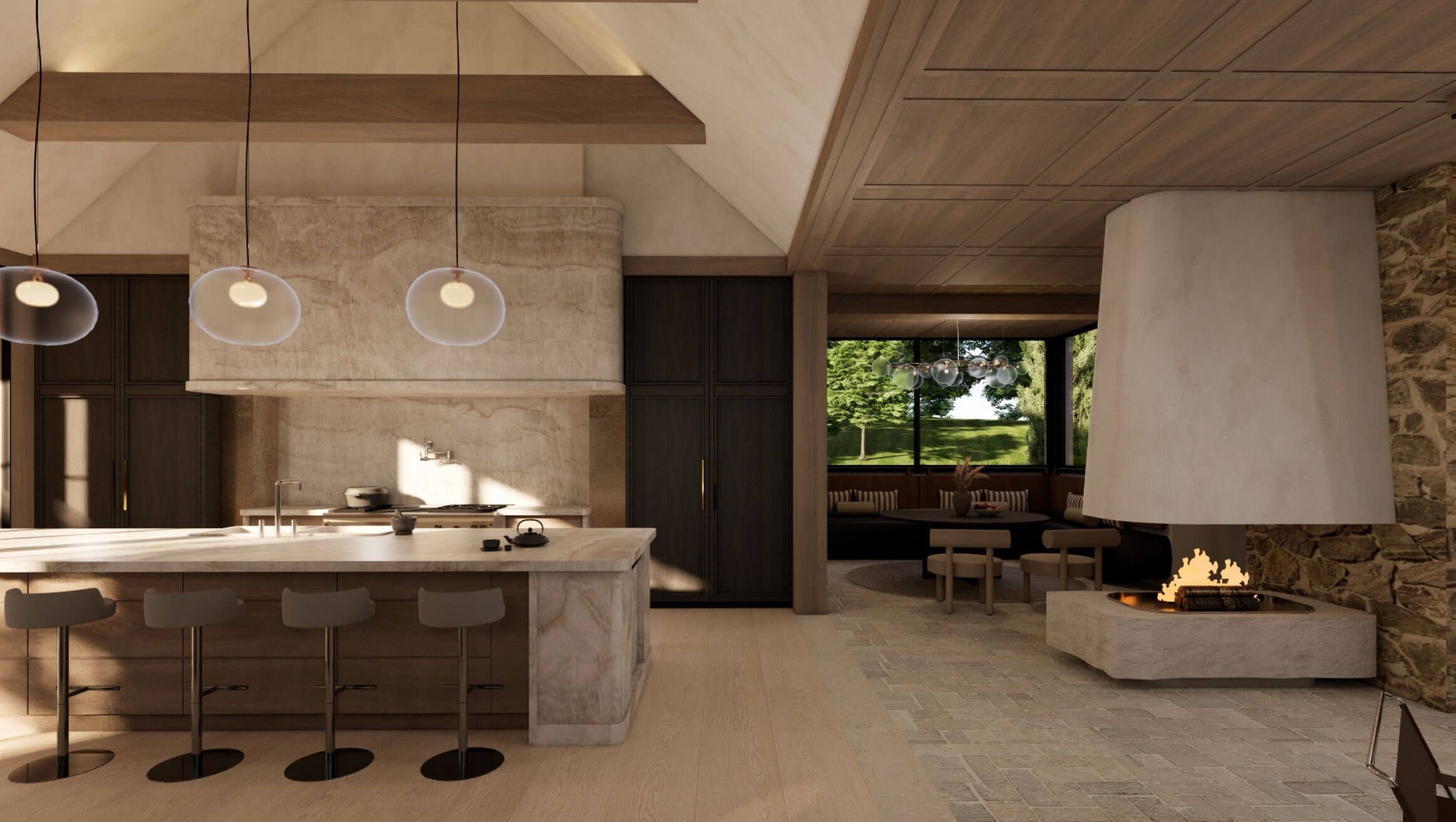
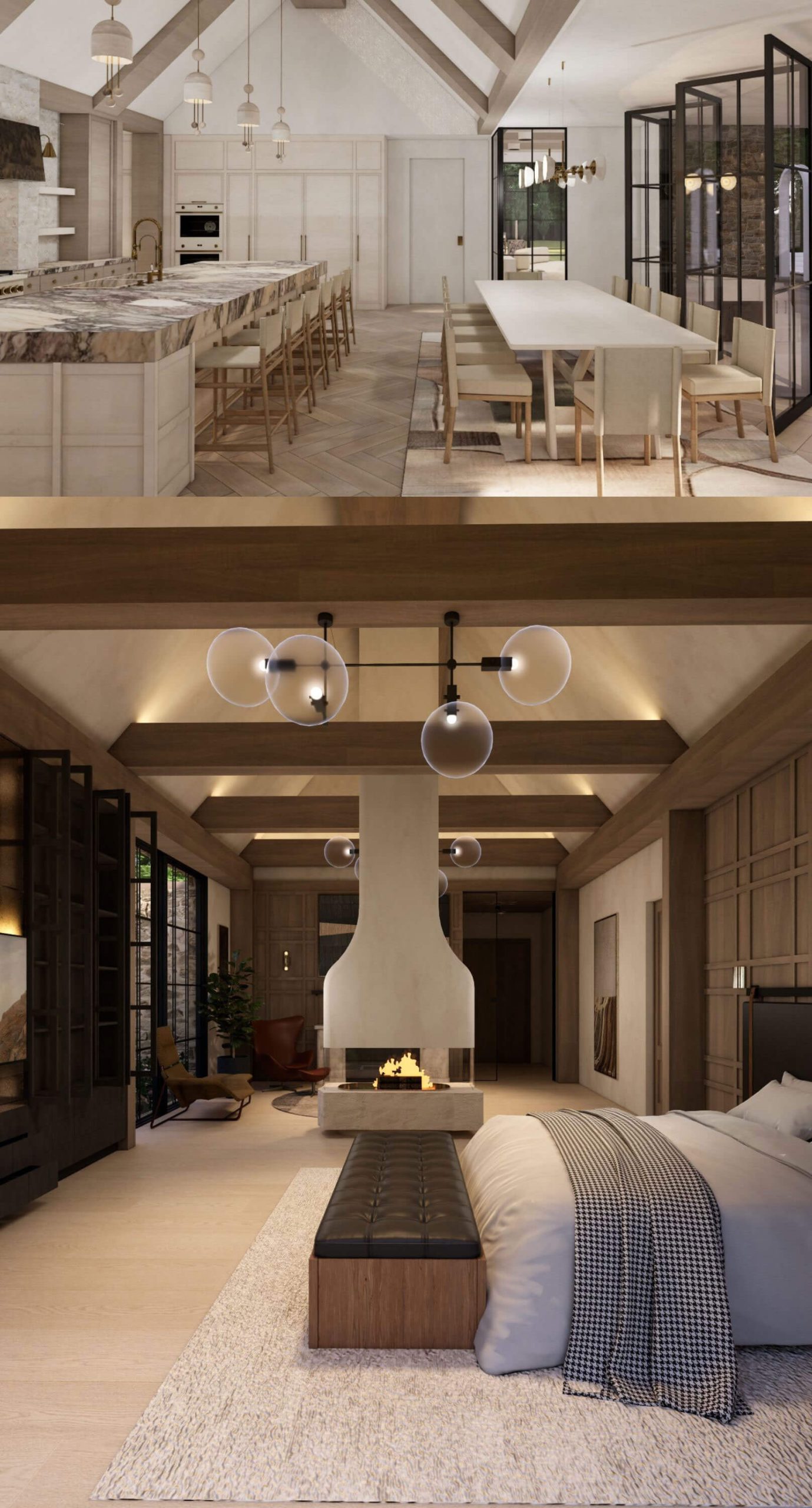
PROPORTIONS
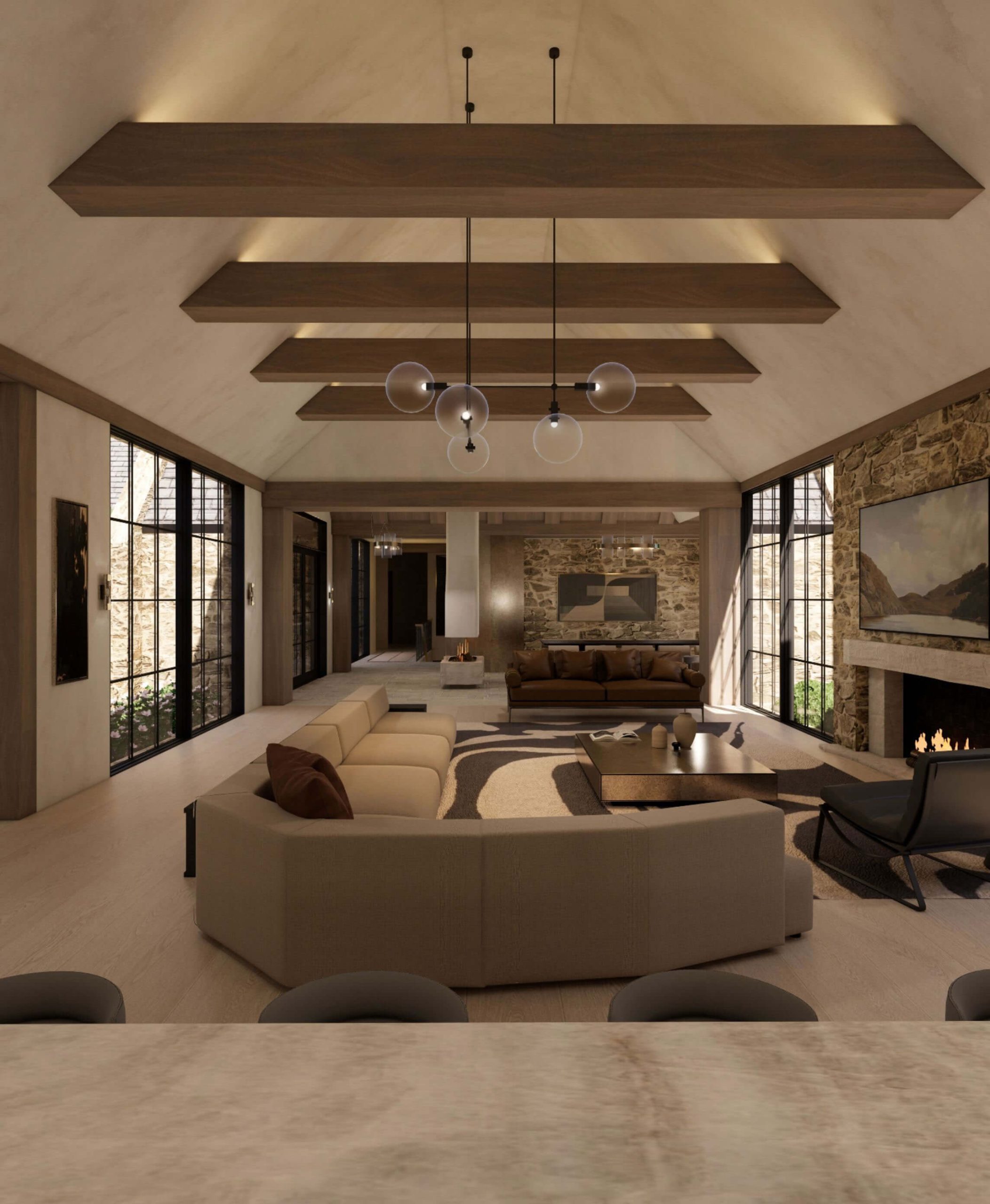
THAT FEEL GRAND
& SPRAWLING
DISTINCTIVE
GABLE
PROPORTIONS
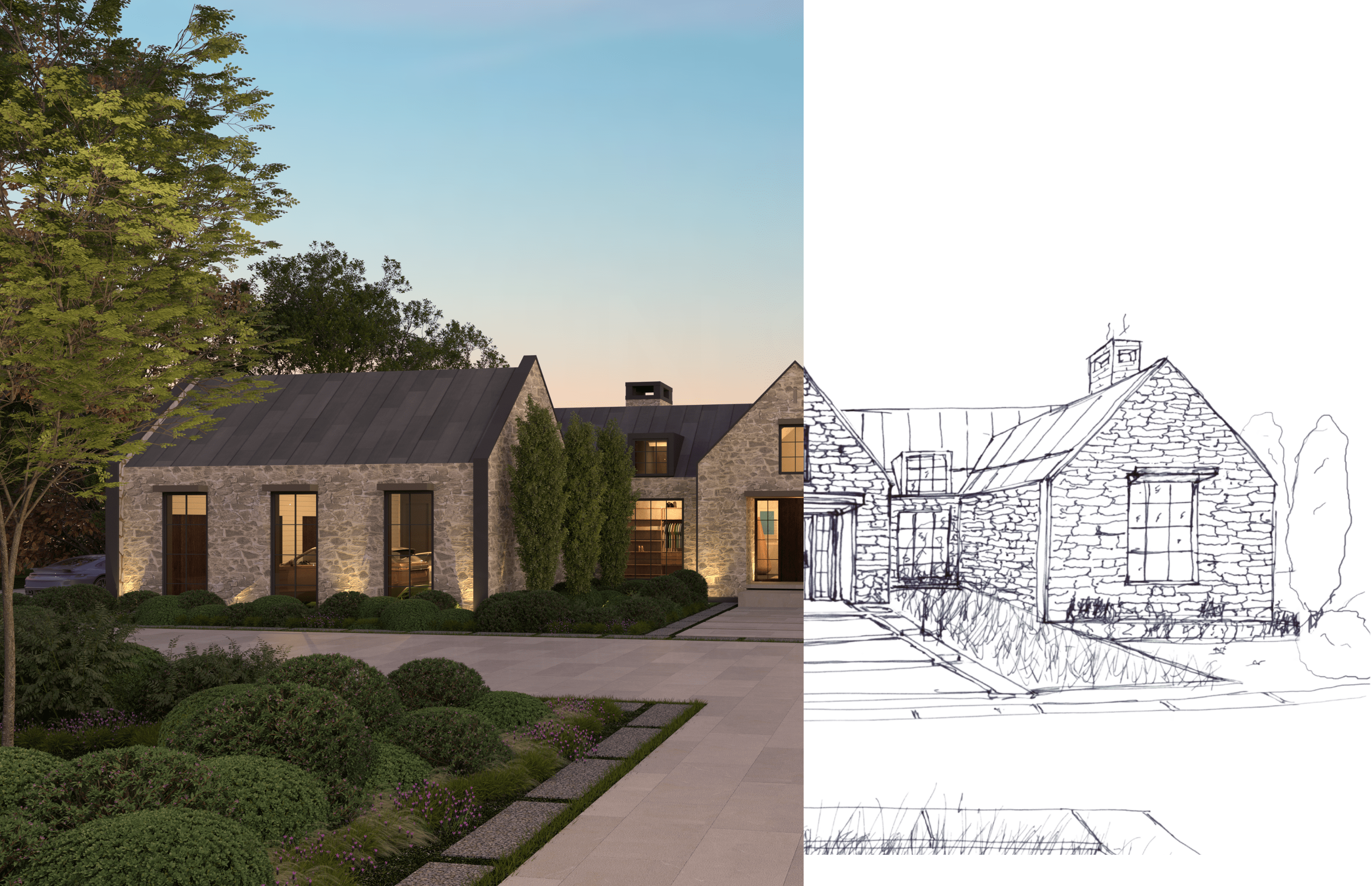
The gables are an integral part of the character of the facade, as they each represent a tiny Cotswold cottage being joined together into one sprawling estate. Their proportions are meant to feel grand without losing their warm and inviting traditional touch. It is a signature of Jesse’s to consider the scale of the surroundings as he develops his proportions, as they can be scaled up or down to suit the ideal.
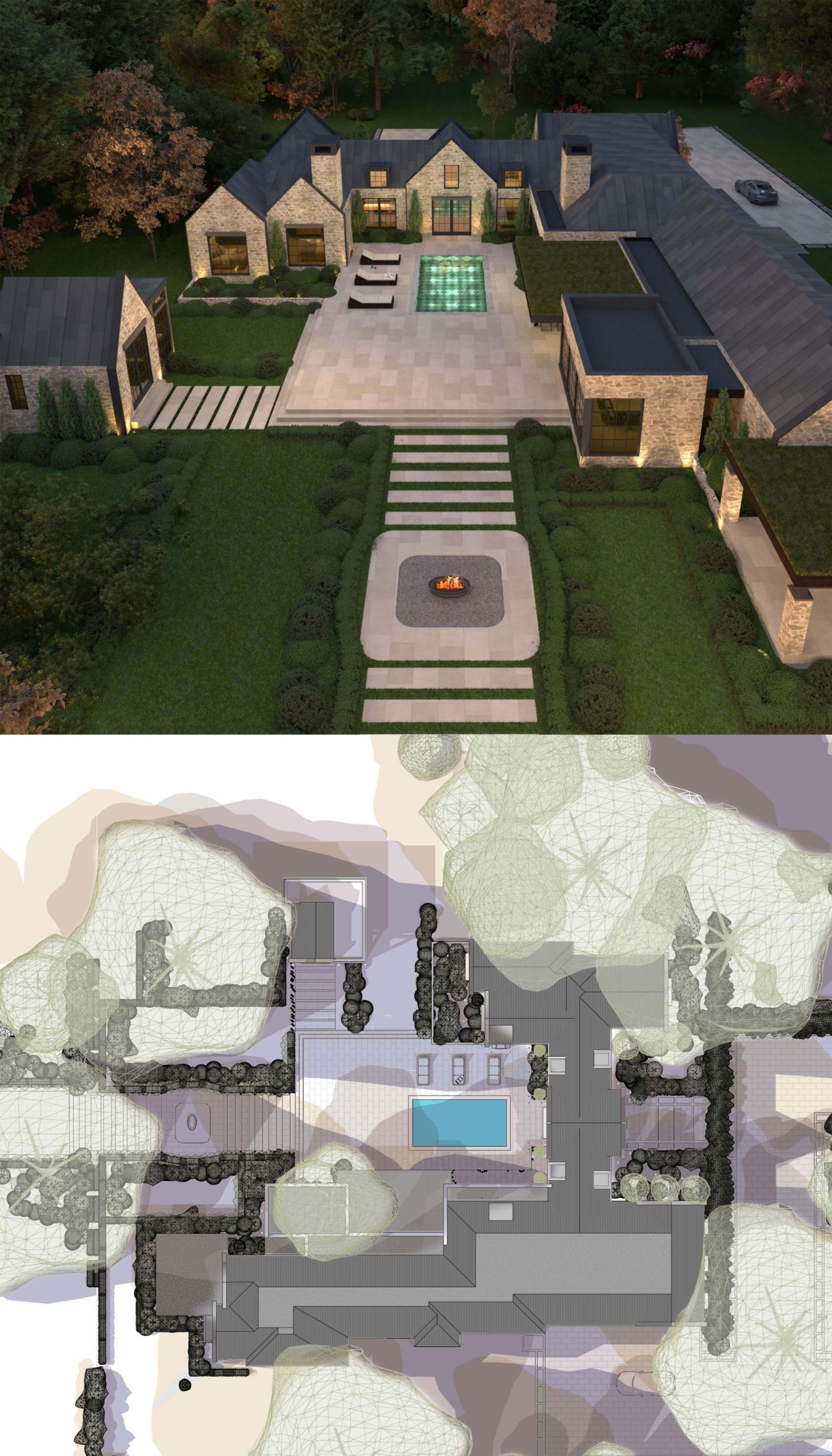
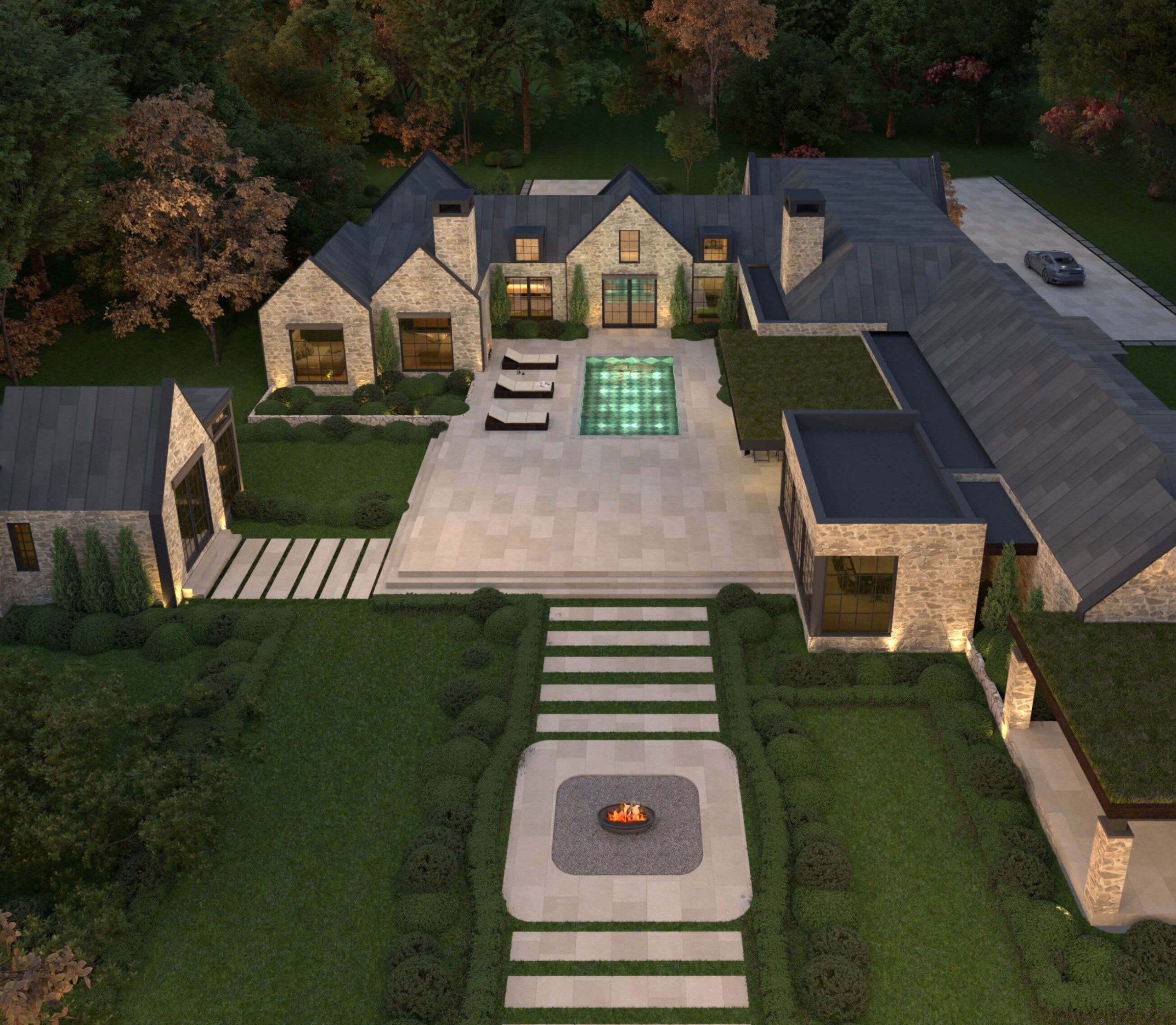
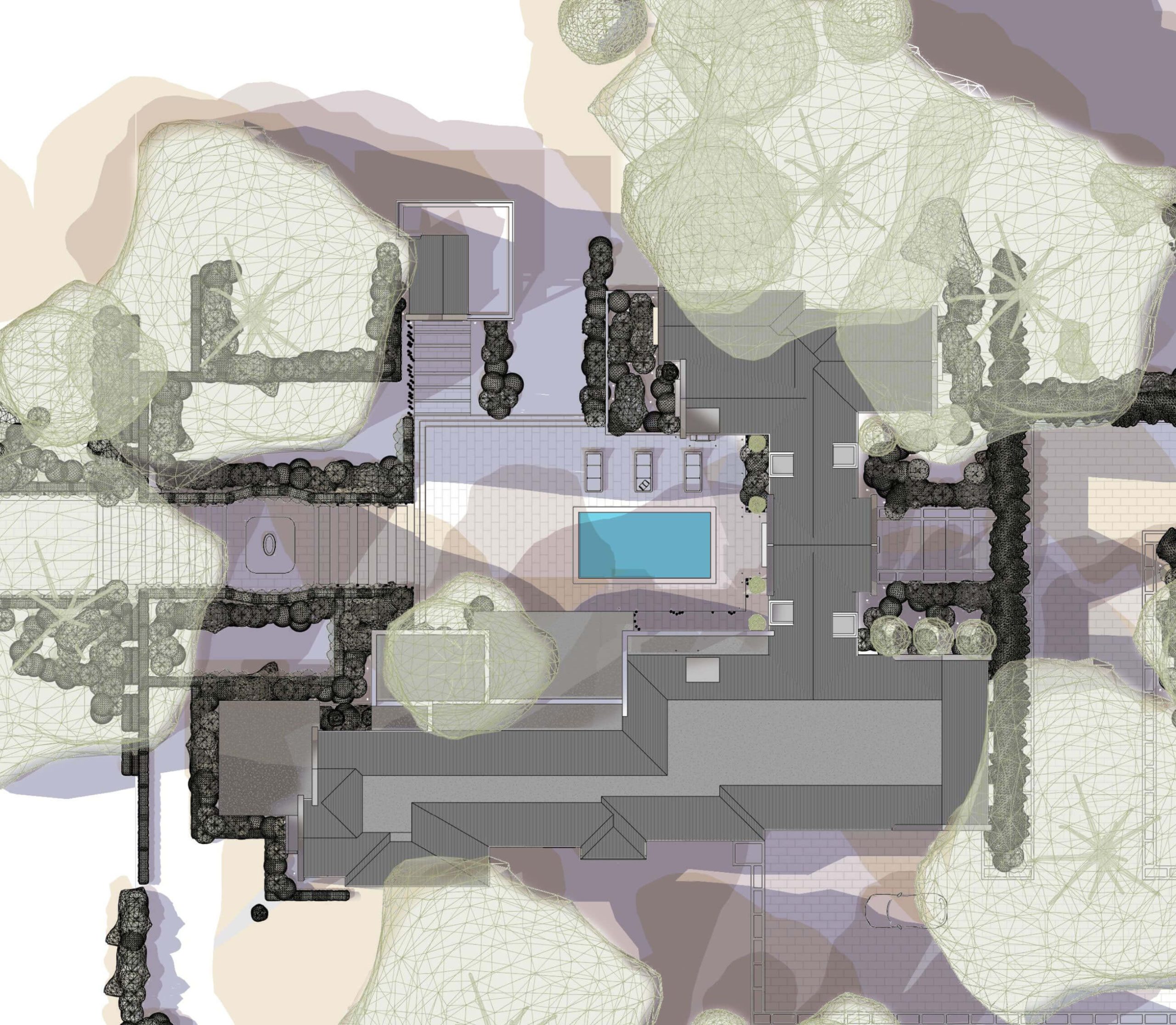
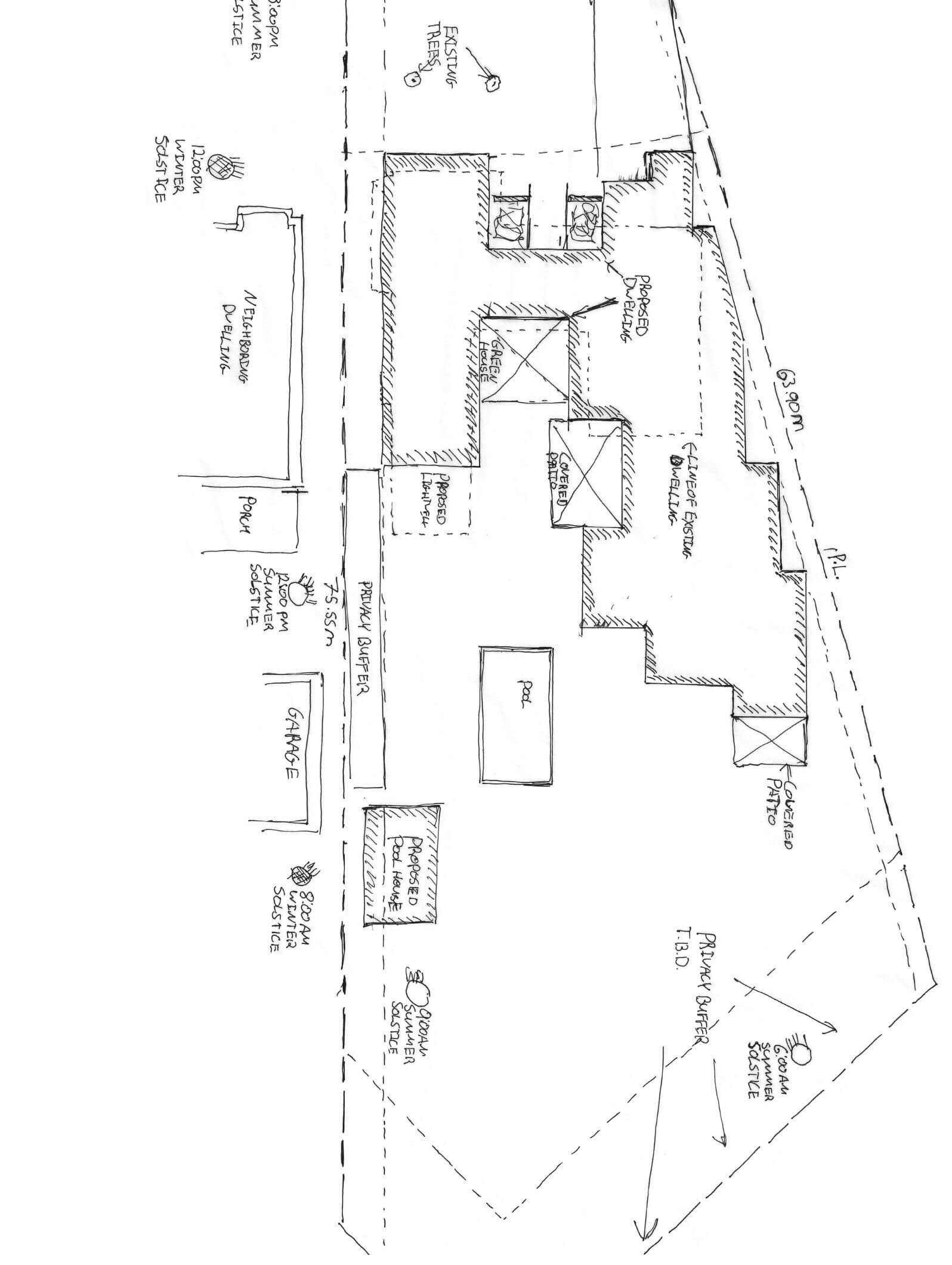
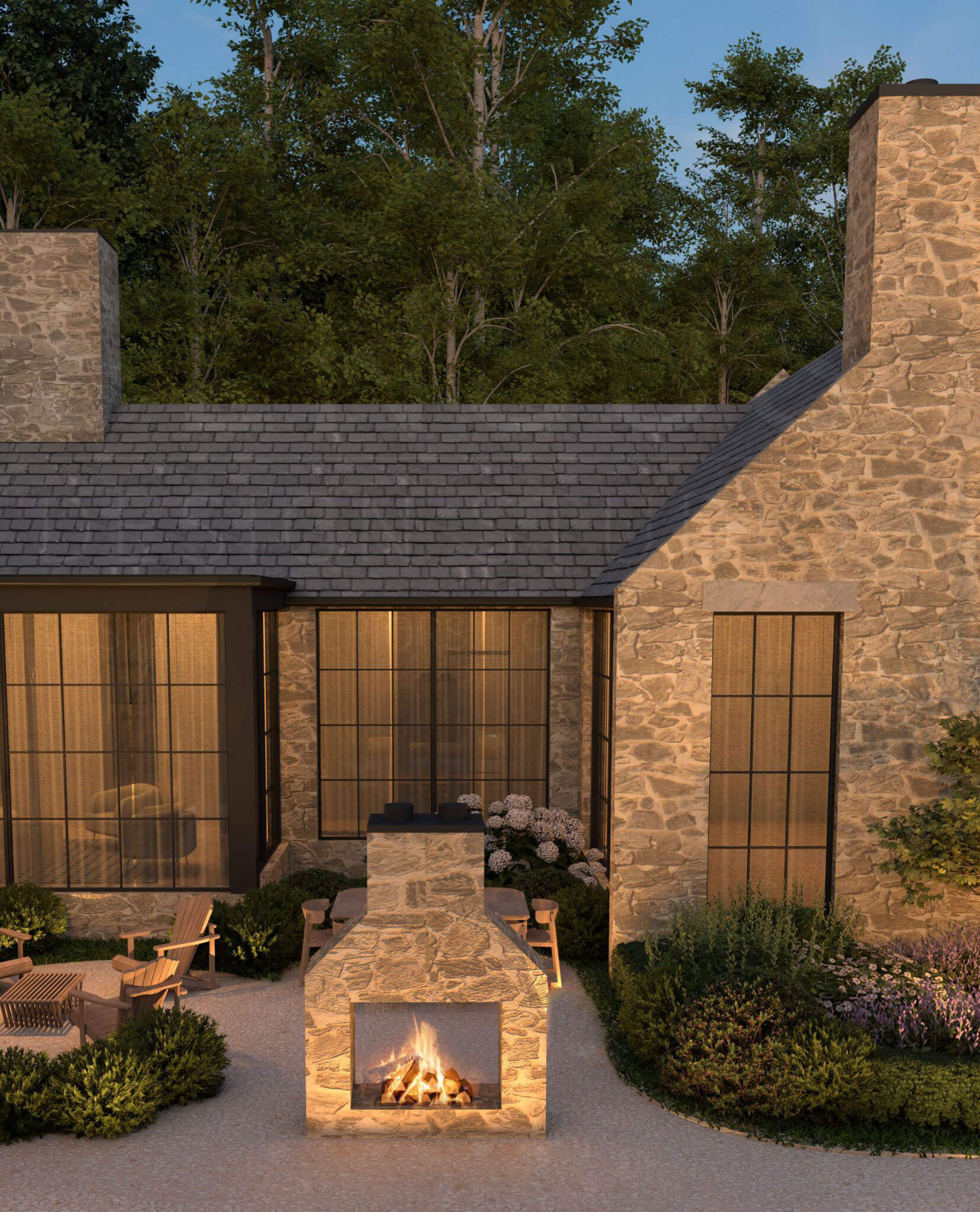
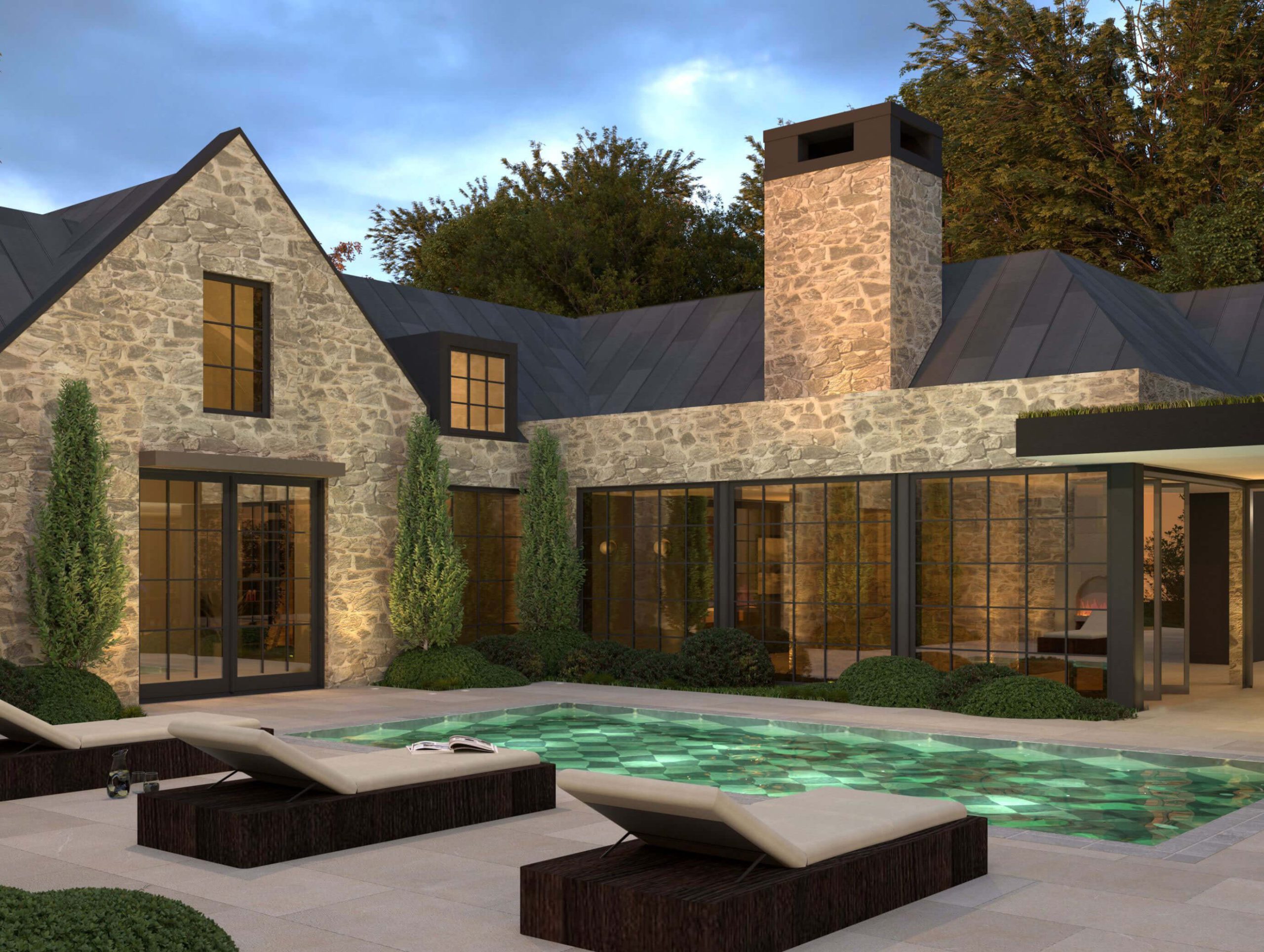
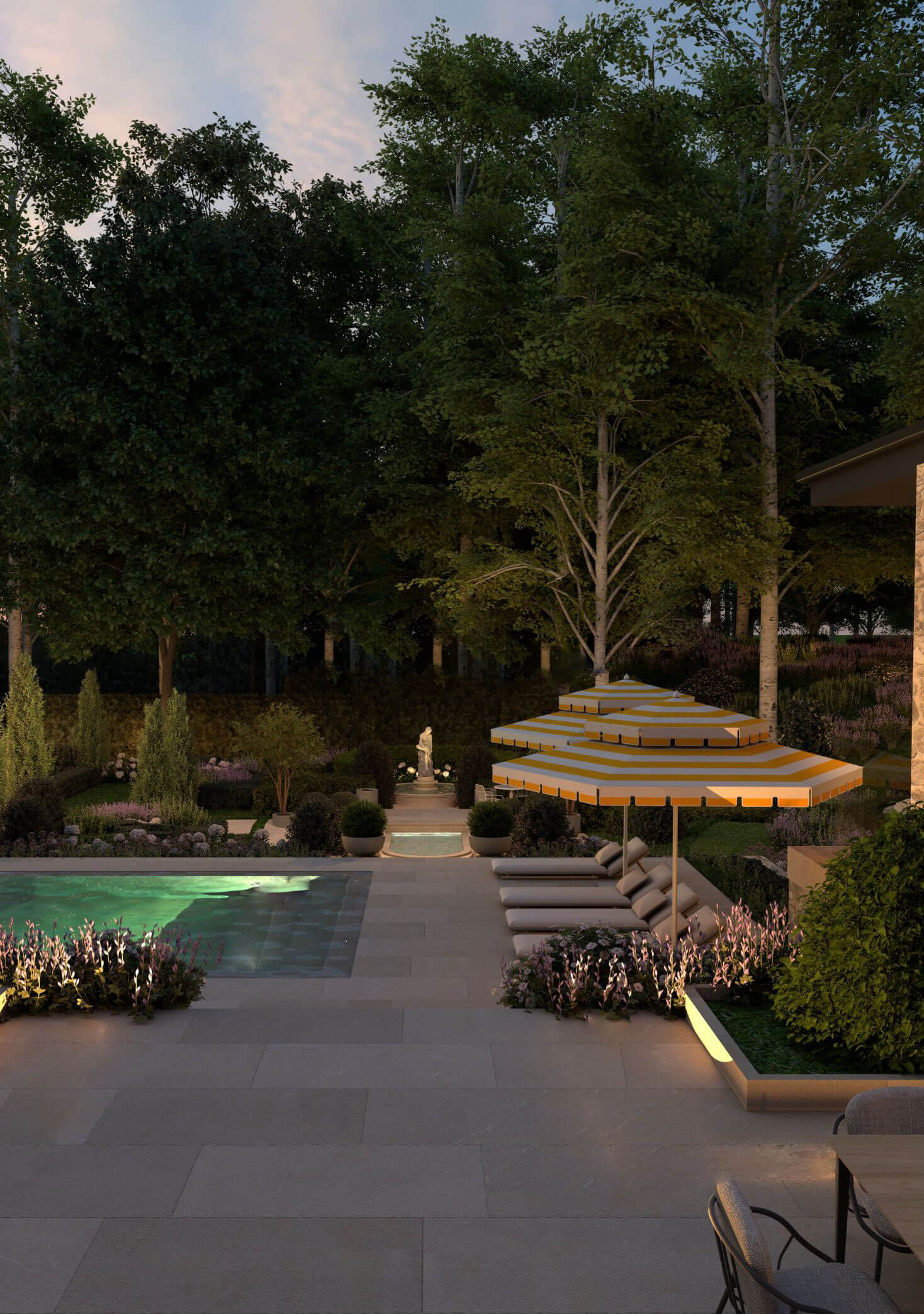
They also serve to create dimension, bringing the noble materials they are clad with front and center. Most notably, they impact the composition of the home as well, giving Jesse the opportunity to create alcoves and peninsulas within the footprint that makes the room feel as if it is set among the gardens. This is integral to the “rambling wing” effect explained earlier in this breakdown.
A REAR FACADE
DESIGNED TO FEEL
CONNECTED TO ITS
SURROUNDINGS
GARAGES THE OFFER
A NOD TO THE STABLES
OF MANORS’ PAST
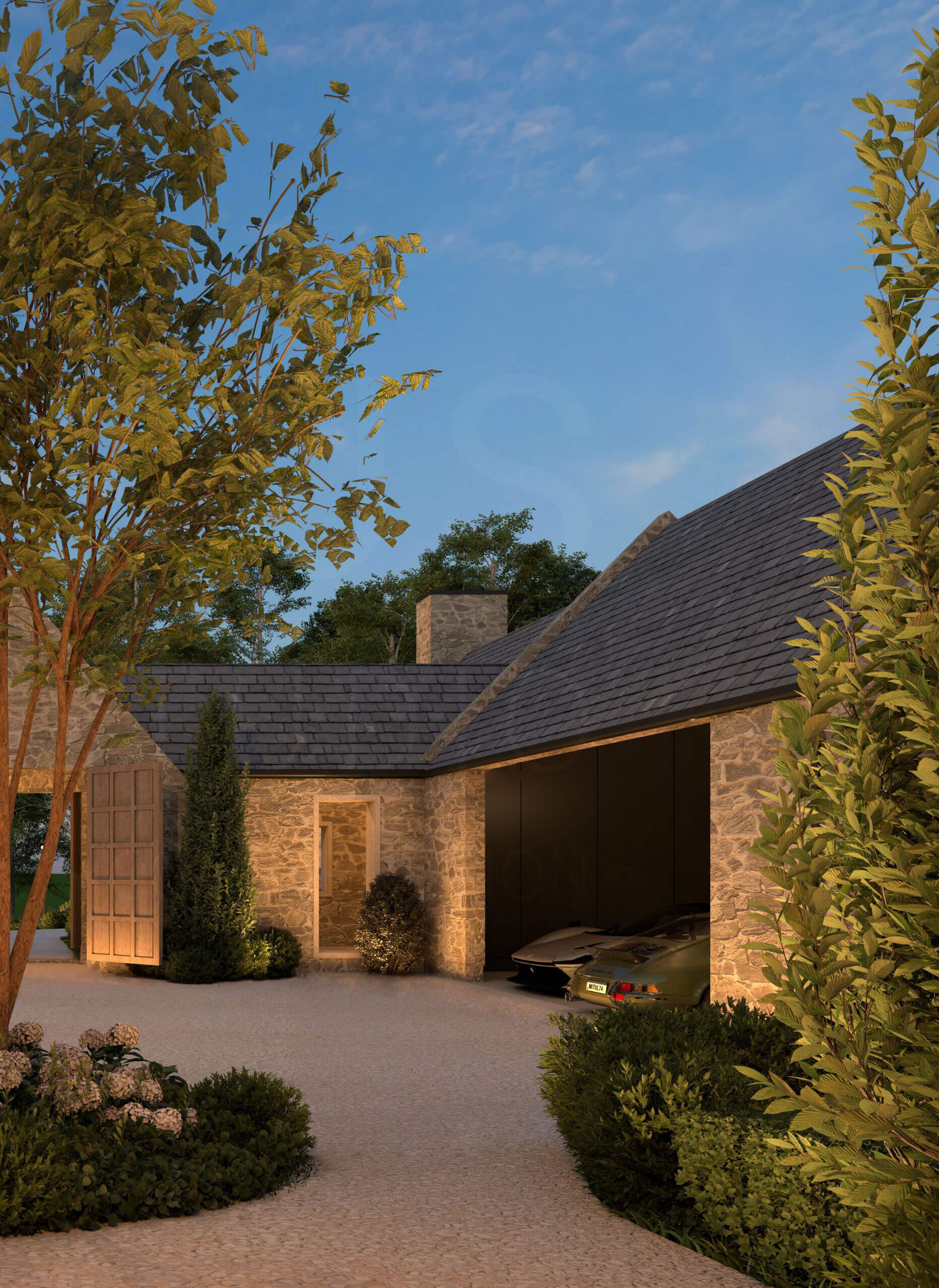
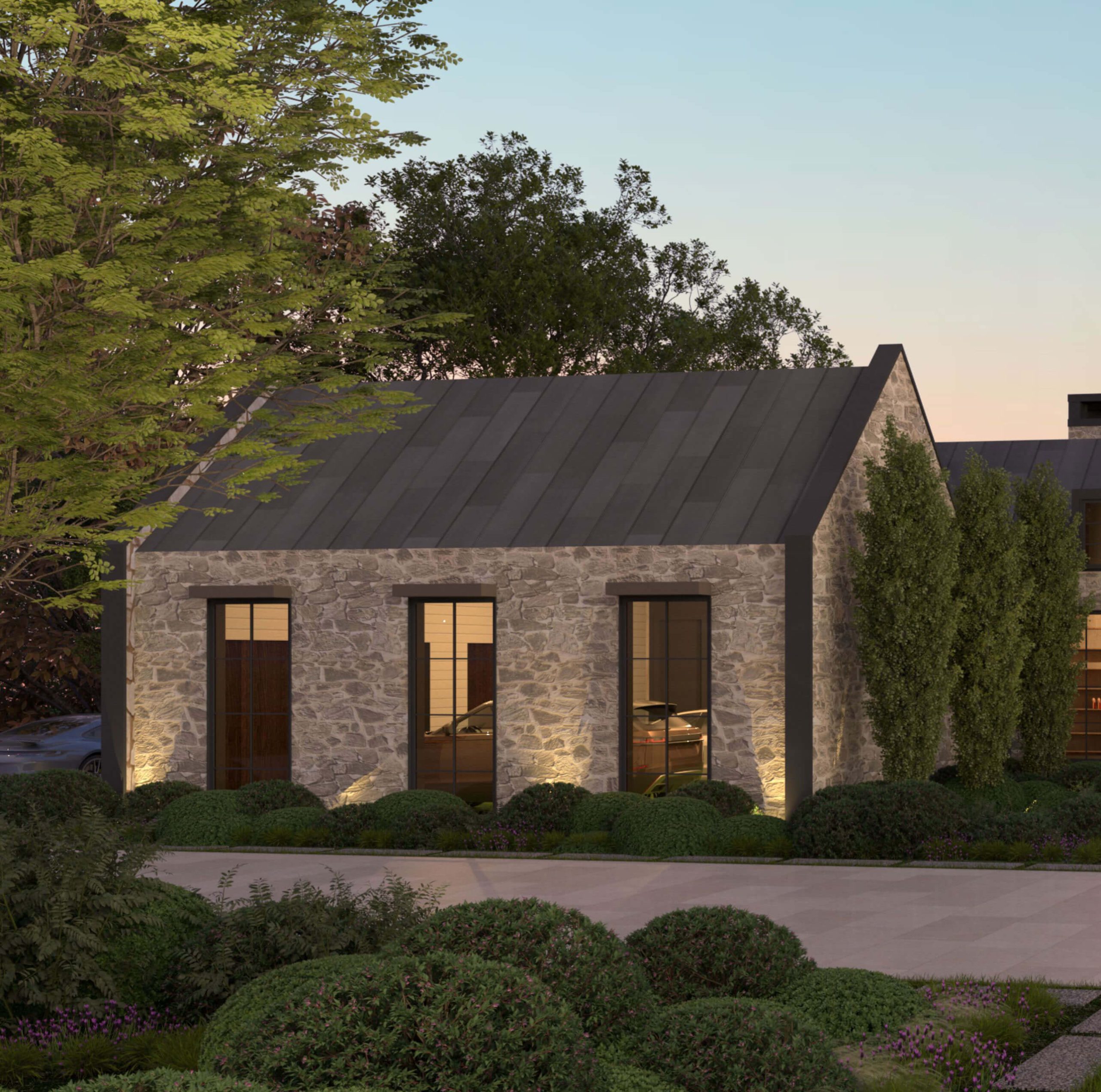
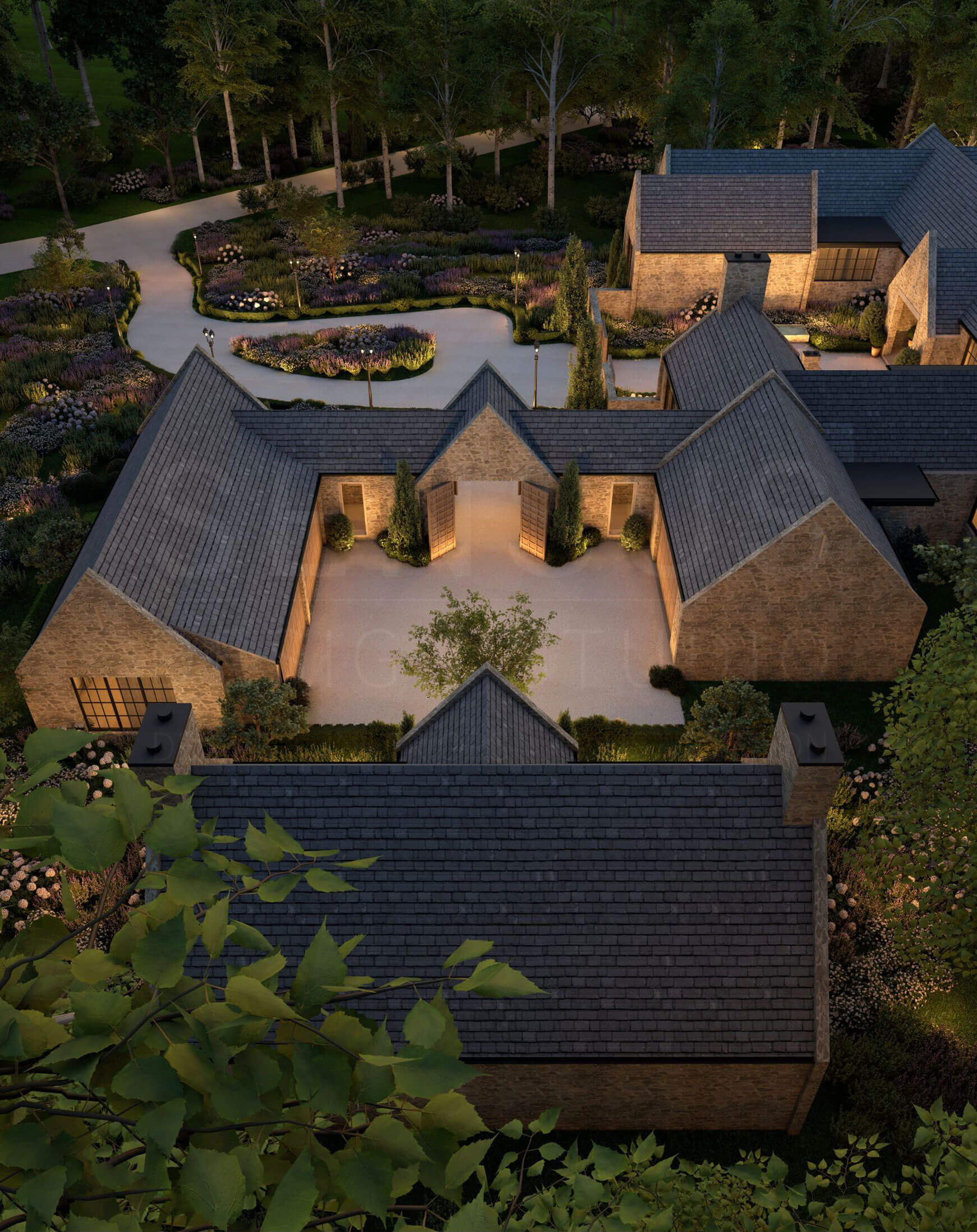
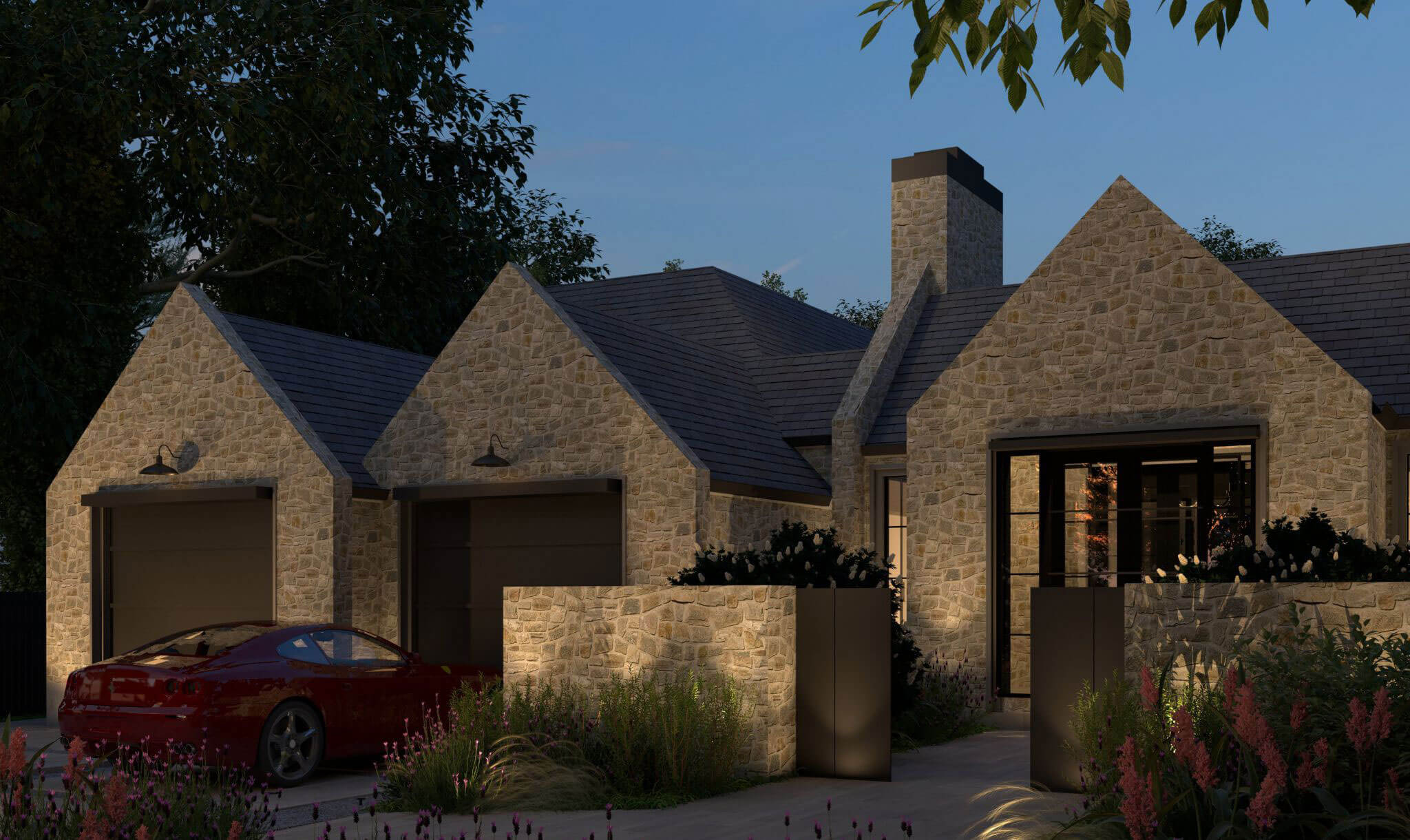
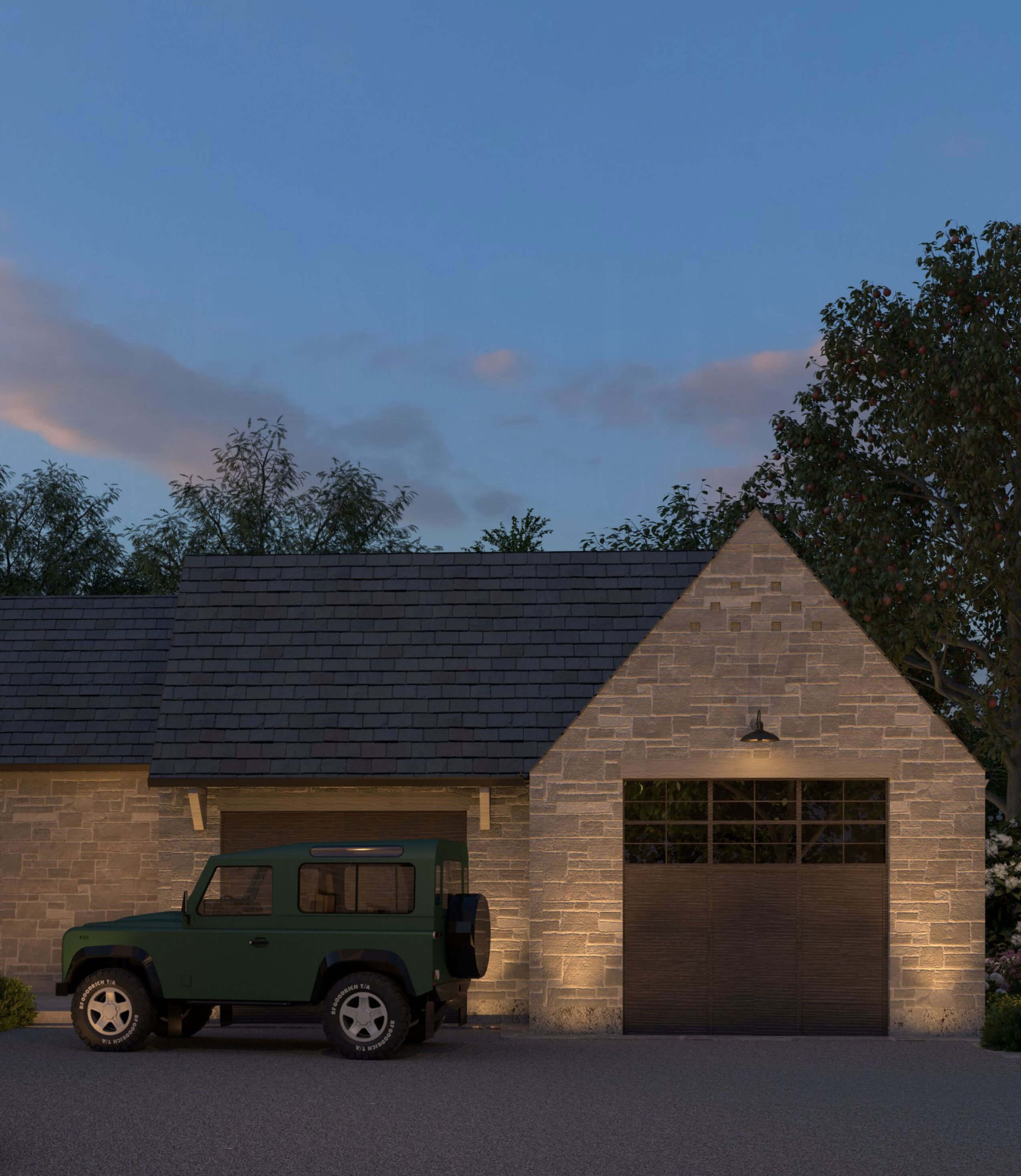
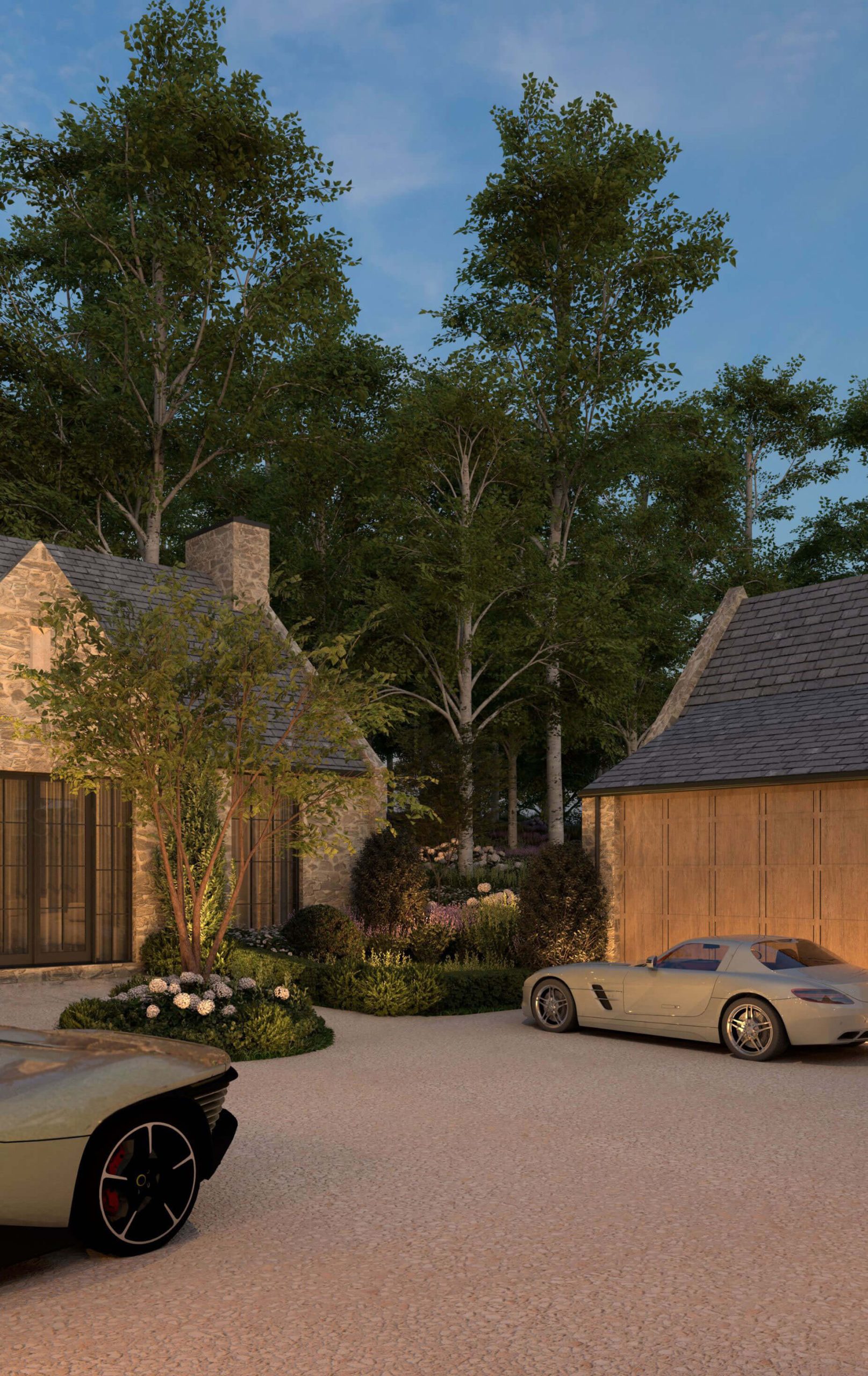
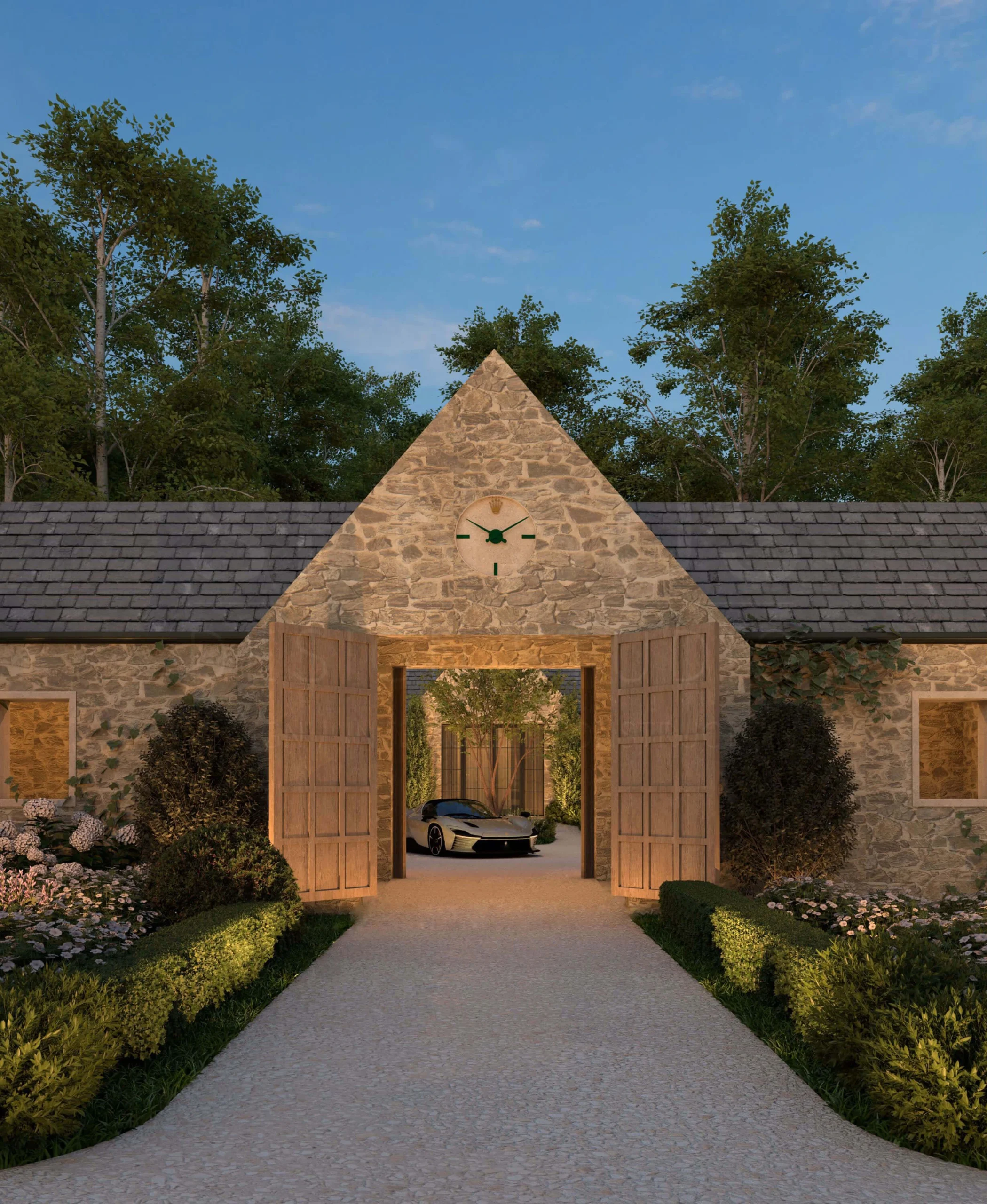
In the North American Cotswold design language, even the garage is treated as a curated architectural moment. Jesse Sahlani approaches each garage not as an afterthought, but as an opportunity, designing each garage into a courtyard format that stands out as a distinct and storied element of its own.
In some homes, repeated gable proportions and material continuity subtly mask the garage doors, allowing them to disappear into the broader architectural composition of rhythmic gables. In others, the garage wing is expressed with its own identity, evoking a sentiment similar to that found in carriage houses or the historic stables of manors past, contributing to the layered, winding feel that defines this style. In both cases, the result is garages that are intentional and beautifully integrated.