Giardino Giusti
OUR VISIT TO:
GIARDINO GIUSTI
LAYERED MASTER-
PLANNING IN AN
URBAN SETTING
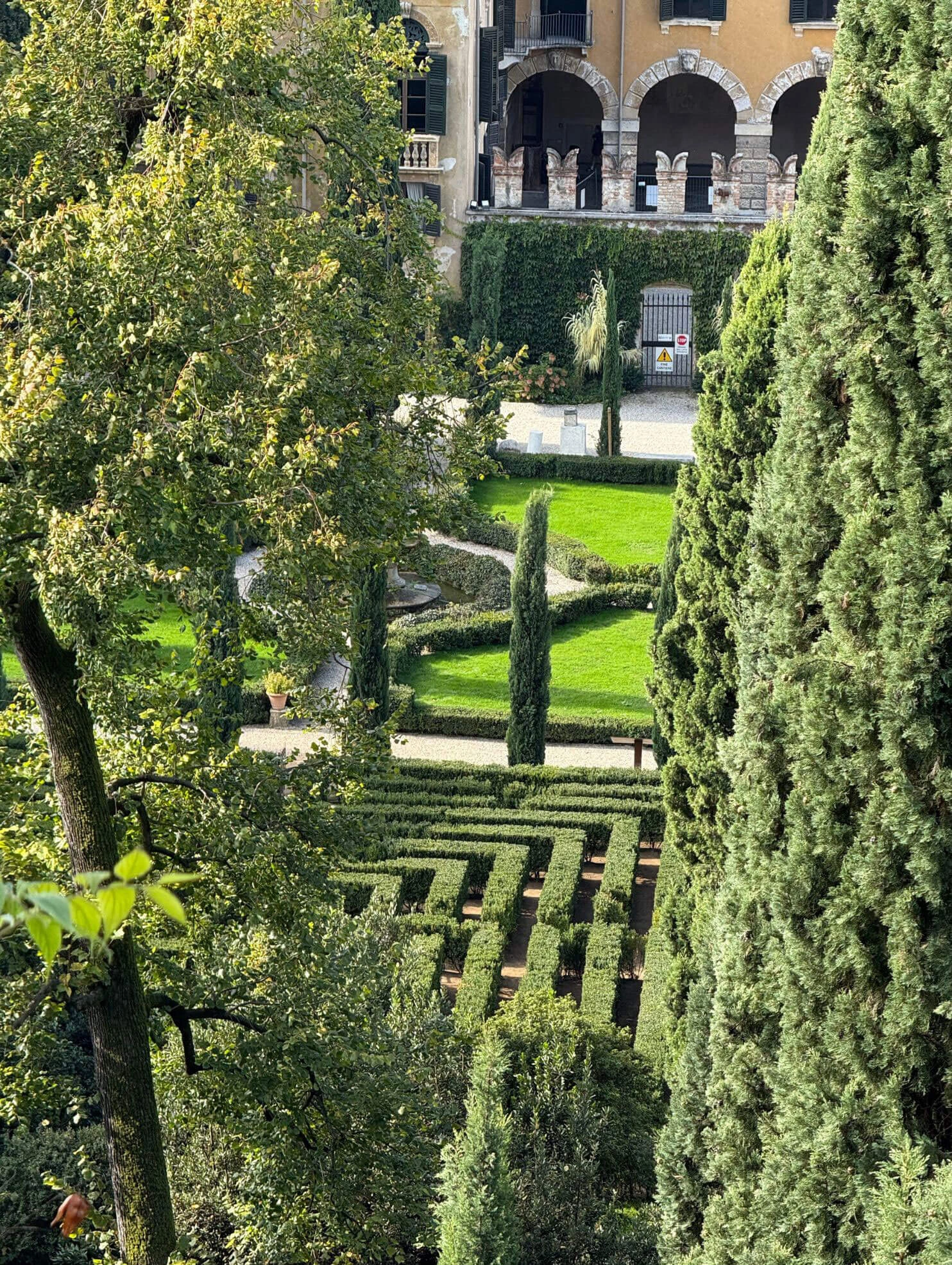
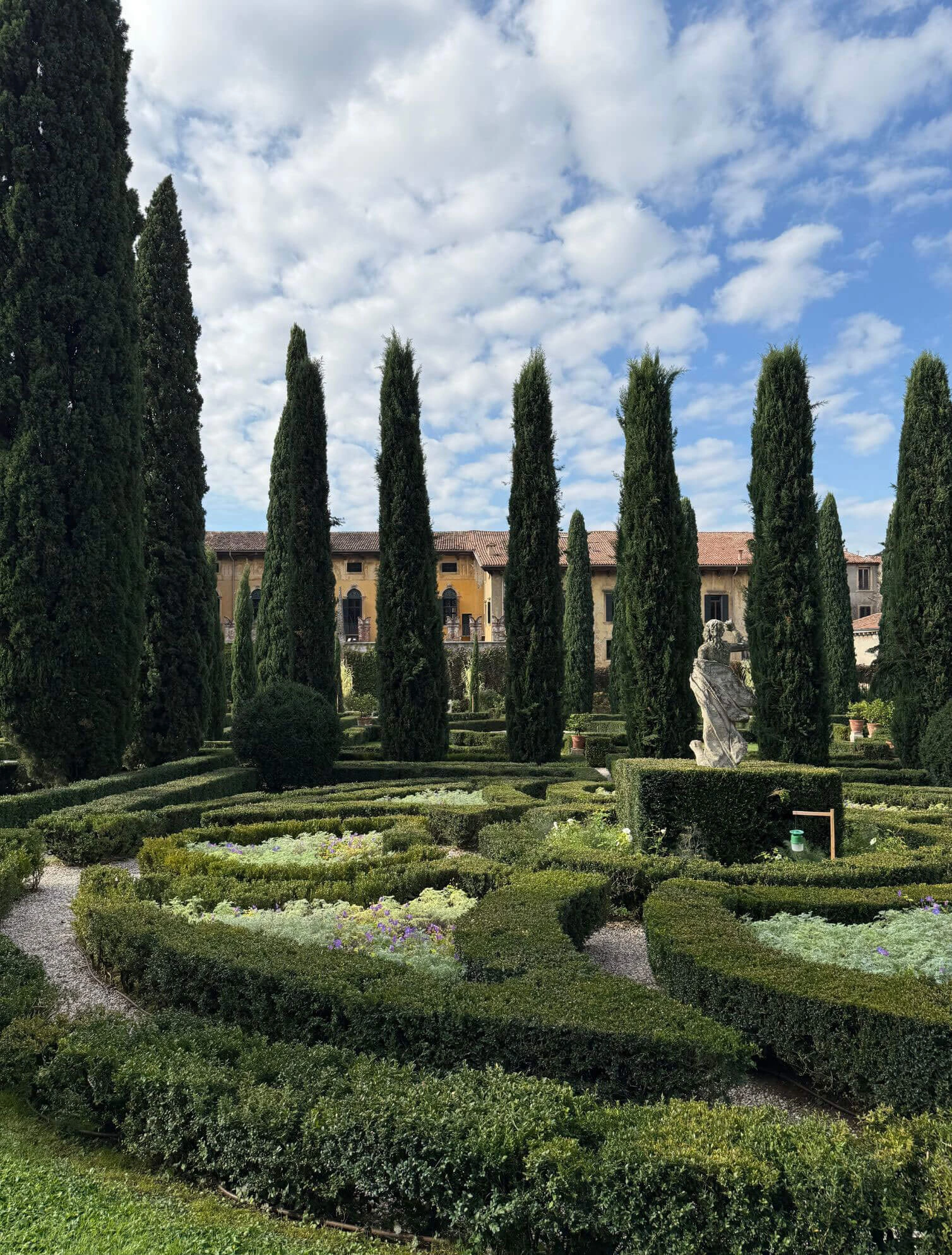
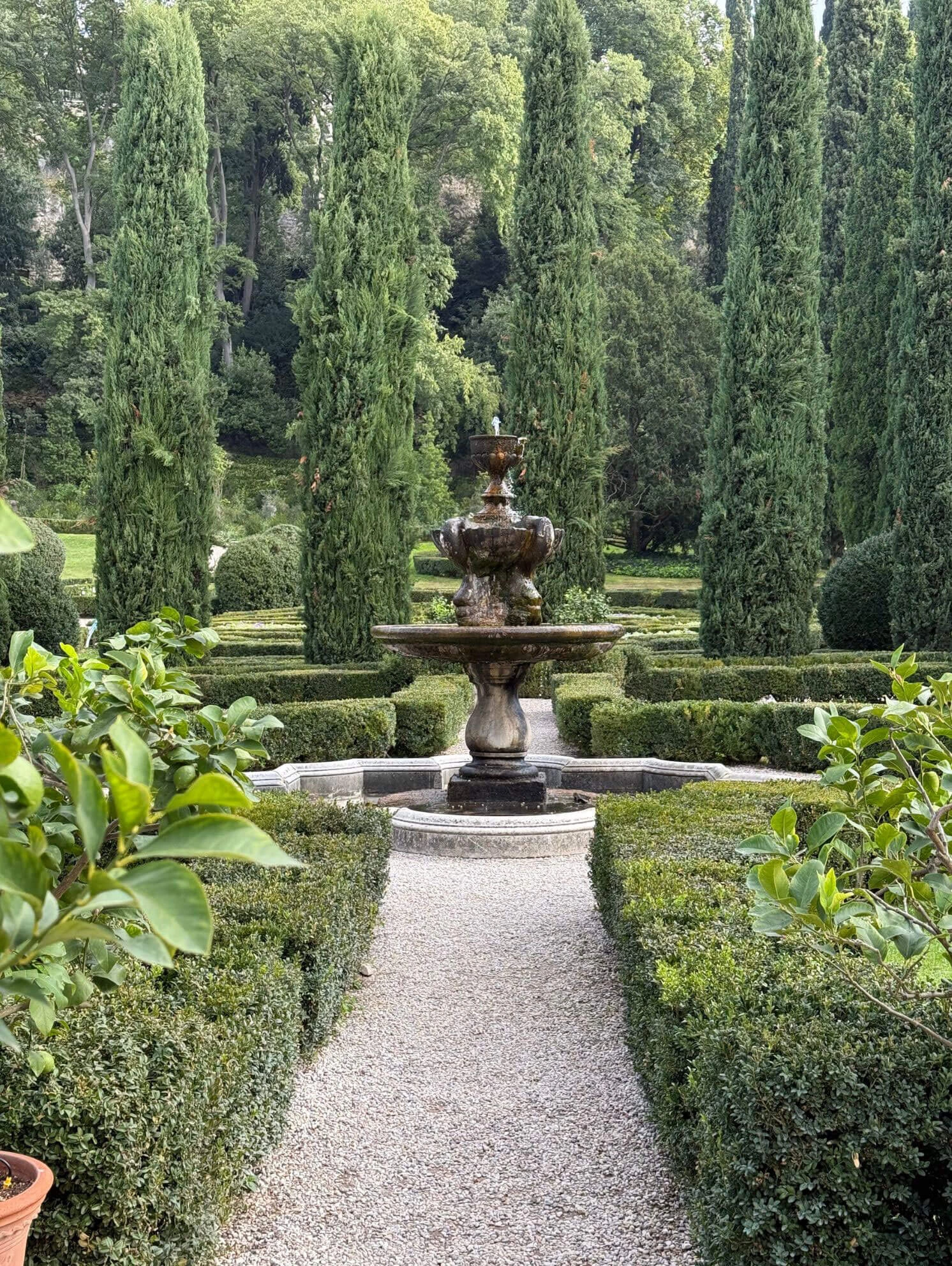
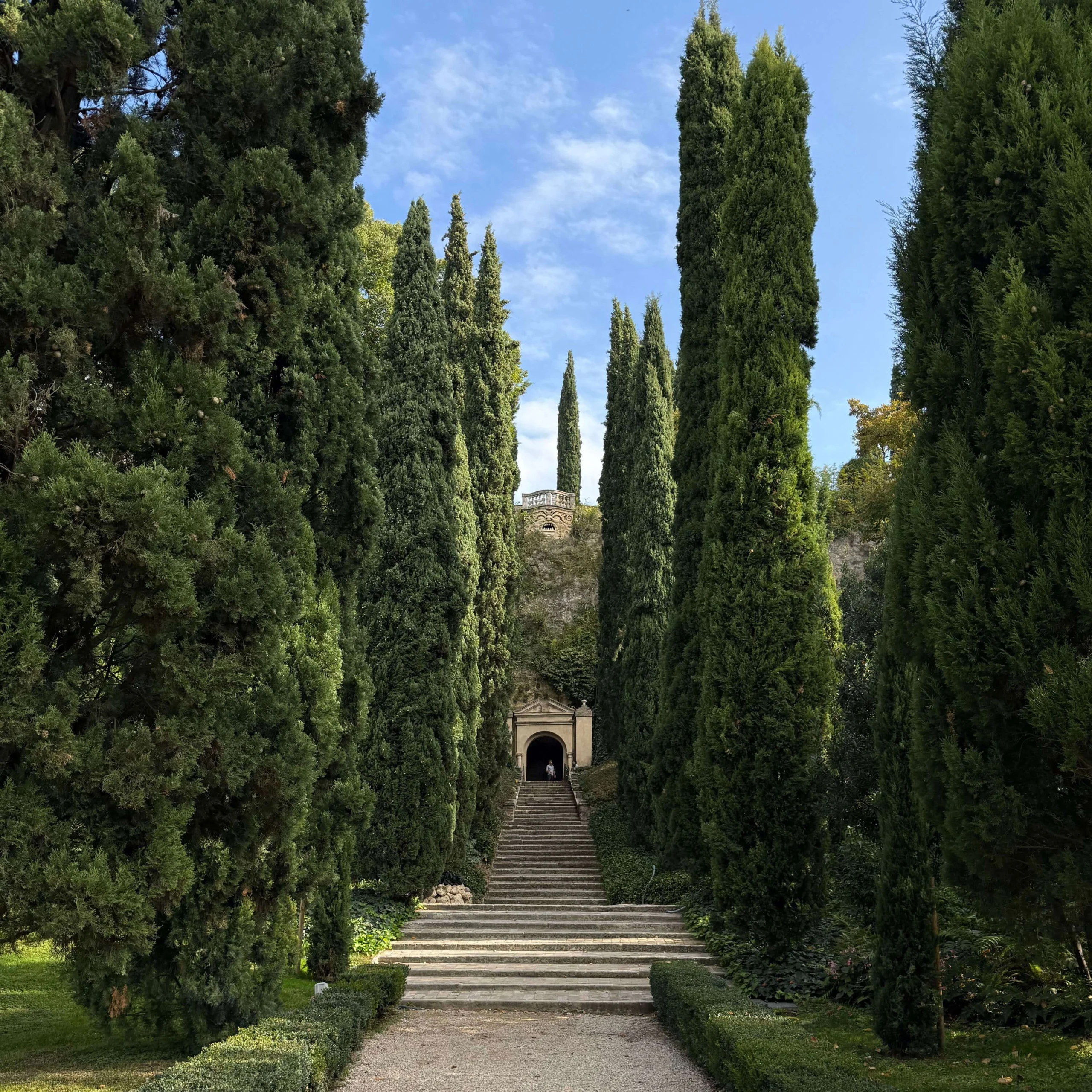
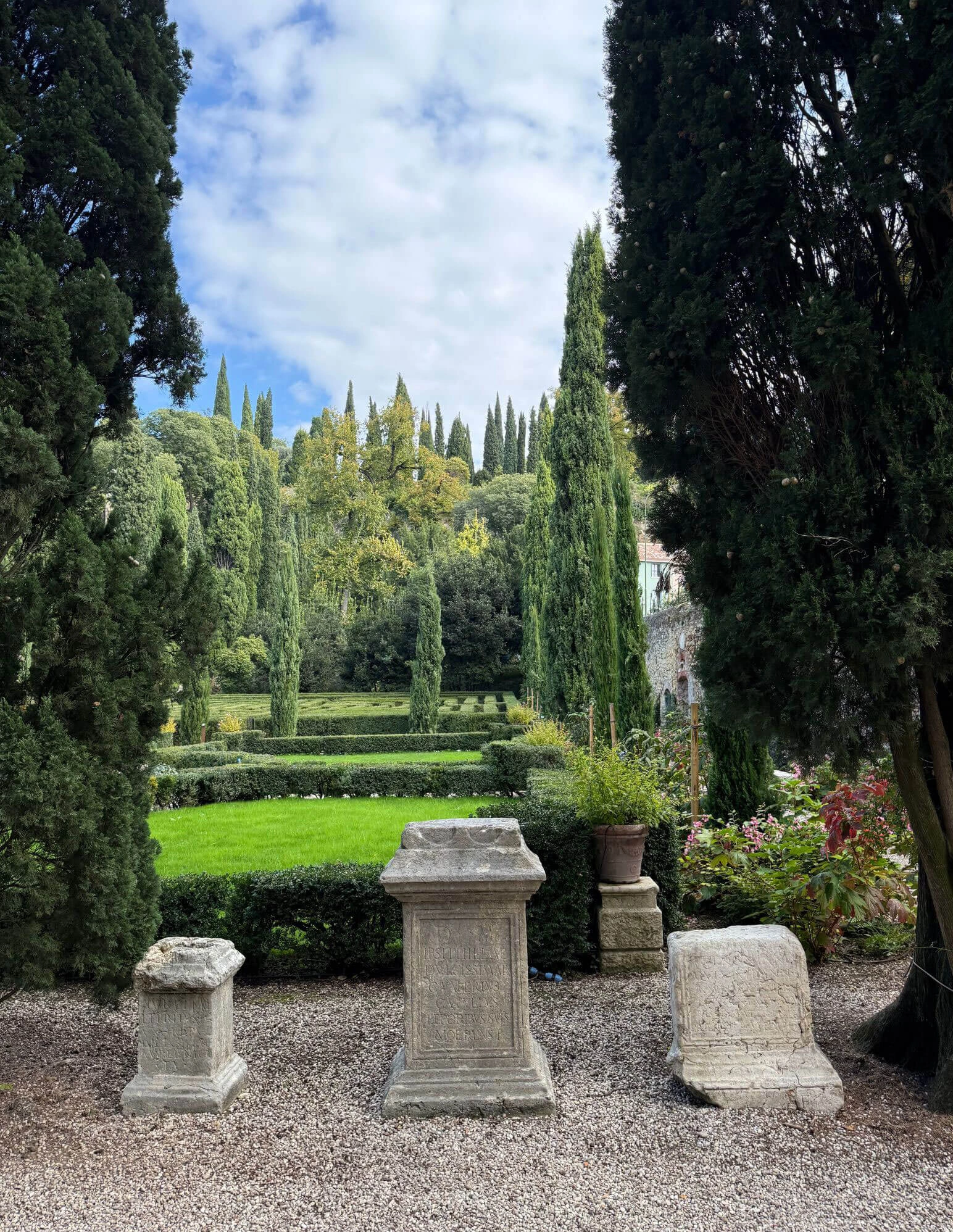
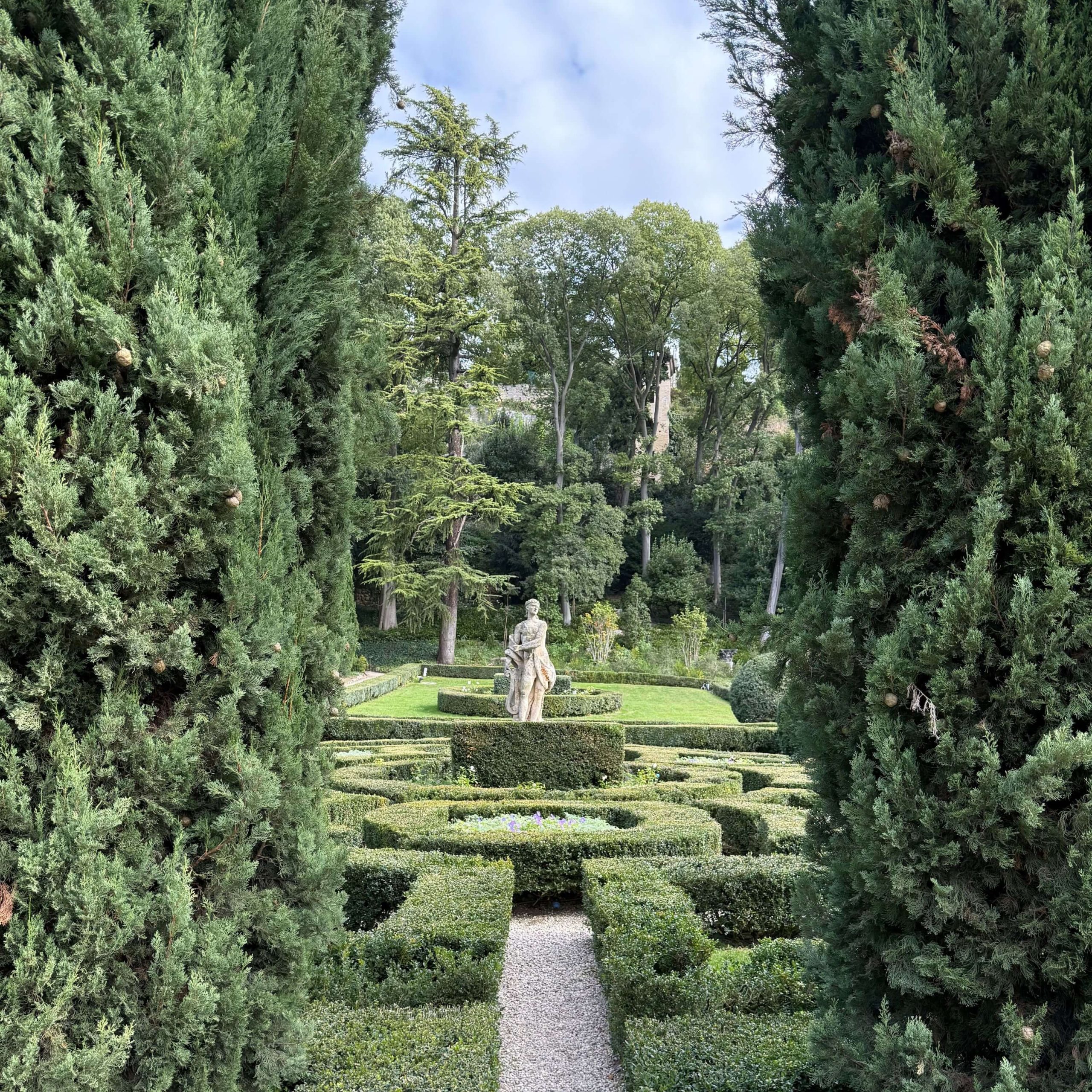
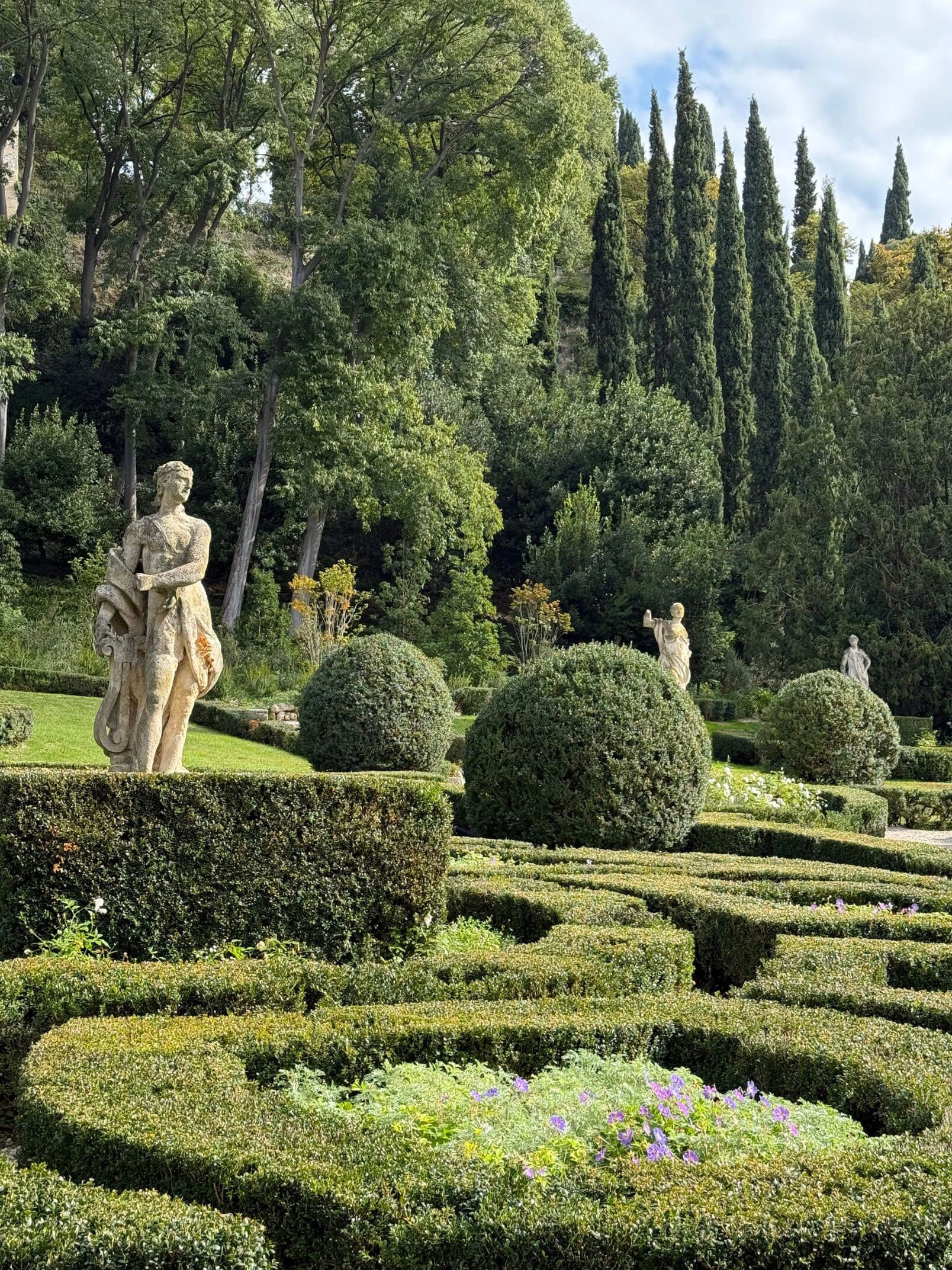
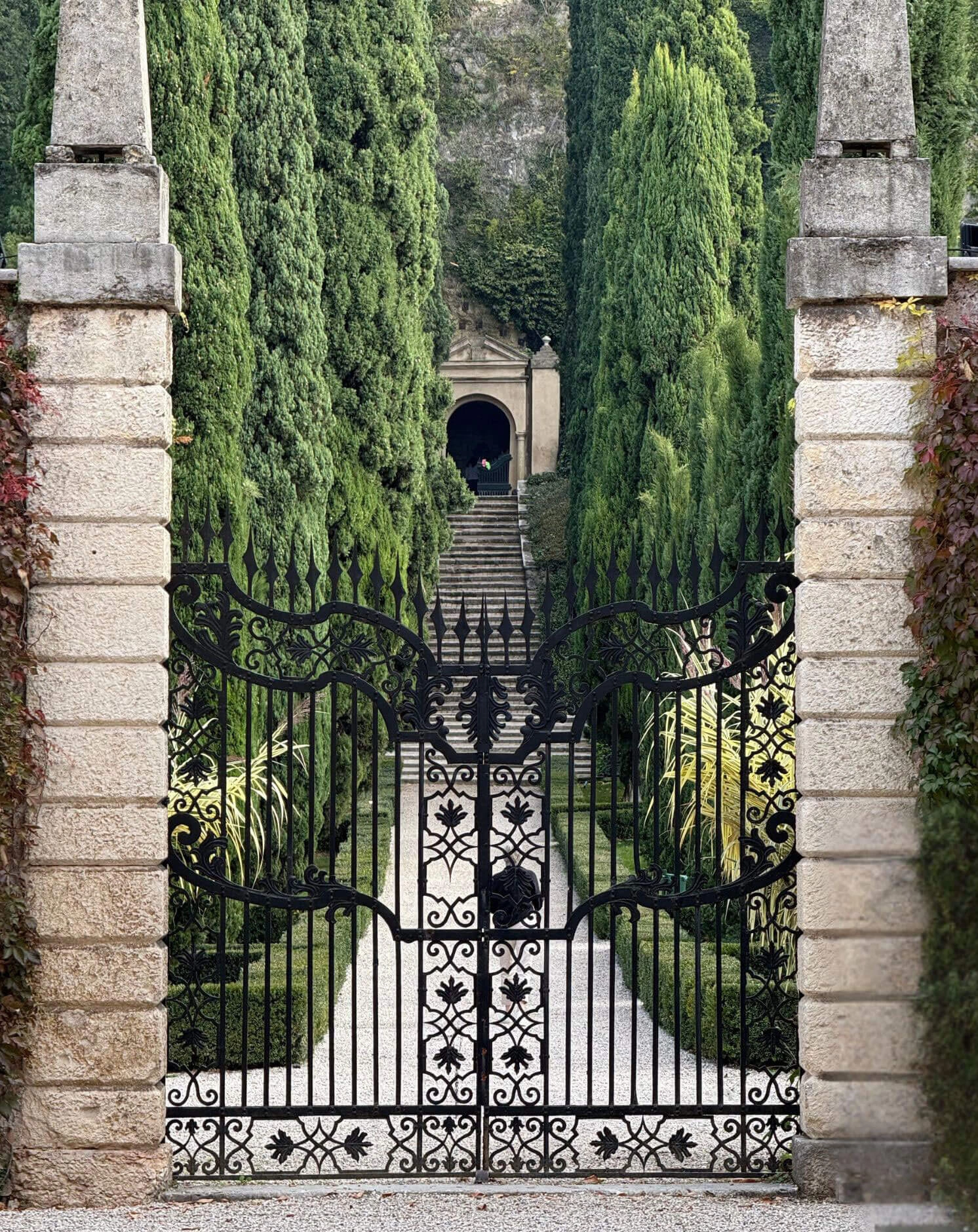
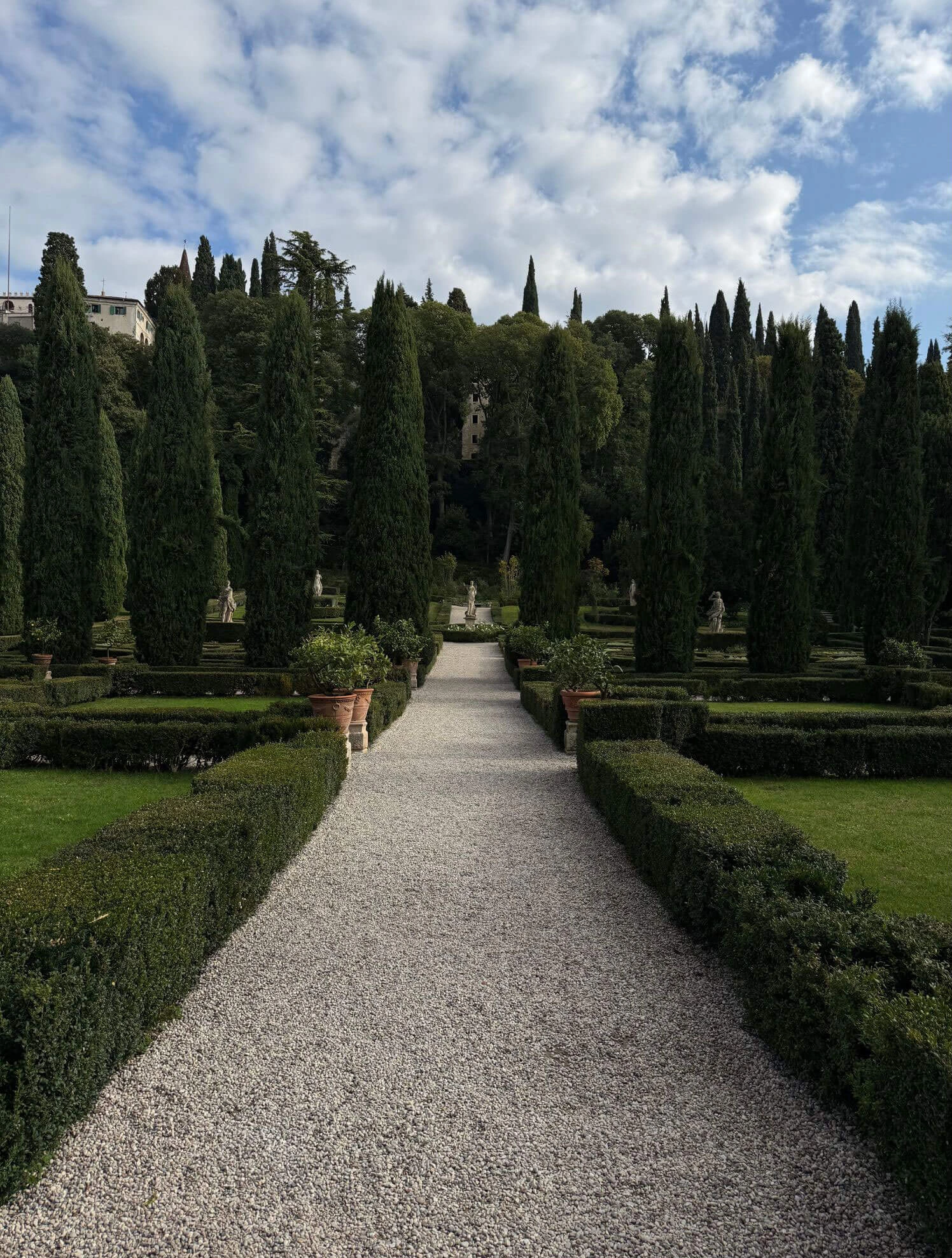
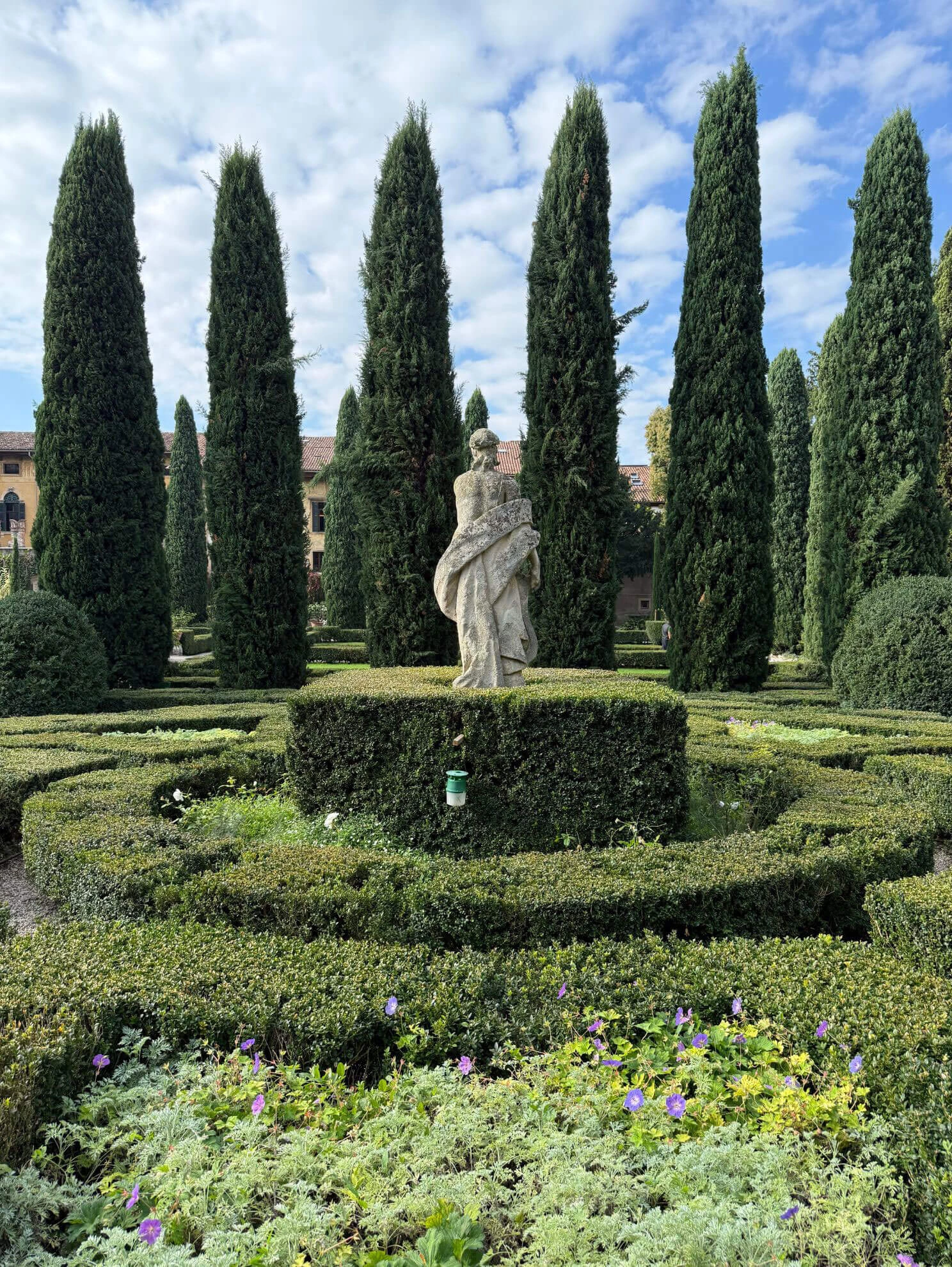
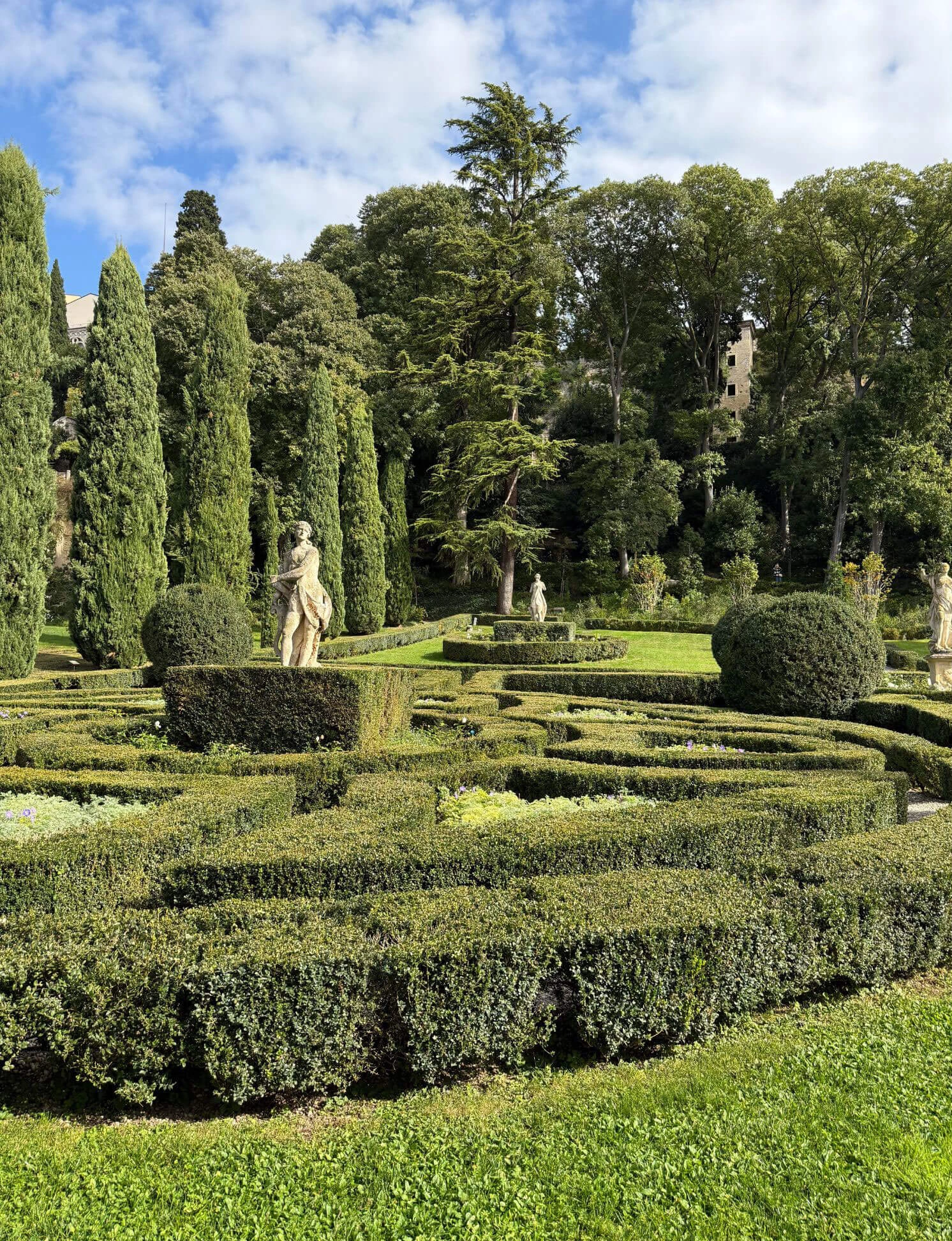
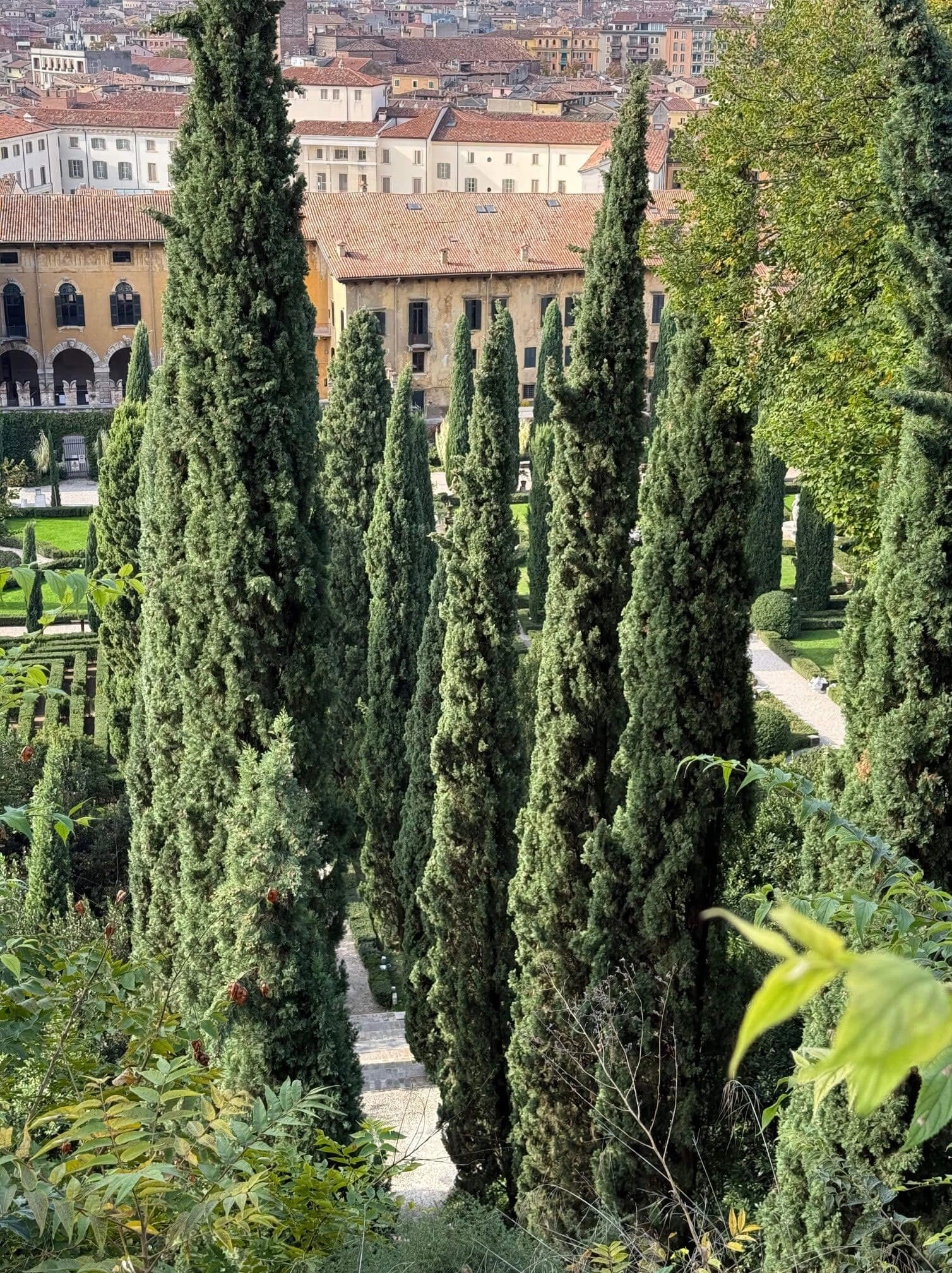
Our visit to Giardino Giusti in Verona was nothing short of inspiring, and we wanted to share some of our favorite photos we took during our visit. To us, this meticulously preserved 16th-century Renaissance garden serves as a potent reminder of what is possible within a dense, urban setting. It is also a reminder of how a garden outlives its creator, getting better with time and consistency of care. Some of the cypress trees that line the center path to the second terrace are up to 300 years old.
A HISTORY OF EXCELLENCE
JUXTAPOSITION OF
THE FORMAL
STRUCTURE AGAINST
THE HILLSIDE
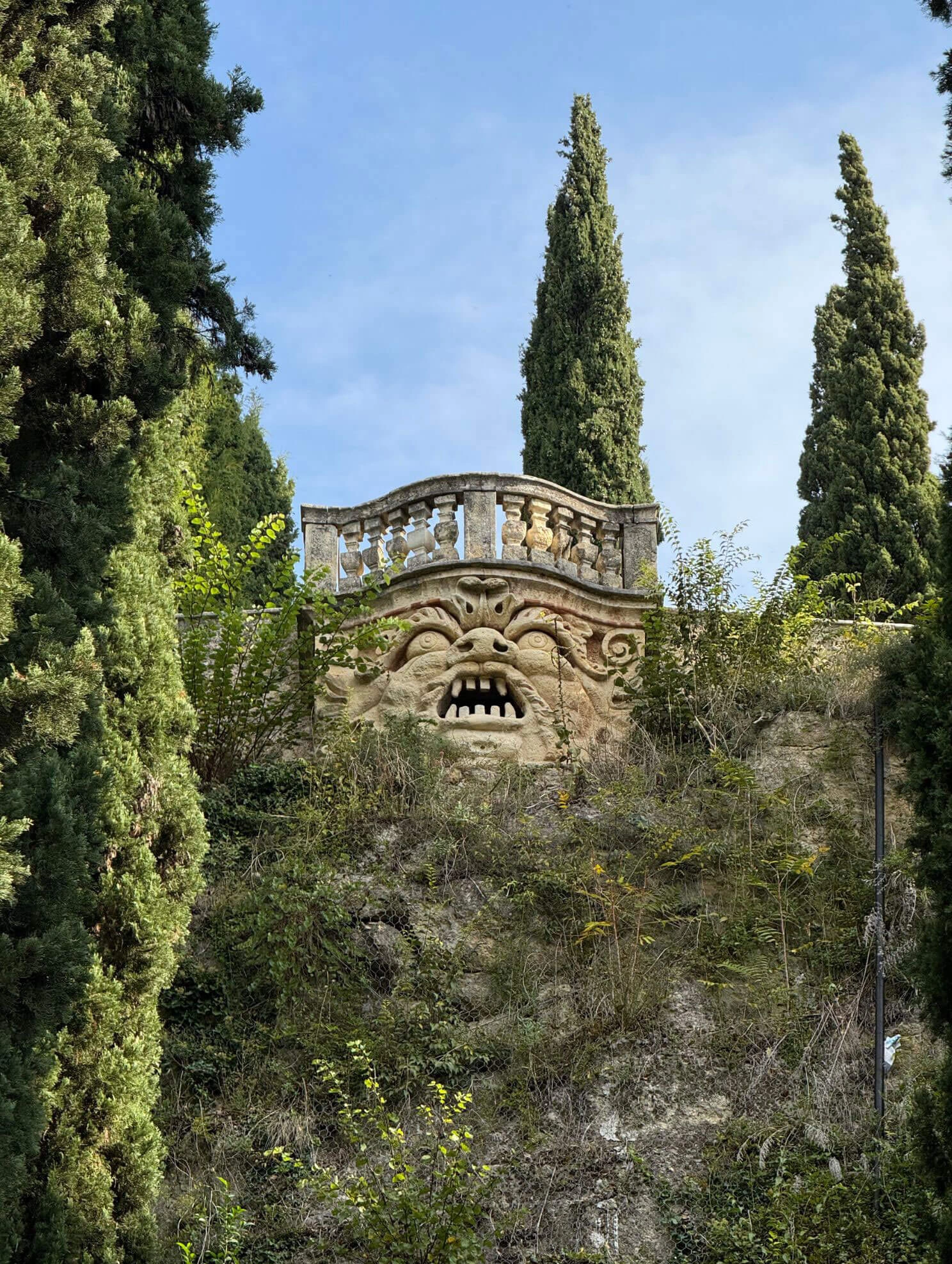
This formal design is then juxtaposed by the ascent up the hillside. The upper terraces were designed to surprise the visitor, including grottoes and a spectacular grotesque mask carved into the rock face. This mask was historically designed to emit fire or smoke, creating a theatrical element of wonder and awe for guests viewing it from below. This transition from rigid geometry to unexpected natural elements highlights the importance of experiential design.
SYMMETRY, LAYERING,
AND INTENTION
TOWARDS PLANNING
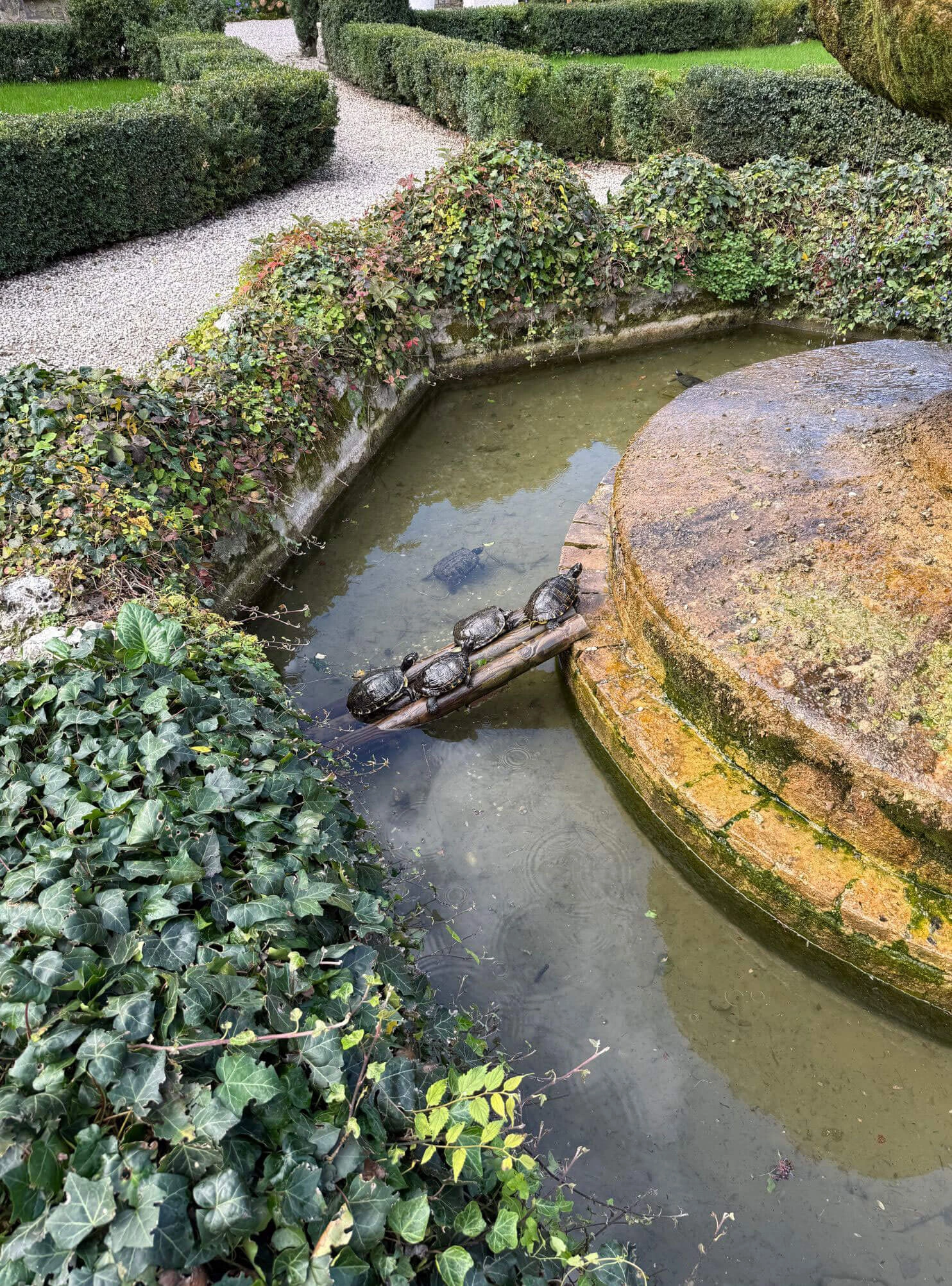
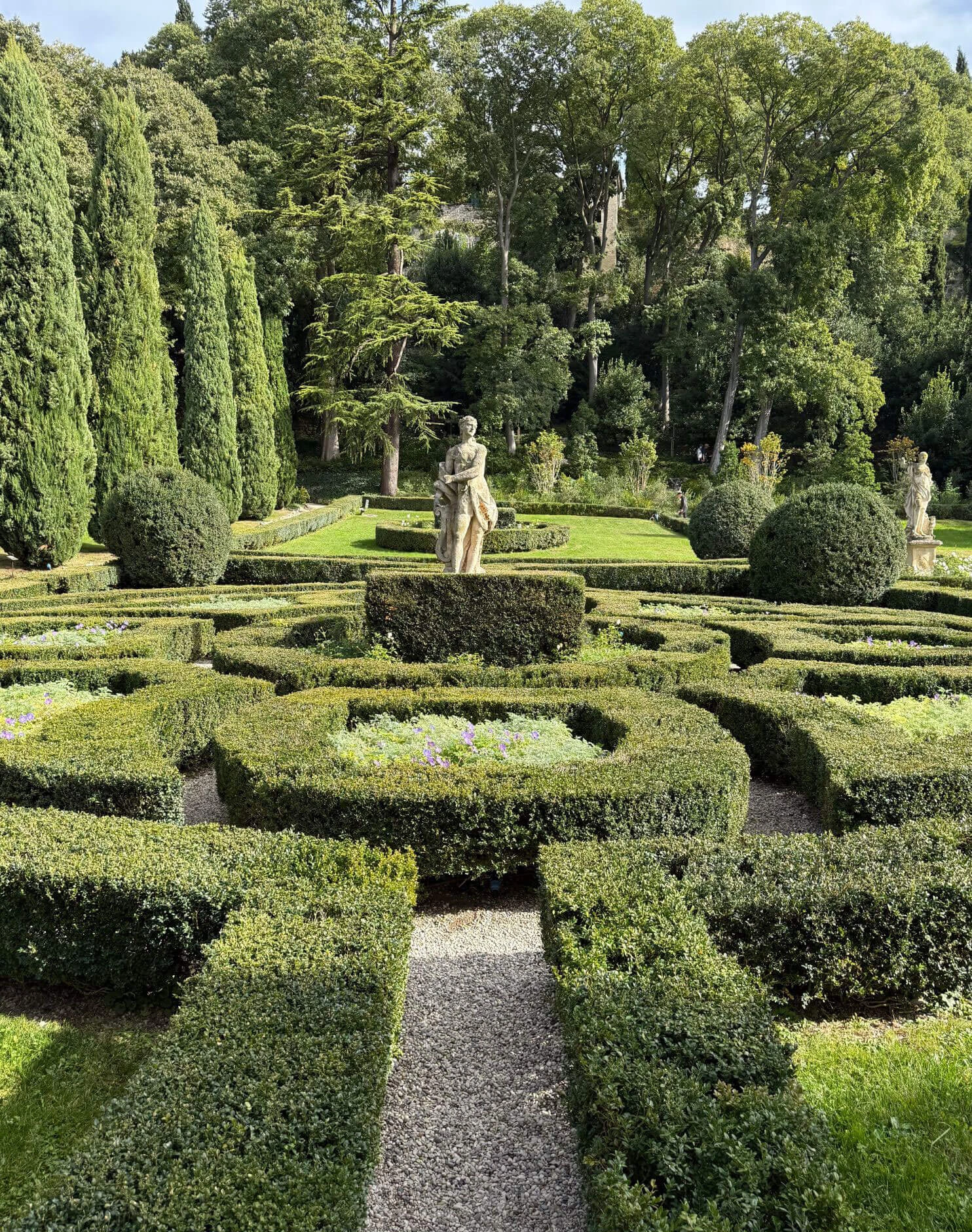
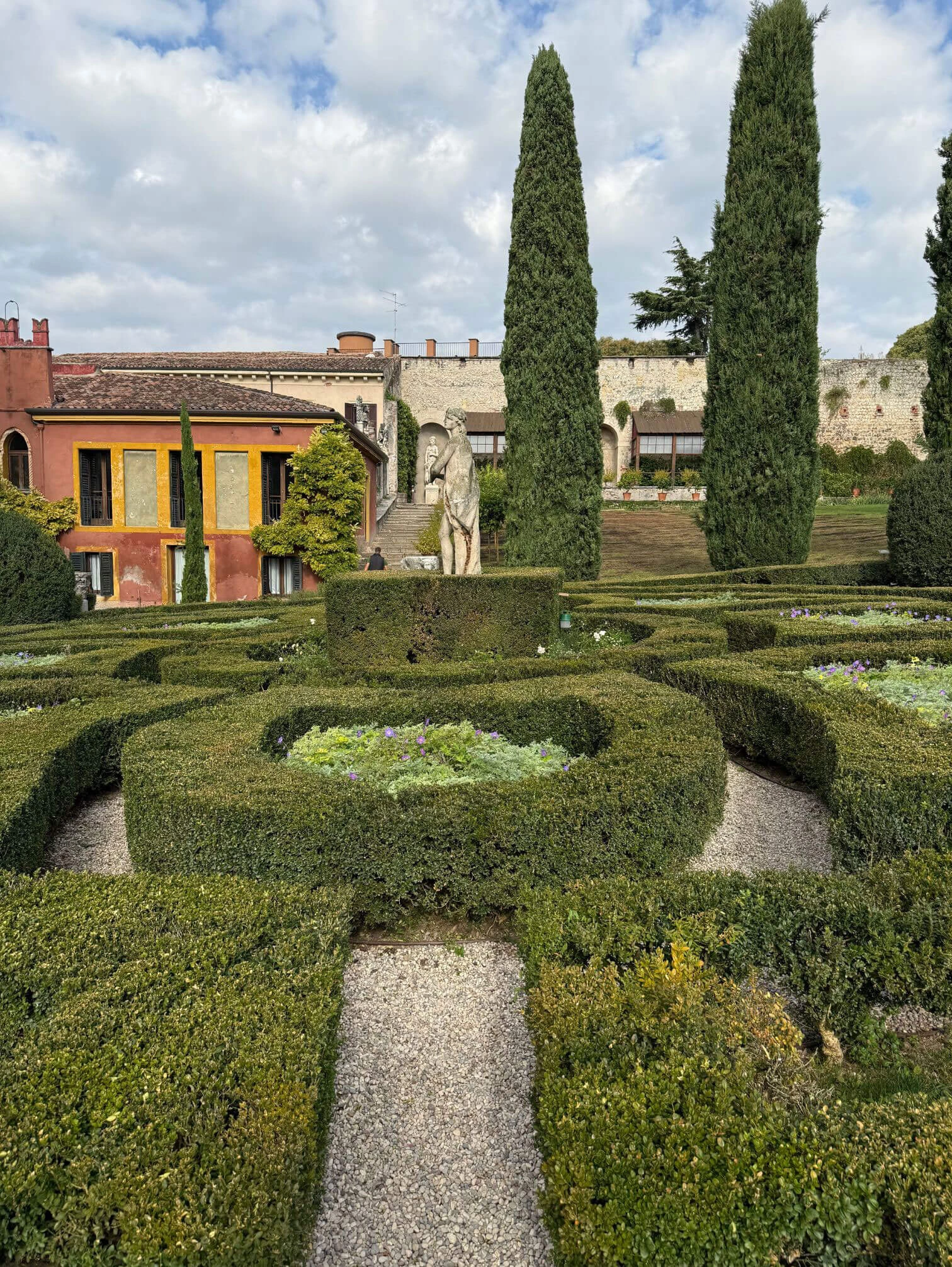
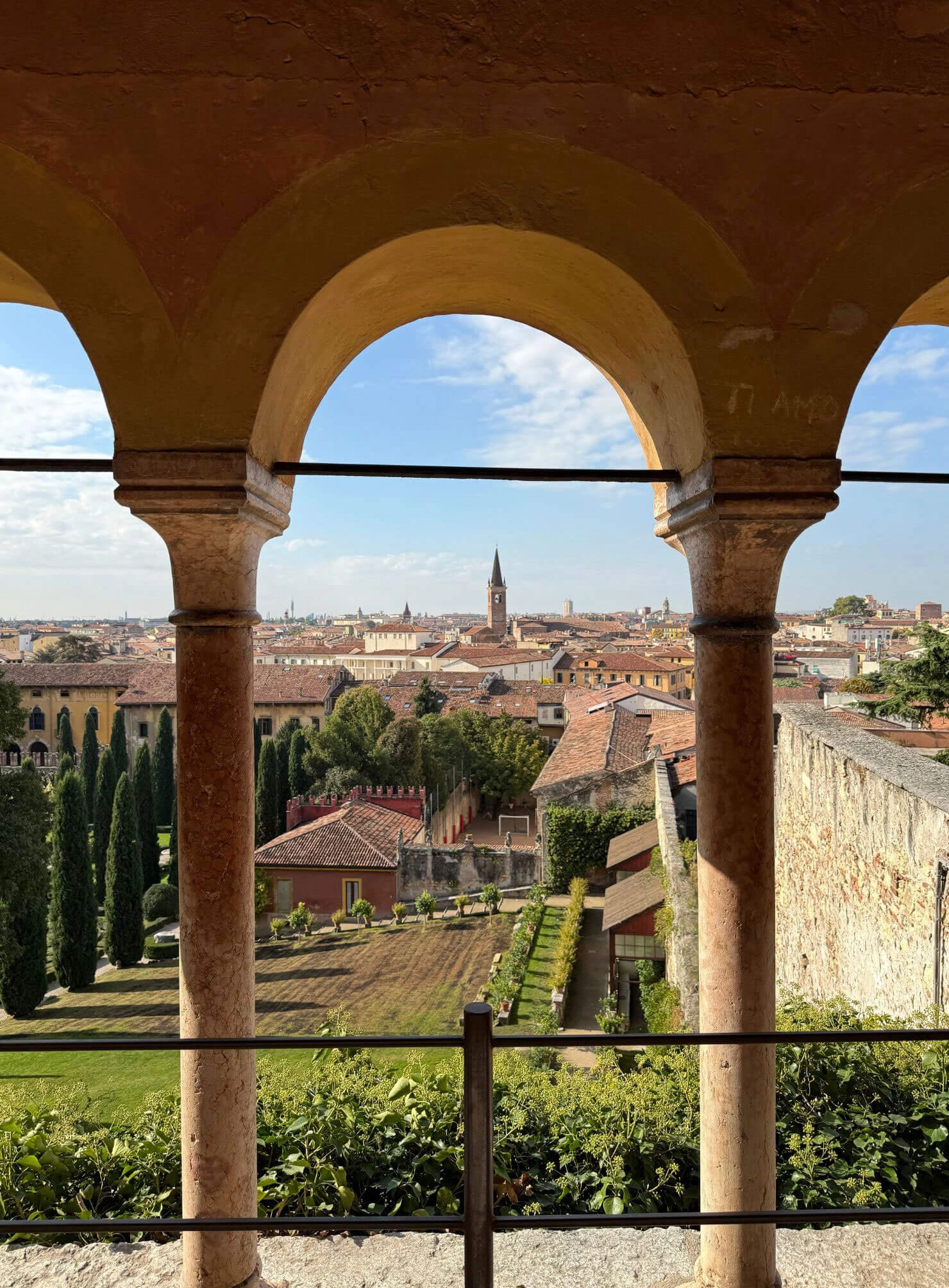
The entire composition, from the intricate maze (one of the oldest in Europe) to the 16th-century fountains filled with turtles, demonstrates layered design planning. The high viewpoint from the belvedere terrace offers a treat of a view over the city of Verona’s clay roofs, allowing for an immediate understanding of the contrast between the lush greenery against the orange backdrop. This perfectly framed perspective illustrates the final step of true master-planning: creating a powerful visual connection between the environment and the architecture it surrounds.
“TRAVEL, IN THE YOUNGER
SORT, IS PART OF
EDUCATION; IN THE ELDER,
PART OF EXPERIENCE.
--FRANCIS BACON
A LEGACY OF HSITORY
AND MODERN
RELEVANCE
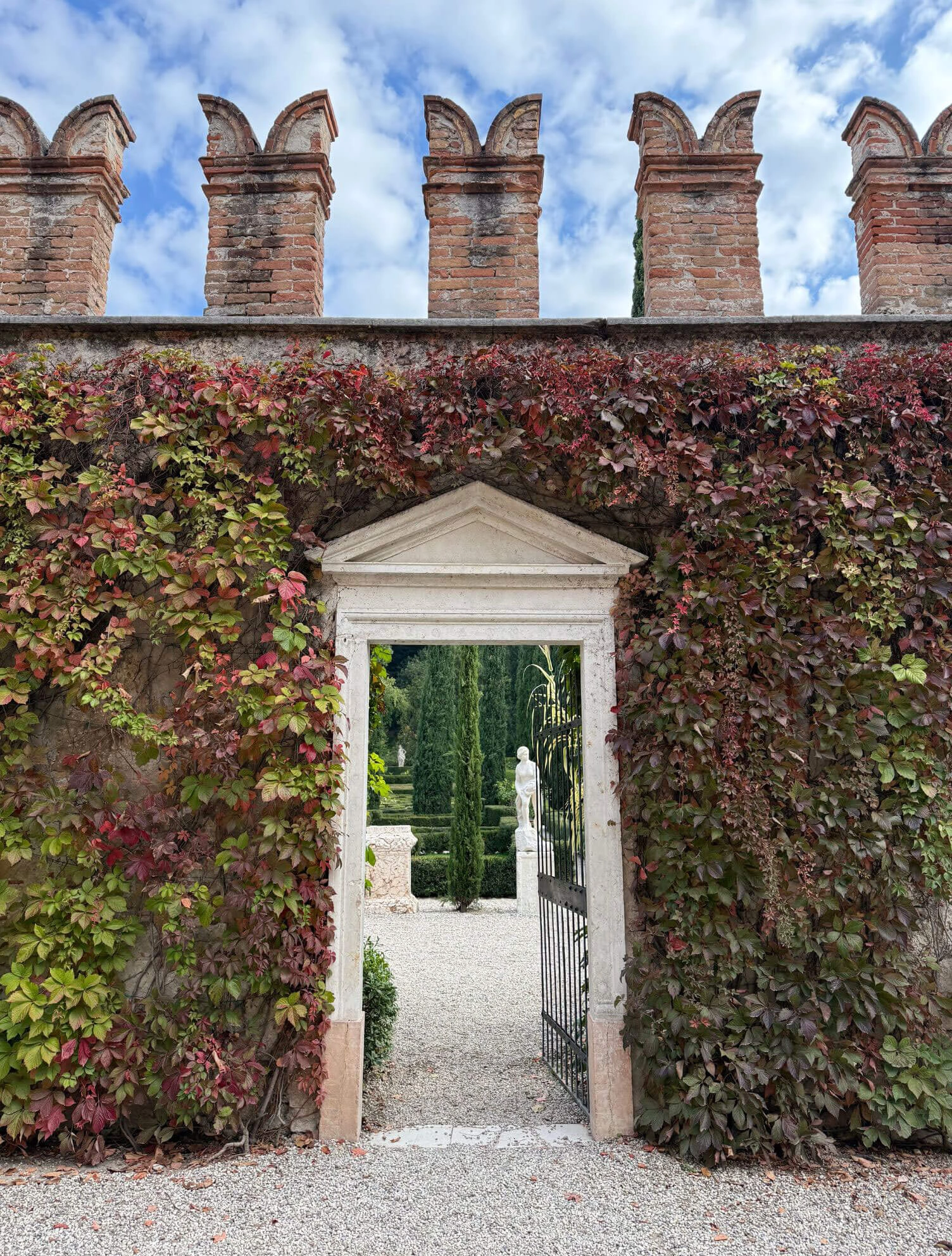
We found our experience to be immersive, prompting further exploration, photo taking, and appreciation of the surroundings in the shade. It is indeed true that a garden is a body of work that only gets better with time and consistency of care. Landscape design is the quietest of the performing arts for this reason.