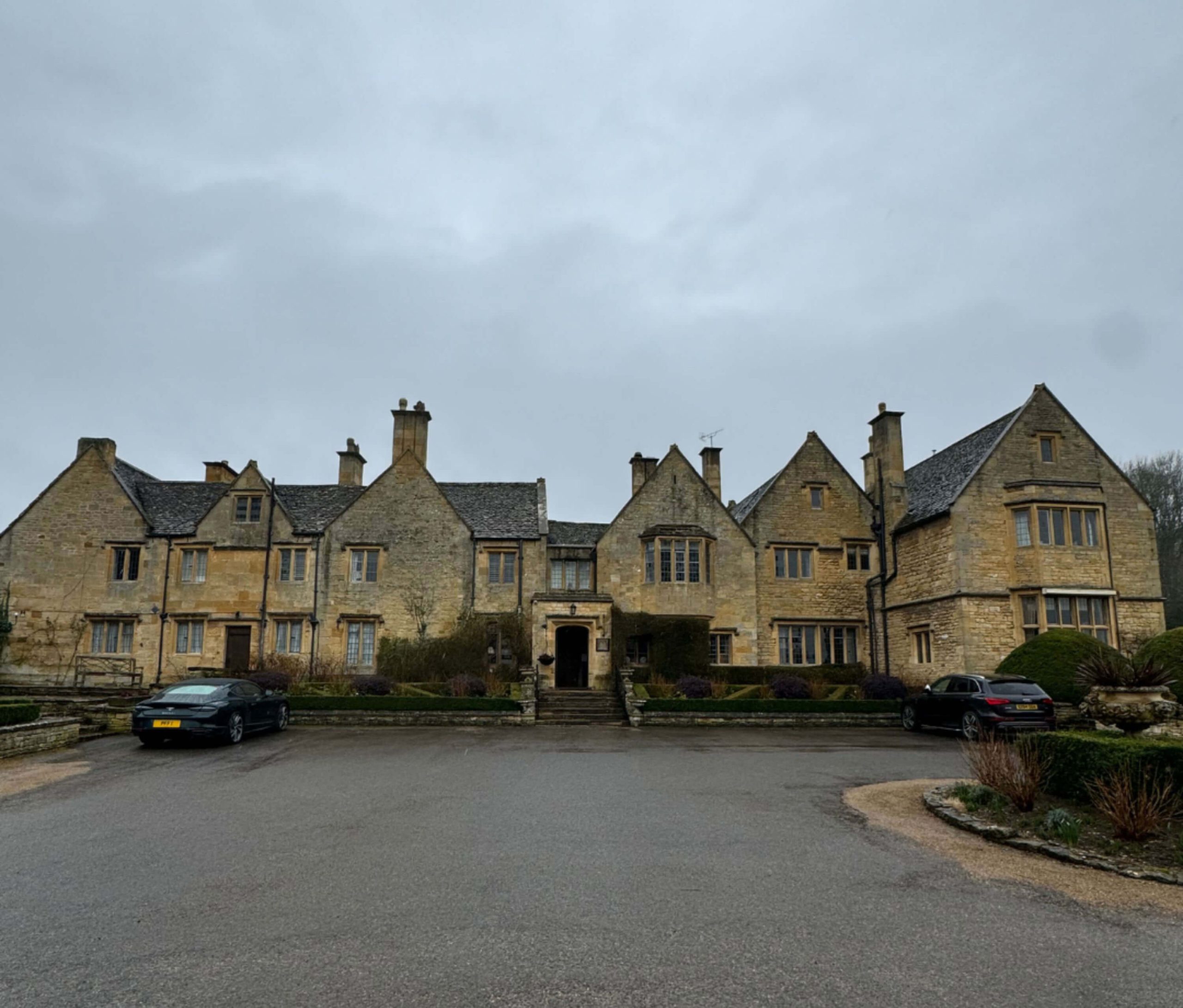
Buckland Manor
OUR VISIT TO:
BUCKLAND
MANOR
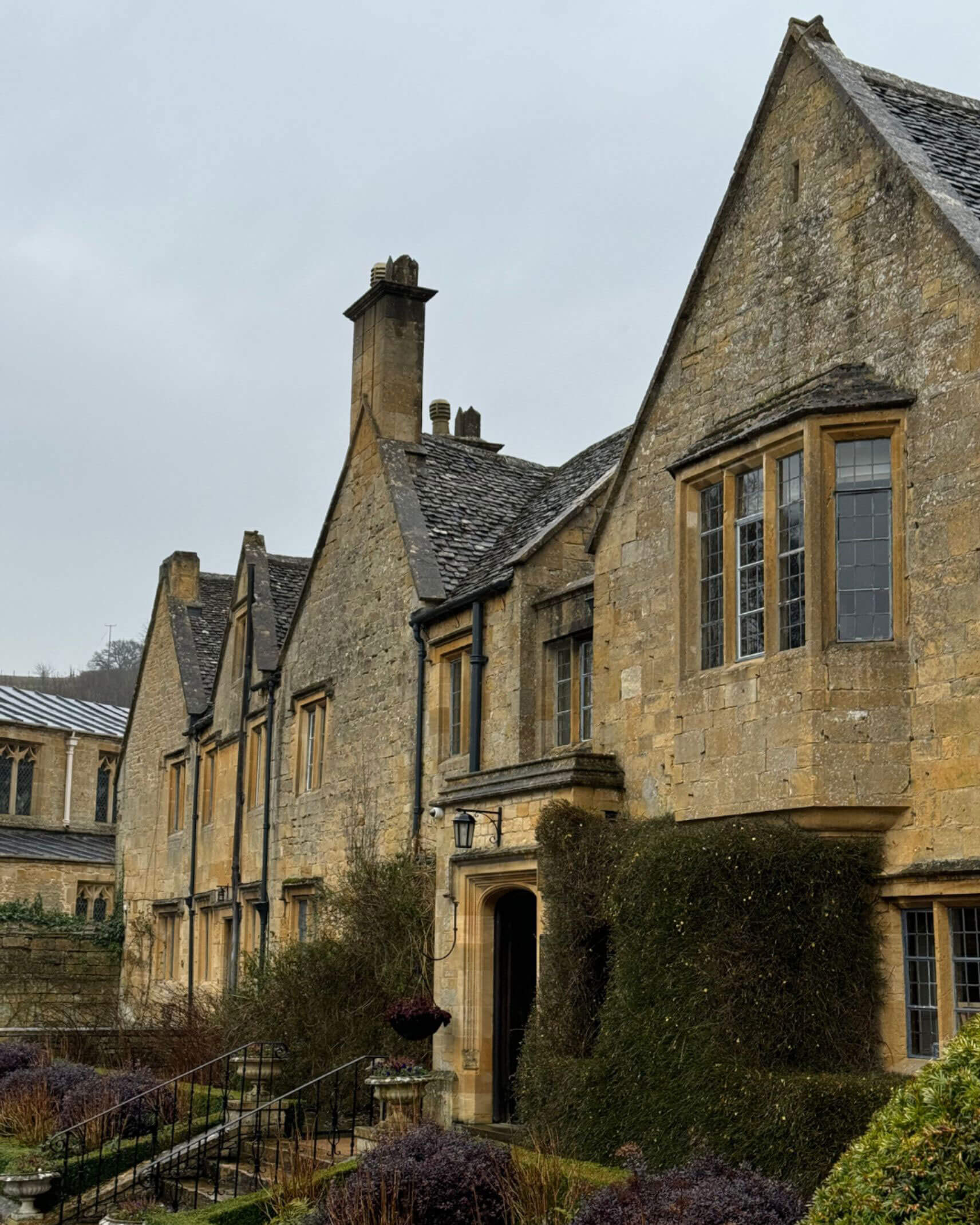
We had the chance to stay at Buckland Manor, originally known as Bookland Manor, in 2025, and I wanted to share our experience for a few reasons. To start, both Jesse and I consider this to be a well-preserved Cotswold manor that reflects what a relaxing and immersive countryside environment would have been in the 18th century. It is also a great example of a timeless architectural character that has outlasted the design trends of the centuries.
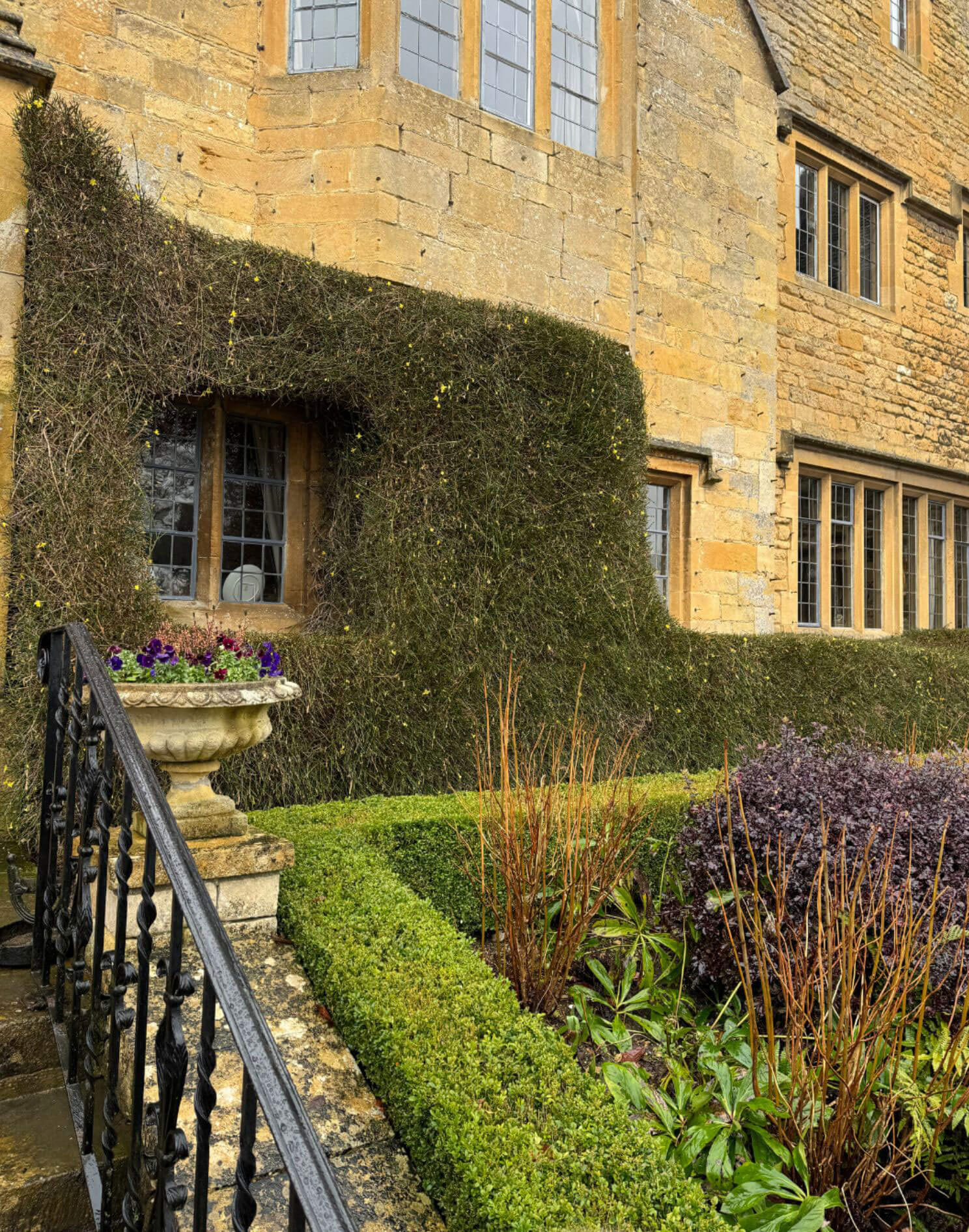
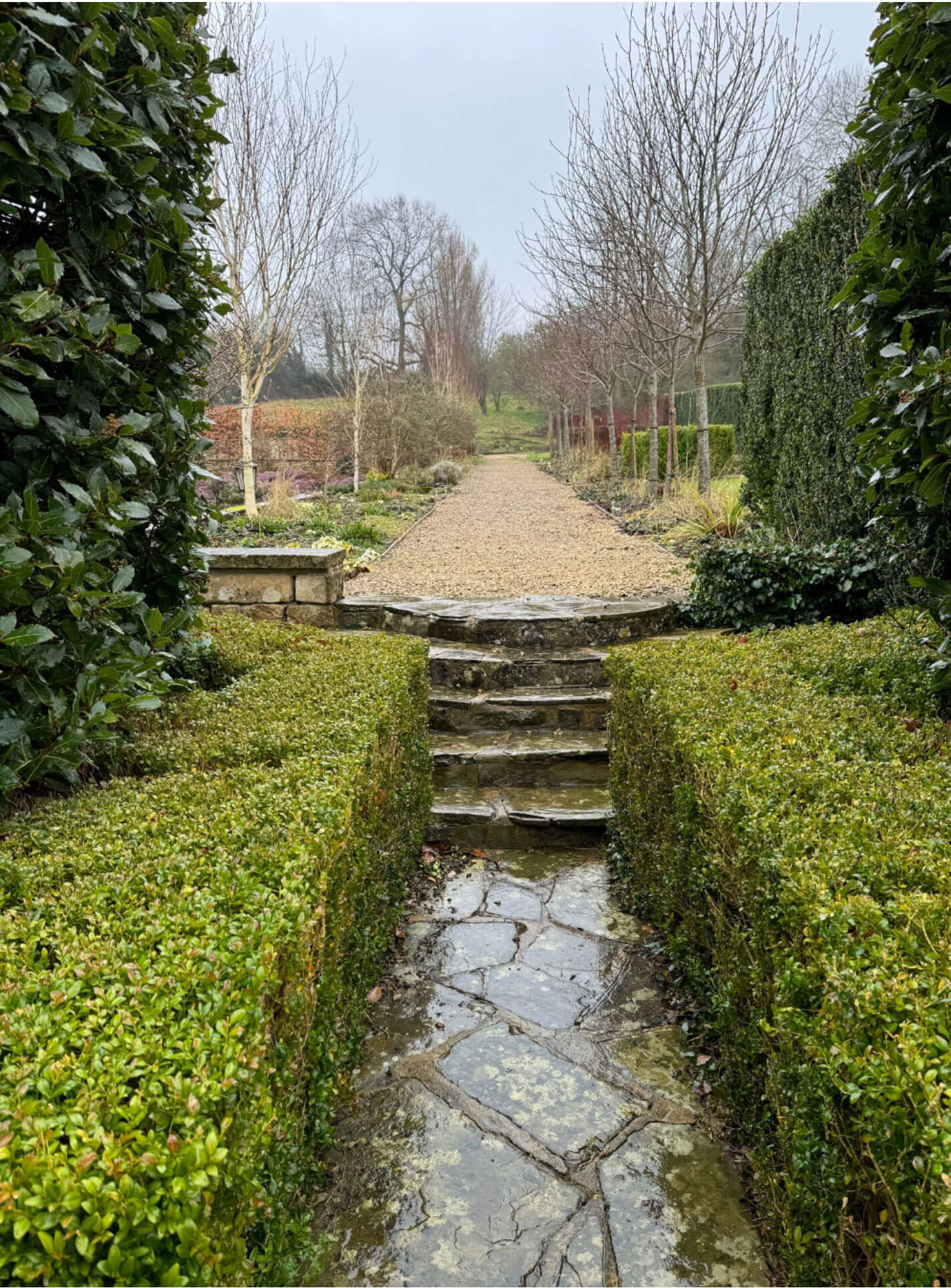
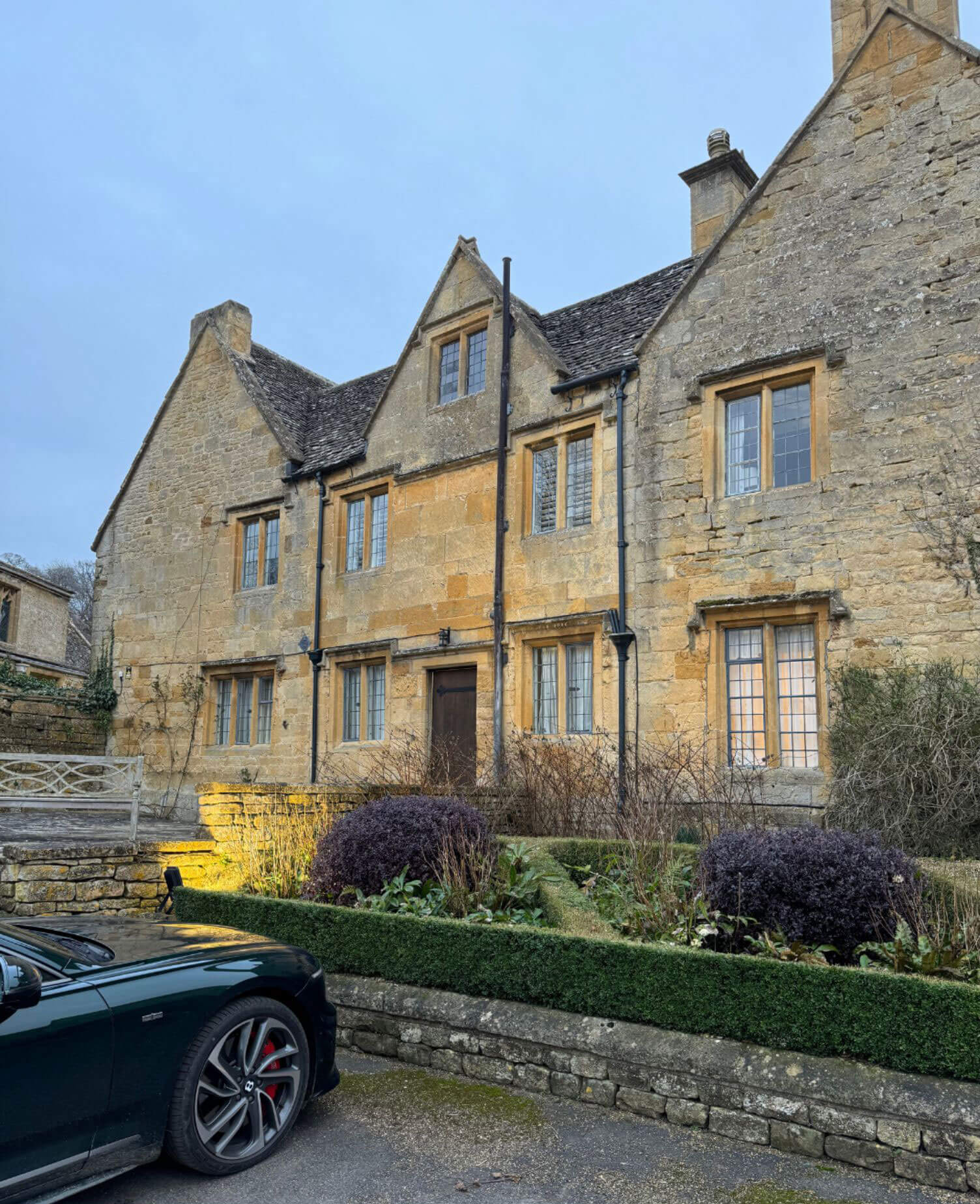
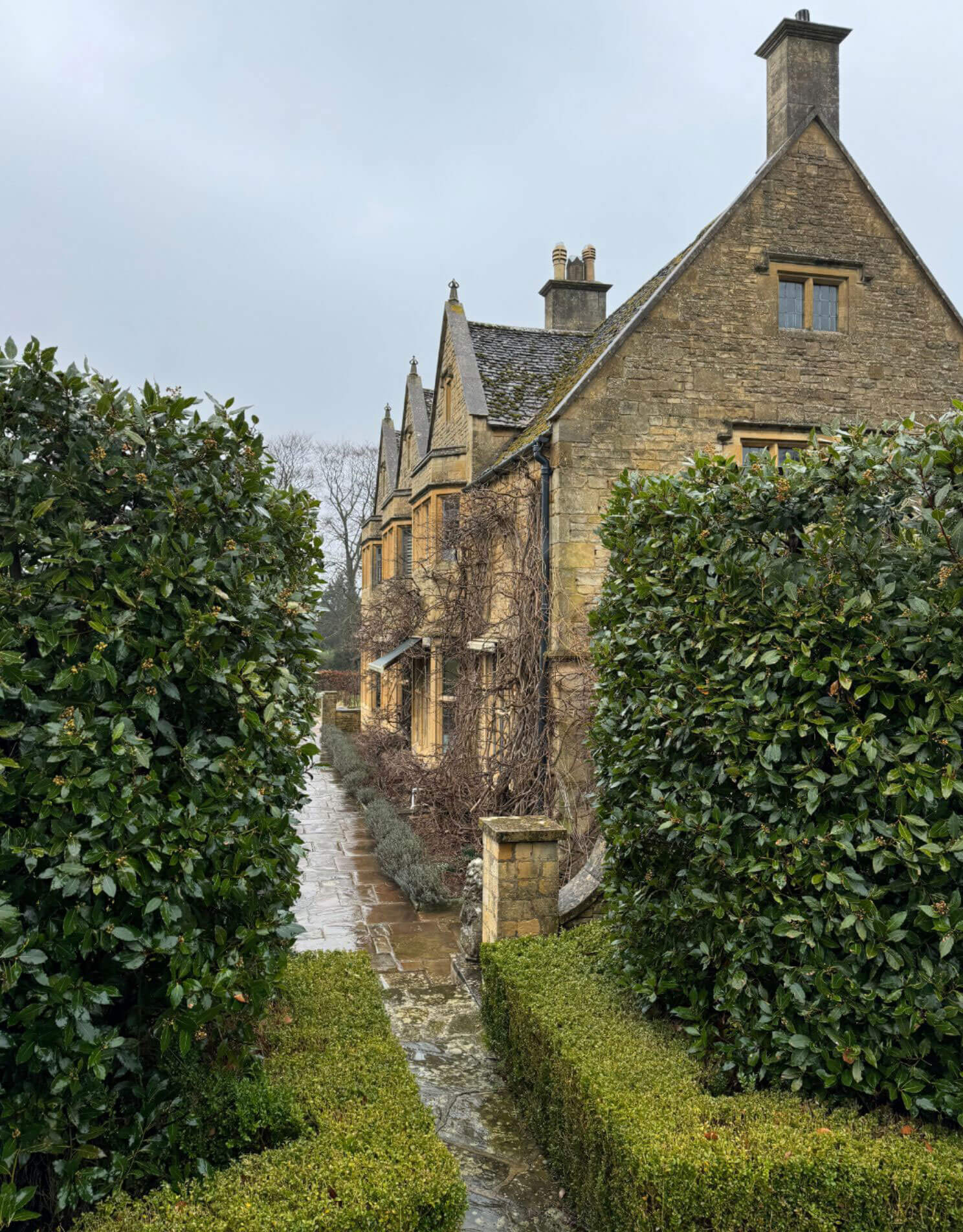
This manor-turned-hotel sits tucked beneath the Cotswold escarpment, just outside Broadway, in a village so small it is easy to miss it entirely if you are not looking for the turn, revealing very little until you are nearly at the door. Jesse applauds this restraint and simplicity, because once you enter the motor court, you are wrapped in English charm. This environment is largely supported by the architecture of the structure itself once you pull up to the motor court, which is lined with low, but tastefully colourful, structured hedge gardens. It also offers highly unique proportions that capture the unmistakable charm of the early Cotswold Manor style with the influence of the Arts and Crafts design style that Sir Edwin Lutyens made so famous in his day.
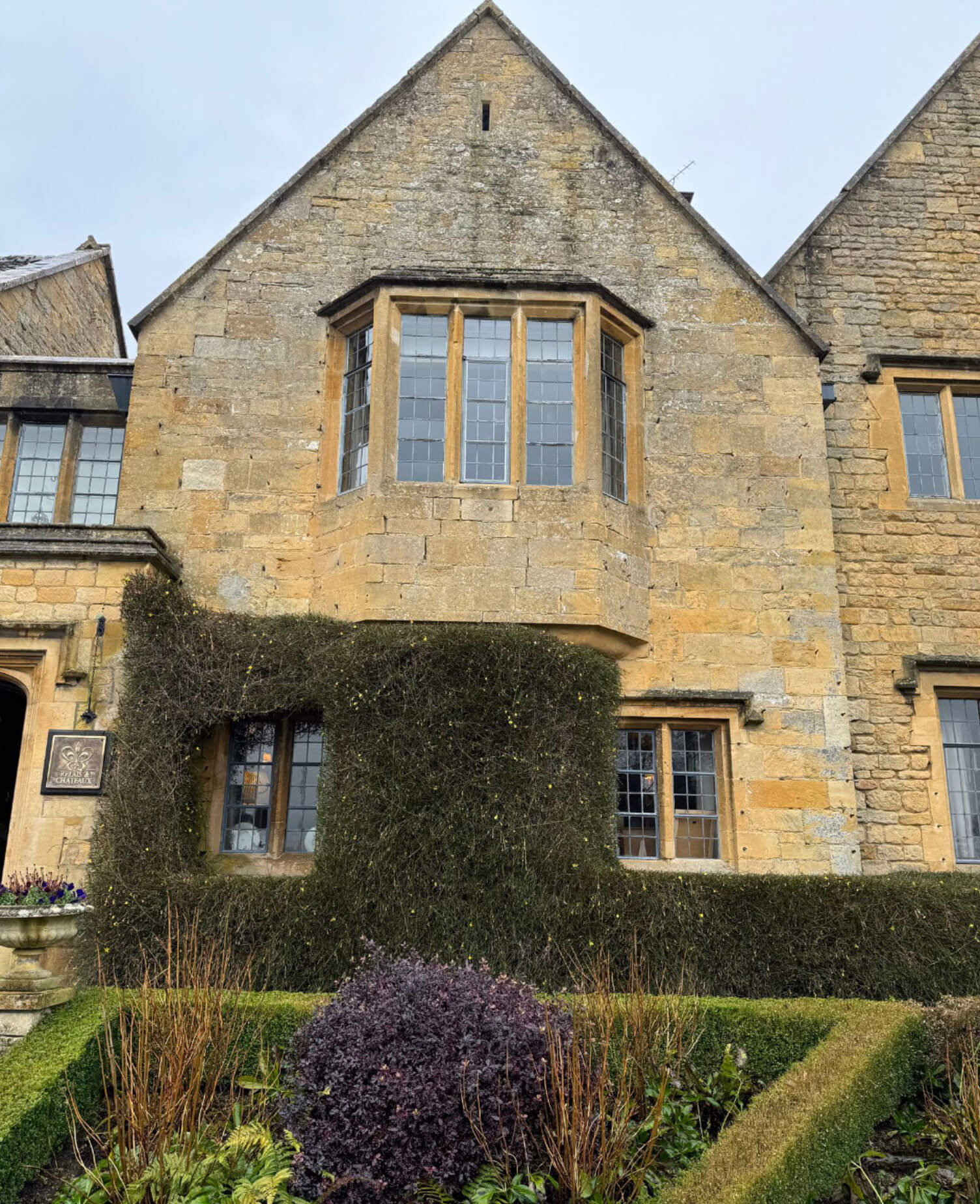
The structure is clad in the same honey limestone that clads many of the homes throughout the Cotswolds, and specifically in Broadway, and its warm yellow hue is particularly striking and timelessly enjoyable. However, multiple examples of this same stone being applied using different methods or dimensions can be found throughout the exterior, representing scars of repairs or additions that were completed to the tastes of the owner at the time. When we first laid eyes on it, we thought it was unmistakably grand, and a great example of what we think of when we picture this design style.
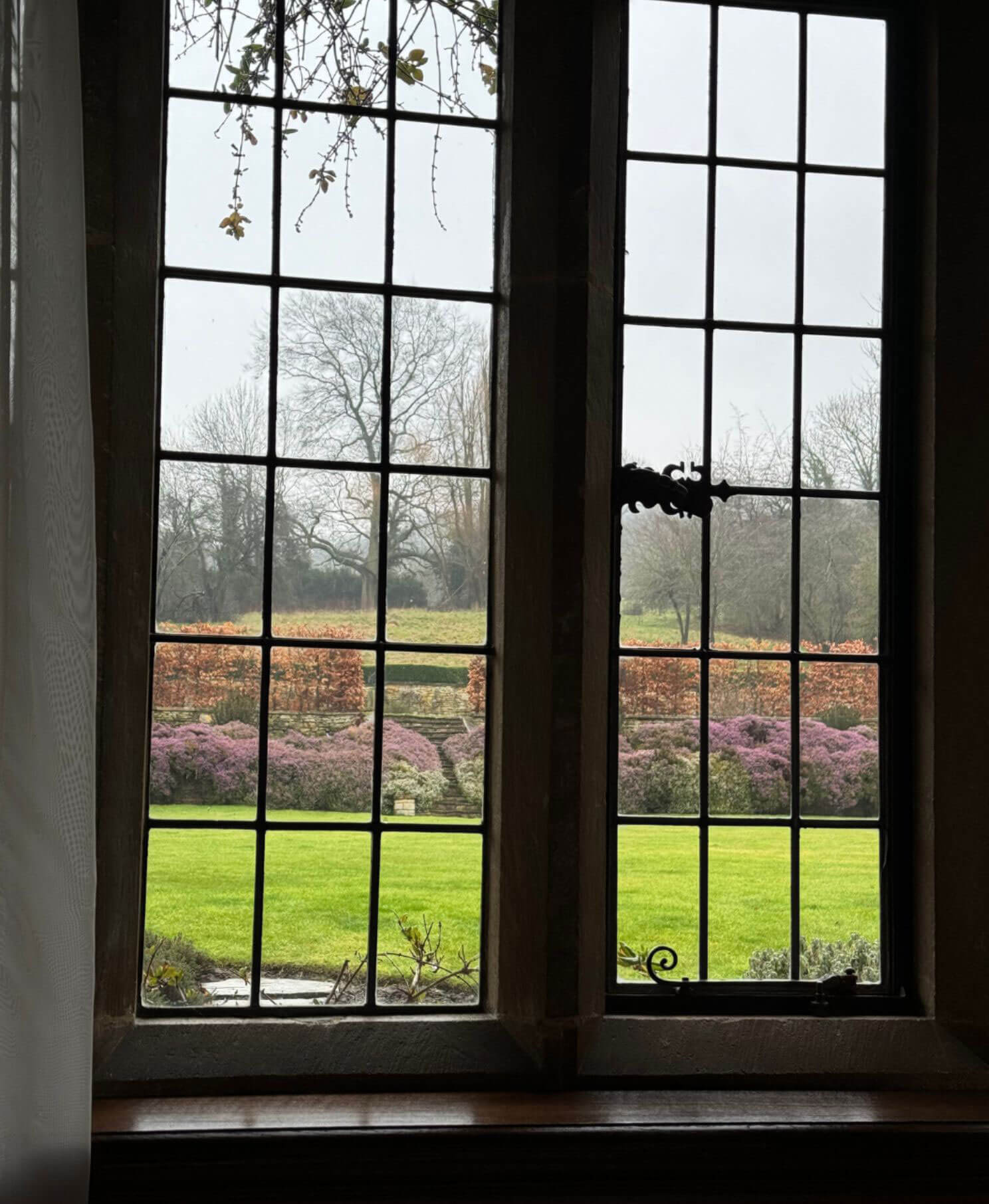
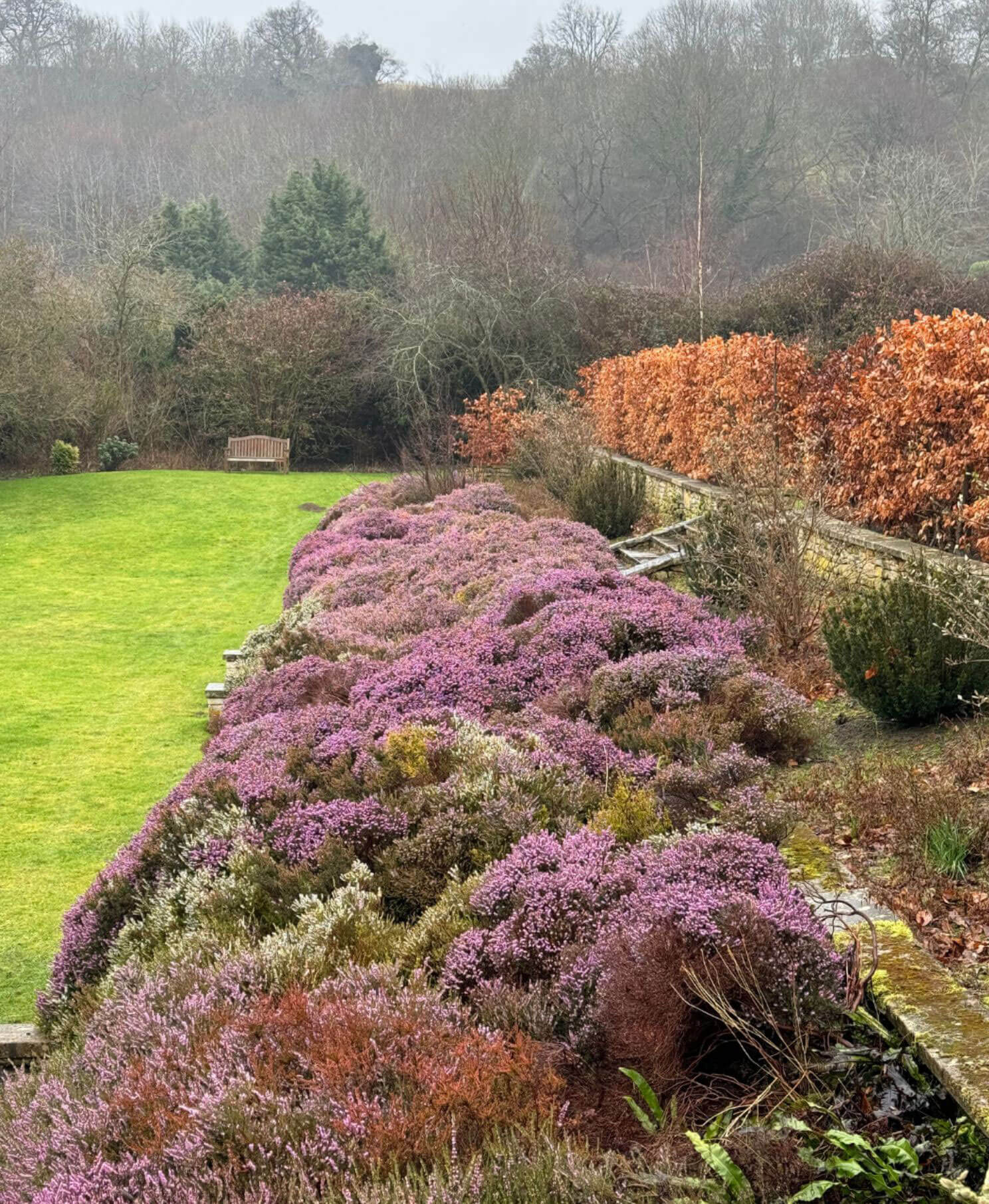
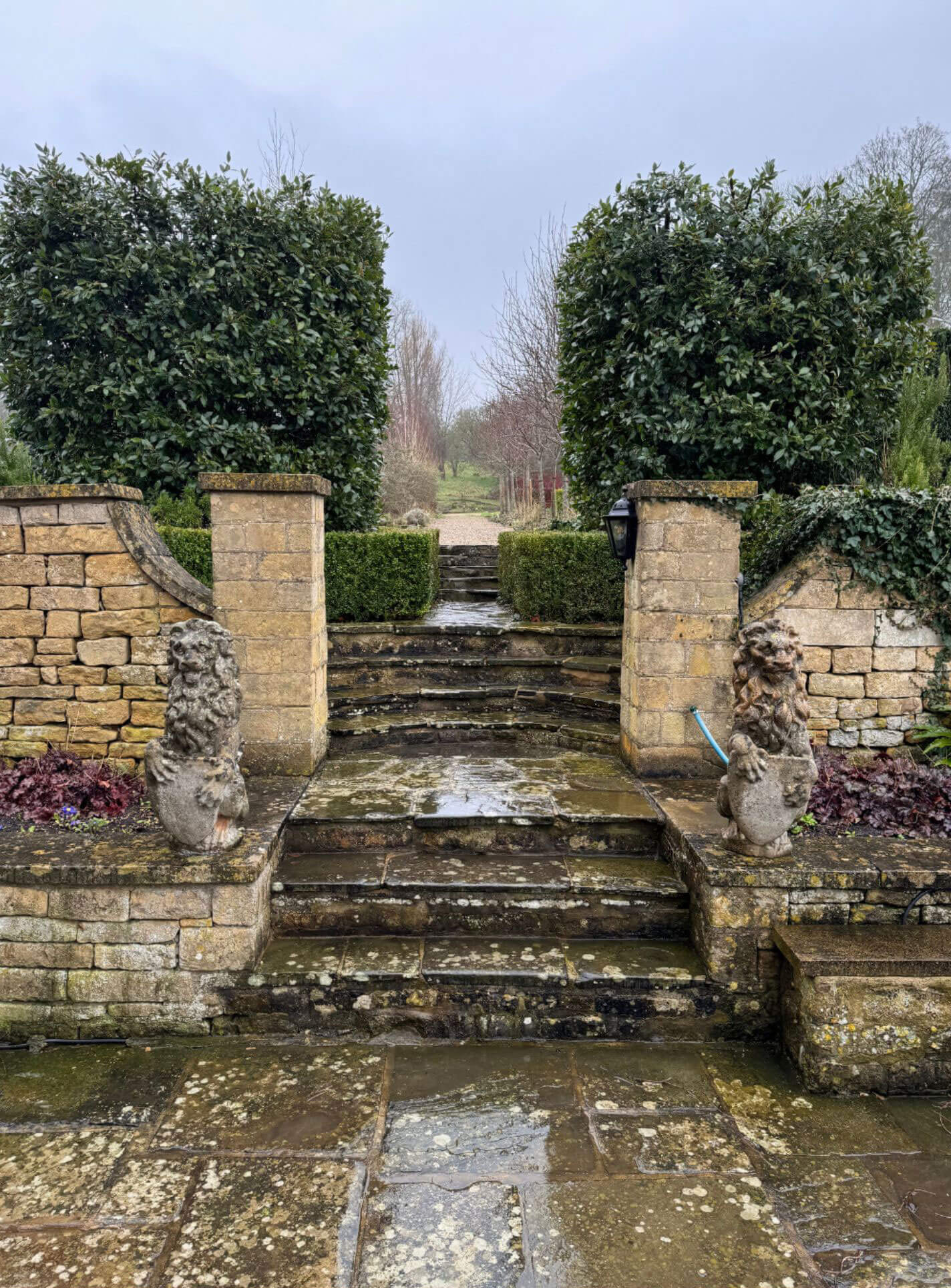
Move to the rear of the manor and the character reveals its age a bit more, revealing smaller wings added through the centuries based on the tastes and functional needs of each owner at the time. The result is that it feels sprawling and rambling among ten acres of manicured gardens that unfold with none of the formality found out front. The room we stayed in looked out onto the rear lawn, which features mature, cloud-like bushes of Cotswold lavender, planted long enough ago that their form has thickened and softened with age in a way that only decades of maintenance can produce. This is not a young garden by any means. You can tell it has been tended to continuously, which is both impressive and part of what makes these clouds of lavender so enjoyable to look at.
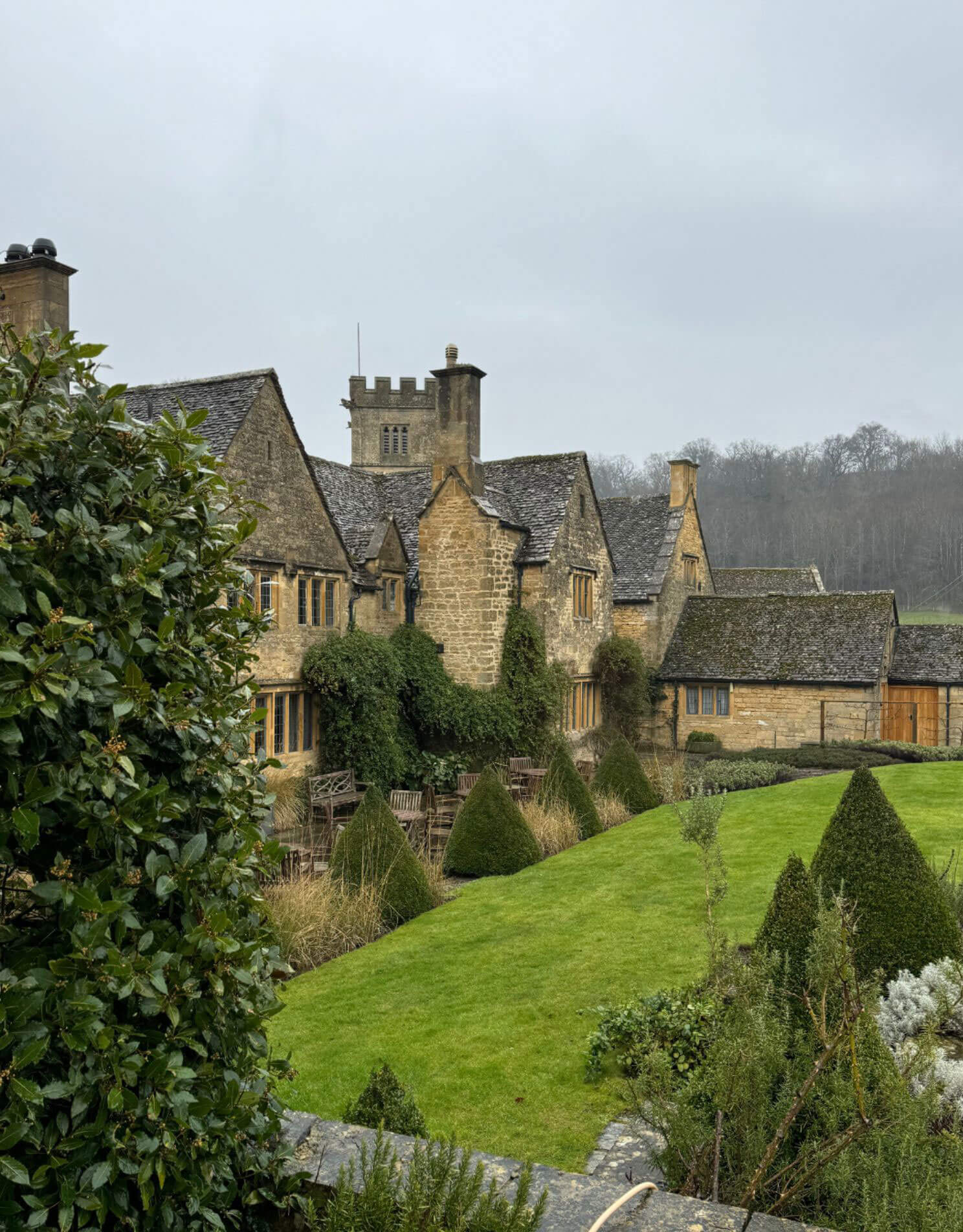
The character of this manor is weathered, with a patina that cannot be recreated, sitting close alongside the 13th-century church of St. Michael's. This proximity is not incidental. The manor and the church were built close enough to feel like one composition rather than two separate buildings. The tall tower of the church offers a sense of grandeur to the front motor court when pulling up that no other feature could match. The church itself is significant as well, as the east window holds 15th-century glass, believed to have come from Hailes Abbey following the Dissolution, and the quality of it is well documented enough that William Morris personally paid for its re-leading when he visited in the 19th century.
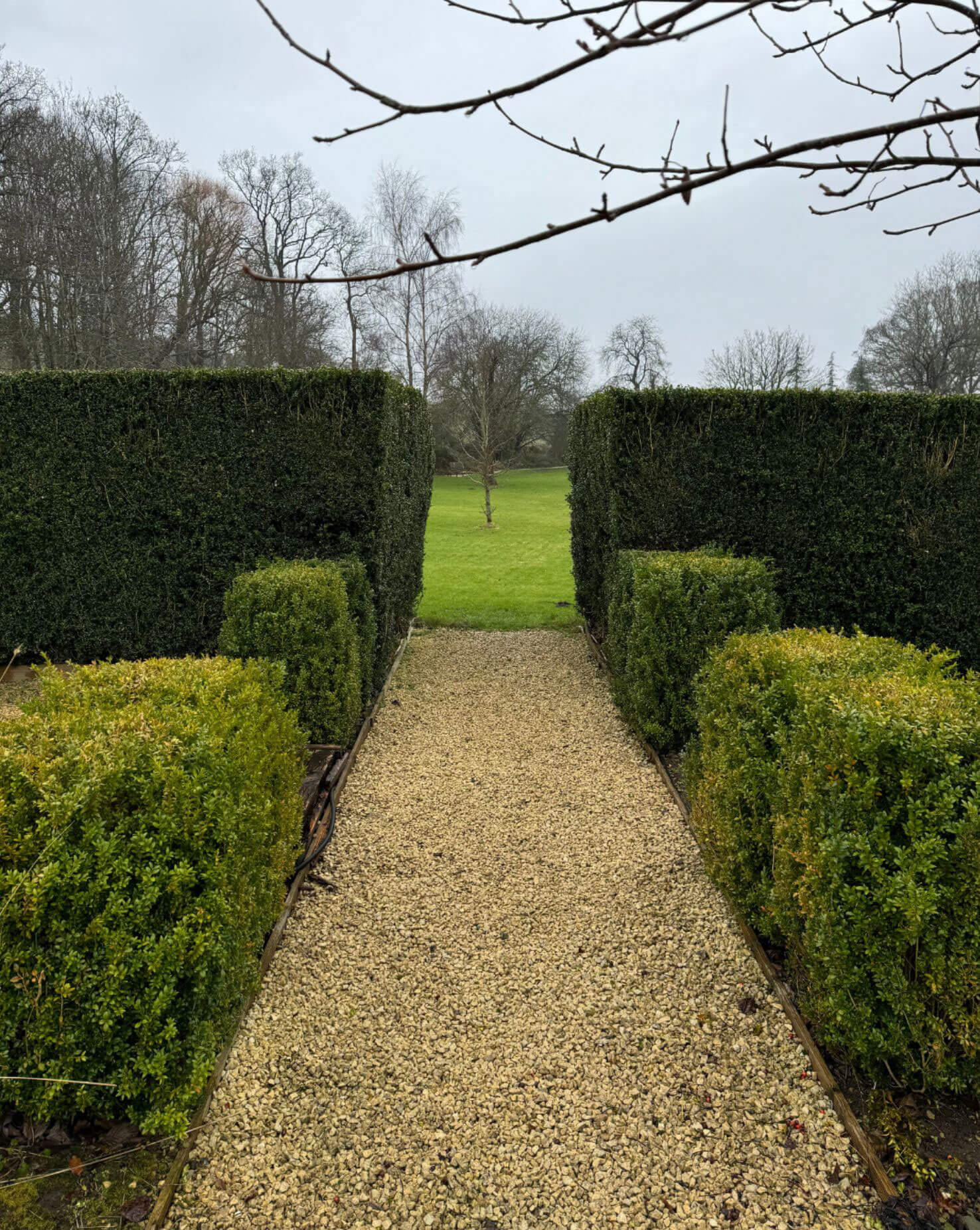
The name "Buckland" originates from the Anglo-Saxon term "Boc-land" (or "bōcland"), which refers to land that was held or assigned under a written charter. Historical records indicate that the land where Buckland Manor currently sits in the Cotswolds (near Broadway) was first mentioned in 600 AD. The original structure of Buckland Manor dates back to the mid-13th century. While the physical building has been extensively updated and altered over the centuries, it still retains many of the architectural features of the original medieval mansion, such as its stone fireplaces, leaded windows, and intricate wood paneling.